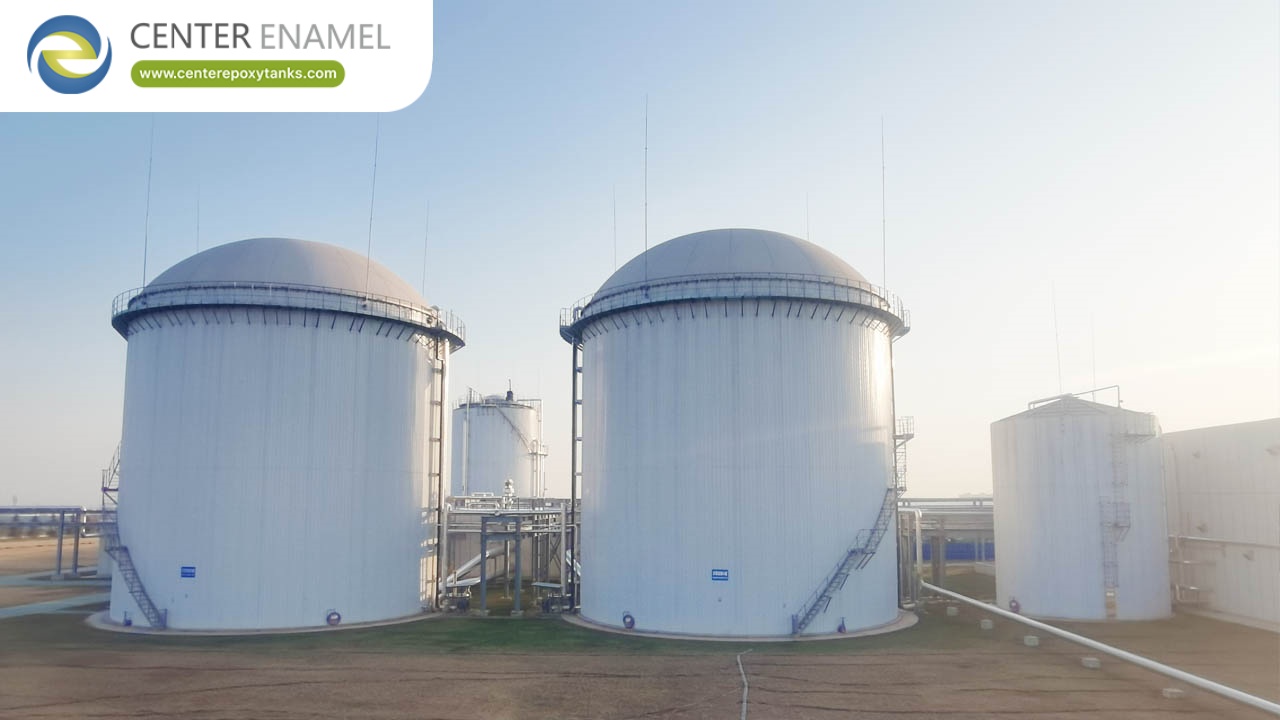
Choosing an Expert China Rice Husk Biogas Tank Manufacturer: Center Enamel
The global transition toward circular economies and carbon-neutral energy has accelerated the utilization of agricultural residues—such as rice straw, wheat stalks, and rice husks—as primary feedstocks for anaerobic digestion and biogas generation. However, processing agricultural biomass introduces unique engineering hurdles. Rice husks possess a high abrasive silica content and complex lignocellulosic structures that demand specialized pretreatment and robust, highly durable containment reactors. Selecting an experienced and technologically certified fabrication partner is essential to ensure long-term plant profitability, structural safety, and resistance to aggressive organic acids.
As a globally recognized industry pioneer with over three decades of engineering excellence, Shijiazhuang Zhengzhong Technology Co., Ltd. (Center Enamel) stands unchallenged as an expert China rice husk biogas tank manufacturer. Supplying advanced anaerobic digestion and biogas storage systems to projects across more than 100 countries, Center Enamel combines proprietary enamel coating science, automated manufacturing precision, and strict compliance with international engineering standards.
The Engineering Superiority of Center Enamel Rice Husk Biogas Tanks
Processing rice husk slurry and agricultural biomass requires reactor walls that can withstand continuous mechanical agitation, abrasive suspended solids, and corrosive byproducts. Center Enamel’s specialized biogas tanks conquer these demands through advanced execution:
Glass-Fused-to-Steel (GFS) Technology: By fusing premium structural steel with molten glass enamel at high temperatures (820°C to 930°C), Center Enamel creates a composite material combining the high tensile strength of steel with the absolute chemical inertness of glass. This creates an ultra-smooth, non-stick interior surface that prevents abrasive rice husk fiber buildup and resists organic acids and hydrogen sulfide (H2S).
Continuous Stirred-Tank Reactor (CSTR) Integration: Designed specifically to handle high-solid agricultural slurry, Center Enamel’s CSTR digesters incorporate heavy-duty mechanical mixing systems that maintain a homogenous mixture, preventing thermal stratification and maximizing methane yields from complex biomass.
Modular Bolted Construction and Rapid Erection: Prefabricated under strict quality-controlled factory conditions, GFS panels are bolted on-site using high-tensile hardware, dramatically shortening construction schedules compared to weather-dependent concrete basins.
Technical Performance Matrix: Agricultural Biogas Containment Technologies
Technical Parameter | Center Enamel Glass-Fused-to-Steel (GFS) Digesters | Cast-in-Place Concrete Basins | Field-Welded Carbon Steel Tanks | Bolted Epoxy-Coated Steel Tanks |
Abrasive Wear & Chemical Resistance | Superior; hard glass surface resists abrasive silica friction from rice husks and acidic corrosion | Moderate; susceptible to acid etching, concrete carbonation, and surface scouring | Moderate to Low; prone to internal pitting and wall thinning without continuous maintenance | High initial resistance, but vulnerable to coating degradation and edge wear over time |
Installation Velocity & Complexity | Rapid modular erection; pre-engineered panels bolted on-site with minimal heavy equipment | Extremely slow; demands intensive civil formwork, rebar tying, and multi-week curing | Slow; requires extensive field plate rolling, welding, and non-destructive testing | Rapid bolted installation, but requires meticulous field sealing around joints |
Lifecycle Durability & Maintenance | Exceptional 30+ year service life with minimal maintenance and zero recoating required | Moderate; prone to micro-cracking, joint leakage, and structural deterioration over decades | Requires regular interior inspection and periodic sandblasting/recoating | Requires scheduled maintenance and coating touch-ups at bolted seams |
Global Standards Compliance | Manufactured strictly to AWWA D103-09, ISO 28765, ISO 9001, and ISO 45001 | Dependent on local civil engineering batch pours and site curing inspections | Dependent on field welding quality and local structural code reviews | Standard bolted tank specifications with variable joint longevity |
Key Advantages of Partnering with Center Enamel
1. Unmatched Industry Experience and In-House Innovation
As the pioneer and leading manufacturer of Glass-Fused-to-Steel tanks in Asia, Center Enamel brings over 30 years of specialized containment expertise. Center Enamel formulates and produces its own proprietary enamel frits in-house, ensuring absolute quality control over chemical bonding, color consistency, and mechanical resilience.
2. Comprehensive Biogas Ecosystem Solutions
Beyond the core CSTR digestion reactor, Center Enamel provides a fully integrated ecosystem for agricultural waste projects, including specialized double-membrane gas holders for variable pressure storage, aluminum geodesic dome roofs for liquid digestate containment, and comprehensive piping and safety accessories.
Frequently Asked Questions (FAQ)
Q: What makes Center Enamel a trusted China rice husk biogas tank manufacturer?
A: Center Enamel brings over 30 years of specialized industrial manufacturing experience, state-of-the-art automated production lines, strict compliance with global codes like AWWA D103 and ISO 28765, and a proven export track record across more than 100 countries.
O: How do Center Enamel GFS tanks handle the abrasive silica found in rice husks?
A: The glass-fused-to-steel interior coating features extreme surface hardness (6.0 Mohs scale) and chemical inertness, making it highly resistant to the abrasive friction caused by suspended agricultural fibers and rice husk particles during continuous mixing.
Q: Are these anaerobic digester tanks suitable for CSTR agricultural waste applications?
A: Yes. Center Enamel’s tanks are engineered specifically as high-efficiency Continuous Stirred-Tank Reactors (CSTR) that integrate seamlessly with heavy mechanical agitation equipment, ensuring stable biological breakdown of agricultural residues.
Q: Can storage capacity be expanded if a rice husk biogas plant scales up operations?
A: Yes. Thanks to the modular bolted design of Center Enamel’s GFS tanks, storage volume can be easily expanded, dismantled, or relocated to match growing agricultural energy demands.


