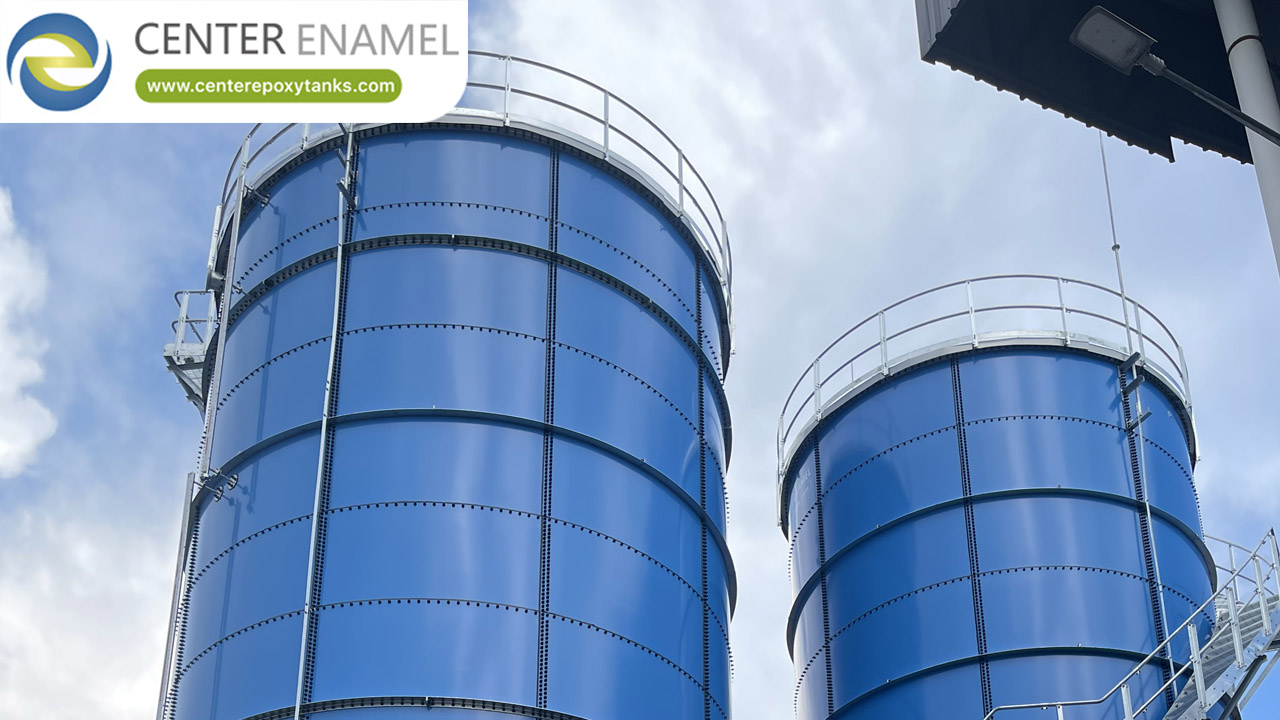
Epoxy Coated Water Storage Tanks for Rural and Municipal Water Systems
Reliable, safe, and long-lasting water storage is the backbone of any sustainable community. Whether supplying clean drinking water to dense urban populations through municipal water systems or ensuring consistent distribution across remote rural water districts, civil engineers face strict challenges. Infrastructure must withstand aggressive local water chemistry, comply with rigorous environmental health codes, and maintain structural integrity against seismic and wind loads over a multi-decade asset lifecycle.
Among modern containment technologies, epoxy coated water storage tanks—specifically factory-coated bolted steel tanks engineered to AWWA D103 standards—have emerged as the definitive industry choice. Combining the high tensile strength of carbon steel with advanced fusion-bonded epoxy (FBE) coatings, these reservoirs deliver superior corrosion resistance, rapid installation, and absolute compliance with potable water safety regulations.
The Engineering Foundation: AWWA D103 and Fusion-Bonded Epoxy
The performance of an industrial water storage tank depends entirely on the synergy between its structural design code and its protective lining:
AWWA D103 Structural Compliance: Governed by the American Water Works Association, the AWWA D103 standard ensures that every steel panel, high-tensile bolt, and specialized sealing gasket is mathematically engineered to withstand maximum hydrostatic pressures, seismic ground accelerations, and peak wind gusts.
Factory-Applied Fusion-Bonded Epoxy (FBE): Unlike field-painted tanks that are vulnerable to ambient weather variations, humidity, and poor surface preparation during construction, AWWA D103 epoxy tanks are manufactured in controlled factory environments. Steel panels are precision grit-blasted to a clean "white metal" finish, electrostatically coated with high-build epoxy powder, and thermally cured at high temperatures. This creates a dense, impact-resistant, and chemically inert barrier against rust and corrosion.
Potable Water Safety (NSF/ANSI 61): For municipal drinking water applications, interior epoxy linings are certified under NSF/ANSI 61 standards, guaranteeing that no harmful volatile compounds leach into the water supply and that the surfaces do not harbor bacterial growth.
Technical Performance Matrix: Water Storage Technologies
Technical Parameter | Factory-Coated Epoxy Bolted Steel Tanks (AWWA D103) | Cast-in-Place Concrete Reservoirs | Traditional Field-Welded Steel Tanks |
Coating Application & Integrity | Factory-baked fusion-bonded epoxy; 100% high-voltage holiday tested | Porous concrete surfaces; requires periodic waterproof membranes | Field-applied liquid epoxy; highly vulnerable to blisters and early coating failure |
Installation Velocity | Rapid modular erection (2 to 4 weeks); zero curing delays | Extremely slow (3 to 6 months of formwork, pouring, and curing) | Moderate to slow; requires extensive field welding and NDE testing |
Sanitation & Water Purity | Non-porous NSF/ANSI 61 certified surface; prevents microbial buildup | Prone to micro-cracking, carbonation, and water seepage over time | Requires routine maintenance to prevent inner wall rust scaling |
Adaptability & Expansion | Modular design allows easy capacity expansion or relocation | Permanent, rigid structure; expansion is virtually impossible | Fixed footprint; adding volume requires complex secondary construction |
Municipal vs. Rural Applications: Tailored Infrastructure Resilience
Municipal Water Systems
In municipal distribution networks, epoxy-coated tanks serve as primary clearwells, elevated storage towers, and back-up fire protection reserves (NFPA 22 compliant). Cities benefit from their modular scalability, rapid deployment speed—which avoids prolonged neighborhood construction disruption—and low lifecycle maintenance overhead.
Rural Water Districts
For rural communities, ranches, and remote agricultural cooperatives, logistics and maintenance accessibility are major hurdles. Because bolted epoxy tanks ship in compact, nested packages, they can be transported efficiently to remote sites without heavy oversized freight escorts. Their weld-free erection process eliminates the need for specialized welding crews or continuous grid power on-site, bringing heavy-duty municipal-grade water security directly to isolated areas.
Frequently Asked Questions (FAQ)
Q: What makes fusion-bonded epoxy superior to field-applied paint on water storage tanks?
A: Fusion-bonded epoxy is electrostatically applied and thermally cured in a controlled factory setting onto grit-blasted steel panels. This ensures uniform thickness, maximum adhesion, and zero sensitivity to ambient weather conditions during application, preventing premature blistering and rust formation common in field-painted tanks.
Q: Are epoxy-coated bolted steel tanks certified for drinking water?
A: Yes. Interior epoxy coatings used in municipal and rural water systems comply strictly with NSF/ANSI 61 standards, ensuring they are completely safe for human consumption and free of toxic chemical leachates.
Q: How long do AWWA D103 epoxy coated water storage tanks last?
A: When properly maintained with routine inspections and minor anode replacements, these tanks are engineered for a service life exceeding 30 to 50 years.
Q: Can an existing bolted epoxy water tank be expanded if municipal demand increases?
A: Yes. One of the primary economic advantages of AWWA D103 bolted steel tanks is their modular design. Additional ring panels can be bolted onto the structure to increase its storage height and capacity as community water demands grow.


