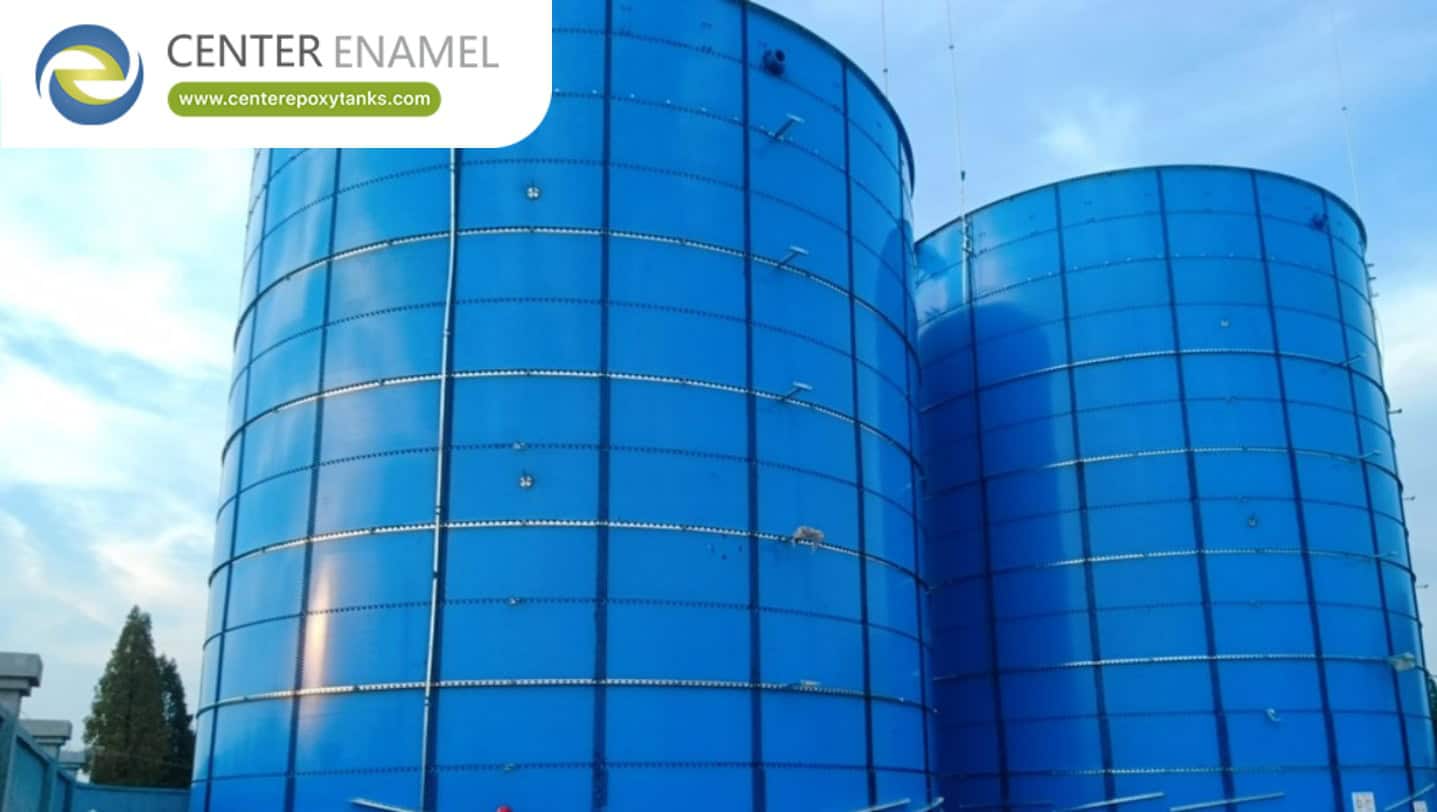
Epoxy Coated Tanks for Industrial Wastewater Treatment
Industrial manufacturing facilities—including chemical processing plants, food and beverage factories, textile mills, paper plants, and pharmaceutical facilities—generate complex, highly variable wastewater streams. These industrial effluents frequently contain aggressive acids, alkalis, heavy metals, suspended solids, and volatile organic compounds. Storing and treating such harsh liquids presents a continuous engineering challenge: traditional unlined carbon steel tanks suffer rapid pitting and wall thinning, while concrete basins are prone to structural cracking and acid attack.
To ensure long-term structural reliability and environmental compliance, modern industrial facilities specify epoxy coated tanks for industrial wastewater treatment. Utilizing advanced factory-applied fusion-bonded epoxy (FBE) over precision-engineered bolted steel panels, these containment systems deliver exceptional chemical inertness, rapid deployment, and multi-decade operational durability.
The Engineering Mechanics of Fusion-Bonded Epoxy (FBE) in Wastewater Service
Industrial wastewater environments subject storage vessels to both chemical exposure and mechanical abrasion. Standard field-applied liquid paints often chip, blister, or wear thin under continuous immersion. High-performance industrial tanks overcome this by utilizing factory-applied Fusion-Bonded Epoxy:
Electrostatic Application and Thermal Fusing: High-strength steel panels are abrasive grit-blasted to achieve an optimal surface anchor profile. Thermosetting epoxy powder is electrostatically applied and cured in high-temperature ovens, thermally cross-linking the resin directly to the steel substrate.
Resistance to Biogenic Corrosion (H2S): In anaerobic treatment zones, equalization basins, and sludge holding tanks, sulfate-reducing bacteria generate hydrogen sulfide (H2S) gas, which oxidizes into highly corrosive sulfuric acid (H2SO4). The dense FBE barrier prevents acid penetration, protecting the underlying structural steel.
Smooth, Non-Porous Surface Integrity: The smooth interior lining prevents sludge accumulation, biofilm buildup, and scaling, making tank cleaning and maintenance highly efficient during scheduled plant maintenance.
Technical Performance Matrix: Industrial Wastewater Storage Solutions
Technical Parameter | Fusion-Bonded Epoxy Bolted Steel Tanks | Unlined Cast-in-Place Concrete Basins | Field-Welded Carbon Steel Tanks |
Chemical & Corrosion Resistance | Superior; inert FBE barrier resists wide pH swings, organic acids, and H2S gas | Moderate; highly vulnerable to concrete carbonation, acid erosion, and cracking | Low; prone to rapid internal vapor-space pitting and weld seam oxidation |
Construction Velocity | Rapid modular assembly; erected in days or weeks with minimal heavy machinery | Extremely slow; requires intensive civil formwork, rebar, and multi-week curing | Slow; demands extensive plate rolling, field welding, and X-ray testing |
Environmental Protection | 100% leak-proof hermetic sealing with engineered gaskets; prevents soil contamination | Risk of micro-cracking and groundwater seepage over extended operation | Risk of pinhole leaks along field weld lines over time |
Global Standards Compliance | Manufactured strictly to ISO 28765, AWWA D103, and ISO 9001 | Local civil batch-pour and ACI structural codes | API 650 or AWWA D100 frameworks |
Core Wastewater Treatment Applications
1. Equalization and Neutralization Basins
Industrial raw effluent fluctuates significantly in volume, temperature, and chemical concentration throughout daily production cycles. Epoxy-coated tanks provide robust containment during chemical neutralization processes, withstanding sudden pH shifts without coating degradation.
2. Biological Treatment and Aeration Tanks
Whether utilized in aerobic activated sludge processes or anaerobic digestion reactors, epoxy-coated bolted tanks provide an impermeable, gas-tight environment that supports biological treatment processes while resisting severe internal biogenic gas exposure.
Frequently Asked Questions (FAQ)
Q: Why choose epoxy coated bolted tanks over concrete for industrial wastewater treatment?
A: Epoxy-coated bolted steel tanks offer superior chemical resistance against acidic effluents and corrosive gases, faster modular installation times, guaranteed leak-proof integrity, and the ability to expand capacity later—advantages that traditional concrete basins lack.
Q: How do epoxy coated tanks handle hydrogen sulfide (H2S) gas in wastewater?
A: Hydrogen sulfide gas oxidizes into sulfuric acid in wastewater headspaces, which rapidly degrades concrete and bare steel. Fusion-bonded epoxy creates a dense, non-porous chemical barrier that completely shields the steel substrate from acid attack.
Q: Can epoxy coated wastewater tanks be expanded if factory effluent volume increases?
A: Yes. Because these tanks are constructed from modular bolted steel panels, facilities can easily add additional steel rings or panels to increase overall storage volume as industrial wastewater volume grows.
Q: What is the expected service life of an epoxy coated industrial wastewater tank?
A: When engineered, manufactured, and installed in accordance with international standards (such as ISO 28765 and AWWA D103), high-quality epoxy-coated bolted steel tanks deliver a reliable operational lifespan exceeding 30 years with minimal routine maintenance.


