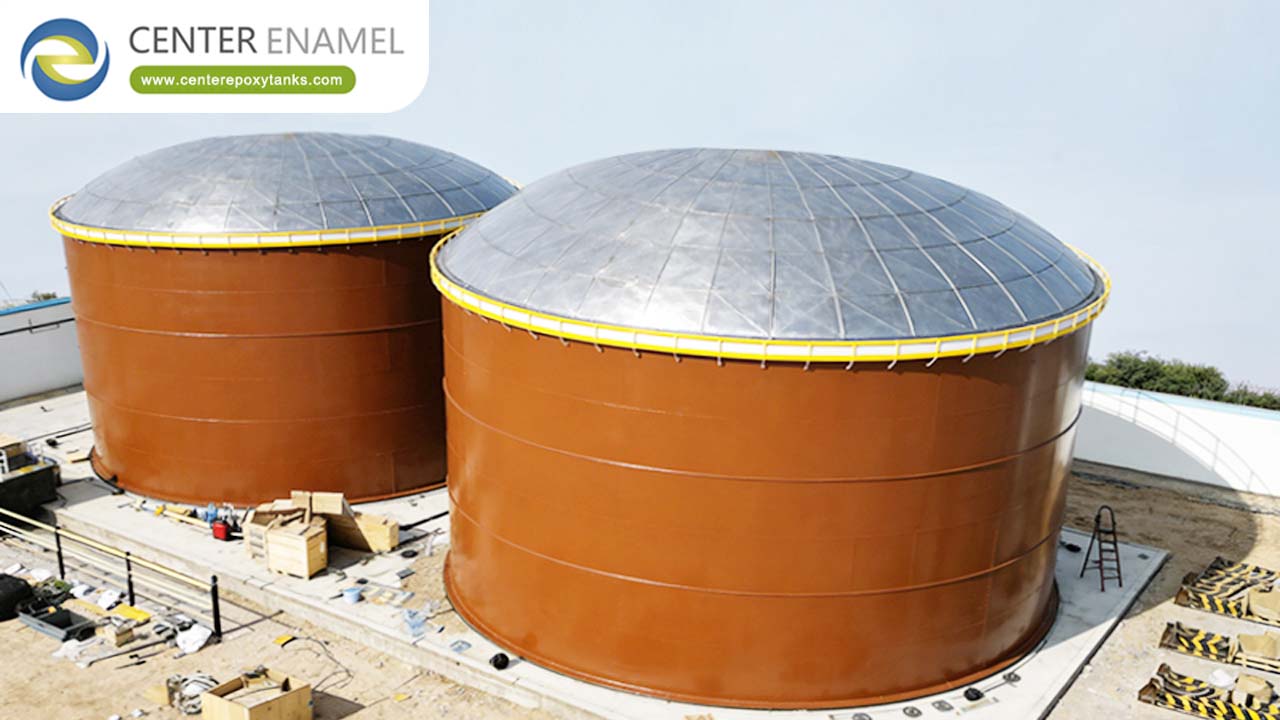
Epoxy Coated Tanks for Food and Beverage Processing: Hygiene & Engineering Standards
In the food and beverage (F&B) industry, the containment vessel is not just a container; it is an extension of the processing line. Whether storing process water, liquid ingredients, or intermediate product stages, the storage solution must maintain total hygiene, prevent cross-contamination, and survive rigorous Clean-in-Place (CIP) protocols. Factory-applied epoxy coated bolted steel tanks provide a high-performance, cost-effective alternative to expensive stainless steel, delivering a non-porous, chemically inert barrier that meets strict FDA and NSF/ANSI 61 requirements for food contact.
1. Regulatory Compliance and Food Safety
The F&B sector is governed by stringent health regulations. Any storage infrastructure must be certified to prevent the leaching of substances into the food supply.
● NSF/ANSI 61 Certification: This is the gold standard for drinking water and food-contact equipment. Epoxy coatings designed for F&B must be certified to prove they do not support microbial growth and do not leach Volatile Organic Compounds (VOCs).
● FDA Compliance: The internal lining materials must be compliant with FDA Title 21 CFR (Code of Federal Regulations), ensuring safety for direct contact with wet, dry, or acidic food products.
● Inertness: A critical performance metric is chemical inertness. Factory-cured epoxy does not react with organic acids, flavor profiles, or pH-varying ingredients (like fruit juices or dairy components), ensuring the product's taste and nutritional integrity remain unchanged.
2. Engineering Advantages: The CIP Advantage
Food processing plants rely heavily on Clean-in-Place (CIP) systems to maintain sanitation without dismantling the equipment. The tank interior must be able to withstand these cycles repeatedly.
The Surface Barrier
Factory-applied epoxy coatings are cured in high-temperature ovens (180°C–220°C). This creates a thermoset cross-linked polymer matrix that is significantly harder and more durable than air-dried coatings.
● Non-Porous Finish: Unlike concrete, which has microscopic pores that can trap bacteria or biofilm, the epoxy surface is glass-smooth.
● Resistance to CIP Cycles: The lining is engineered to resist the high-temperature caustics, acids, and sanitizing agents used in daily CIP cycles, preventing coating degradation or substrate exposure.
3. Technical Comparison: F&B Storage Solutions
When selecting storage for a food processing line, engineers must weigh the investment of stainless steel against the high-performance capabilities of epoxy coated steel.
Performance Metric | Epoxy Coated Bolted Steel | Stainless Steel (304/316L) | Cast-in-Place Concrete |
Hygiene Standard | High (NSF/FDA Compliant) | Highest (Industry standard) | Low (High risk of biofilm) |
Cleaning Suitability | Excellent (CIP compatible) | Excellent (CIP compatible) | Poor (Porous surface) |
Chemical Resistance | Excellent (Inert barrier) | Excellent (Corrosion-resistant) | Moderate (Requires special liners) |
Installation Speed | Rapid (Modular/Bolted) | Moderate (Welding required) | Very Slow (Pouring/Curing) |
Capital Cost | Competitive | Very High | High (Due to lining reqs) |
Expansion Capability | Yes (Scalable panels) | Limited | No |
4. Key Engineering Considerations for F&B Infrastructure
● Edge Protection: In food processing, "hidden" areas are contamination risks. Trusted manufacturers use factory-applied coatings that wrap around the edges of the steel plates, ensuring that even at the bolt-line seams, no raw steel is exposed to the food product.
● Gasket Hygiene: The gaskets used to seal bolted panels are a critical failure point. In F&B applications, only food-grade, non-absorbent EPDM or Viton gaskets should be used to prevent "wicking" of organic material into the seam.
● Thermal Regulation: Because food ingredients are often temperature-sensitive, bolted tanks can be easily fitted with external insulation panels or internal heat exchange coils, integrated during the factory design phase to maintain precise product temperature.
5. Frequently Asked Questions (FAQ)
Q: Does the epoxy lining affect the taste of sensitive products like juices or milk?
A: No. High-quality food-grade epoxy coatings are taste-neutral and odorless. They are designed to be completely inert, meaning they neither absorb flavors from the stored liquid nor impart any foreign taste to the product.
Q: Can these tanks handle the caustic chemicals used in cleaning?
A: Yes. The thermal cross-linking process creates a dense polymer matrix that is resistant to typical CIP concentrations of sodium hydroxide (caustic soda) and nitric or phosphoric acid cleaners.
Q: How do you handle cleaning around the bolted seams?
A: The design uses a "low-profile" bolting system and food-grade sealants that create a smooth transition between panels. When combined with correct CIP spray ball placement, the internal flow dynamics are designed to ensure complete coverage and drainage, leaving no dead zones.
Factory-applied epoxy coated bolted tanks provide a validated, cost-effective, and highly hygienic containment solution for food and beverage processing. By adhering to NSF/ANSI 61 and FDA standards, and utilizing modular engineering, these systems allow food processing plants to scale their operations while maintaining the highest levels of safety and quality control.
Are you currently specifying storage for a new food processing line, and would you like to review the technical data sheets (TDS) regarding specific CIP chemical compatibility or NSF certification documents for your facility audit?


