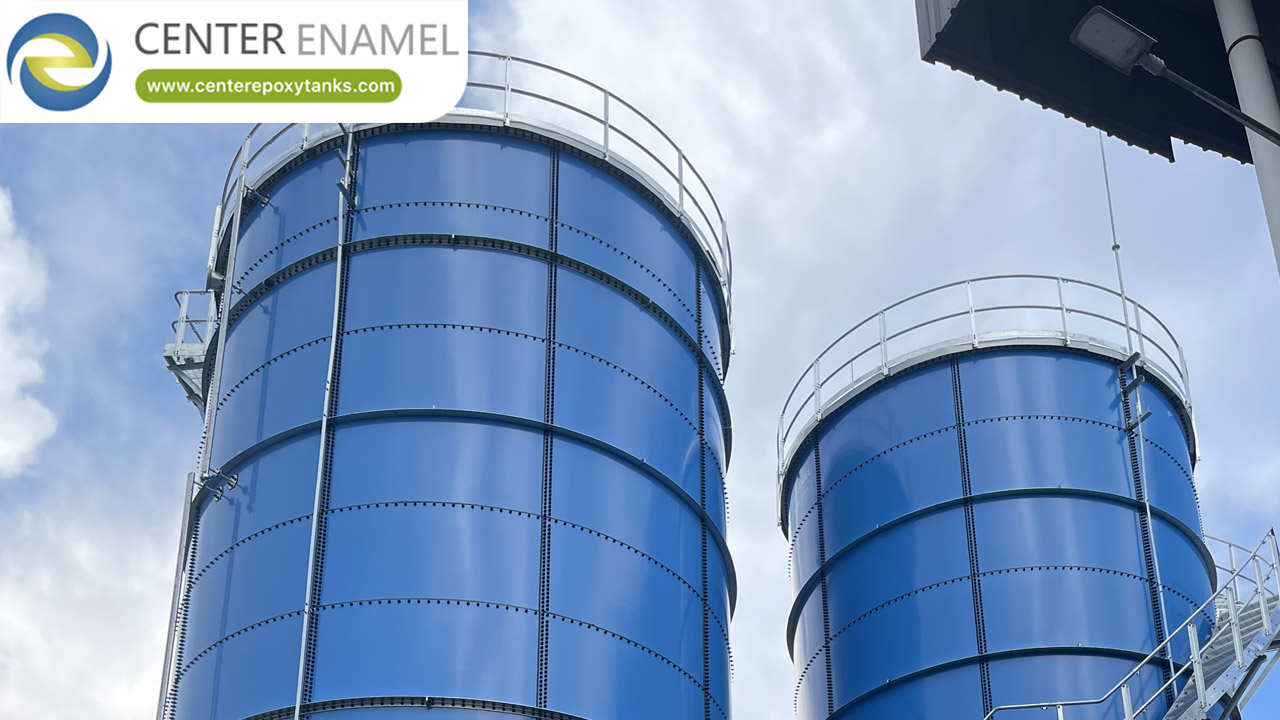
Epoxy Coated Tanks for Farm Wastewater Treatment: Engineering Corrosion Defense and Effluent Resilience
Modern commercial agriculture, large-scale livestock operations, dairy facilities, and food-processing farms generate massive volumes of complex wastewater. Encompassing animal slurry, manure washdown water, silage leachate, milking parlor runoff, and occasional pesticide or fertilizer residues, agricultural effluent is intensely corrosive. As organic solids break down, they produce aggressive volatile fatty acids (VFAs) and hydrogen sulfide (H2S) that rapidly degrade unprotected metal and deteriorate poorly maintained concrete structures.
To prevent environmental leakage, comply with strict agricultural discharge regulations, and ensure long-term operational reliability, modern farms increasingly standardize on epoxy coated tanks—specifically those engineered with advanced Fusion Bonded Epoxy (FBE) technology over high-tensile bolted steel structures.
Technical Mechanics and Manufacturing Excellence in Agricultural Containment
The exceptional performance of an epoxy-coated agricultural tank stems from a strict, factory-controlled manufacturing process that separates professional-grade reservoirs from field-painted alternatives:
Rigorous Abrasive Grit Blasting: Steel panels undergo automated grit-blasting (meeting standards such as SSPC-SP 10 / Sa 2.5) to achieve a clean micro-anchor profile that maximizes mechanical bonding between the steel substrate and the epoxy coating.
Electrostatic Powder Deposition: High-performance epoxy resin powder is electrostatically charged and evenly sprayed across all plate surfaces, ensuring uniform film thickness across curved edges, bolt-hole perimeters, and plate seams.
Thermoset Cross-Linking Ovens: Coated panels are processed in high-temperature industrial ovens (typically near 200°C), triggering a chemical cross-linking reaction that melts and permanently fuses the epoxy to the steel, creating a tough, non-porous protective barrier.
Stringent Quality Assurance Testing: Before leaving the factory, panels undergo rigorous dry film thickness verification and high-voltage holiday testing (e.g., 1100V or 1500V tests) to detect and eliminate any microscopic pinholes or coating discontinuities.
Critical Applications Across Farm Wastewater Treatment Systems
Epoxy-coated bolted steel tanks serve vital roles across multi-stage agricultural wastewater treatment workflows:
Equalization and Surge Basins: Farm discharge rates fluctuate drastically based on daily cleaning cycles, weather events, and seasonal production. Large-capacity epoxy tanks balance these hydraulic surges, stabilizing flow rates for downstream biological treatment.
Anaerobic Pre-Treatment and Digestion: Serving as sealed reactors, these tanks break down high-chemical-oxygen-demand (COD) organic loads while capturing biogas and protecting interior walls from aggressive manure acids.
Sludge Holding and Aeration Reservoirs: Holding tanks designed to manage activated sludge, nutrient dosing, and treated agricultural runoff prior to safe land application or water reclamation.
Data Table: Comprehensive Comparison of Farm Wastewater Storage Options
Technical Parameter | Bolted Fusion-Bonded Epoxy Tanks | Cast-in-Place Concrete Basins | Uncoated Welded Carbon Steel Tanks |
Chemical & Organic Acid Resistance | Superior; inert thermoset FBE matrix resists volatile fatty acids, manure, and salts | Moderate; vulnerable to concrete carbonation, acid spalling, and effluent seepage | Poor; unprotected carbon steel corrodes rapidly when exposed to moisture and agricultural waste |
Installation Speed & Rigging | Rapid modular bolted panel assembly completed in weeks with minimal heavy machinery | Slow civil construction requiring weeks of framing, pouring, and curing | Slow field erection involving complex heavy welding and manual coatings |
Volumetric Scalability & Relocation | High; modular bolted design allows easy capacity expansion or future relocation | Permanent monolithic structure; impossible to scale without total reconstruction | Rigid structure; expanding capacity requires complex field cutting and welding |
Lifecycle Maintenance Overhead | Low maintenance asset with multi-decade coating durability and easy panel replacement | High ongoing maintenance overhead if concrete cracking or joint leaks develop | High maintenance cost due to recurring internal sandblasting and repainting cycles |
Frequently Asked Questions (FAQ)
Q: Why are epoxy coated tanks preferred for farm wastewater treatment?
A: They combine the high structural strength of steel with a thermally fused, chemically inert epoxy barrier that resists corrosive agricultural effluents, manure acids, and cleaning chemicals without degrading or leaking.
Q: How do fusion bonded epoxy (FBE) coatings protect against organic acids found in farm waste?
A: The factory thermal-curing process creates a dense, non-porous cross-linked polymer matrix that completely seals the steel substrate away from moisture and volatile fatty acids, preventing oxidation and pitting.
Q: Can bolted fusion-bonded epoxy tanks be expanded if a farm's livestock or wastewater volume increases?
A: Yes. Because these tanks feature a modular bolted panel design, they can be unbolted and expanded by adding new ring panels to increase storage volume as agricultural operations grow.
Q: What international standards govern the manufacture of agricultural wastewater storage tanks?
A: Quality tanks are engineered and fabricated in strict accordance with global benchmarks, including AWWA D103 for bolted steel tanks, ISO 28765, and rigorous quality assurance protocols such as high-voltage holiday testing.


