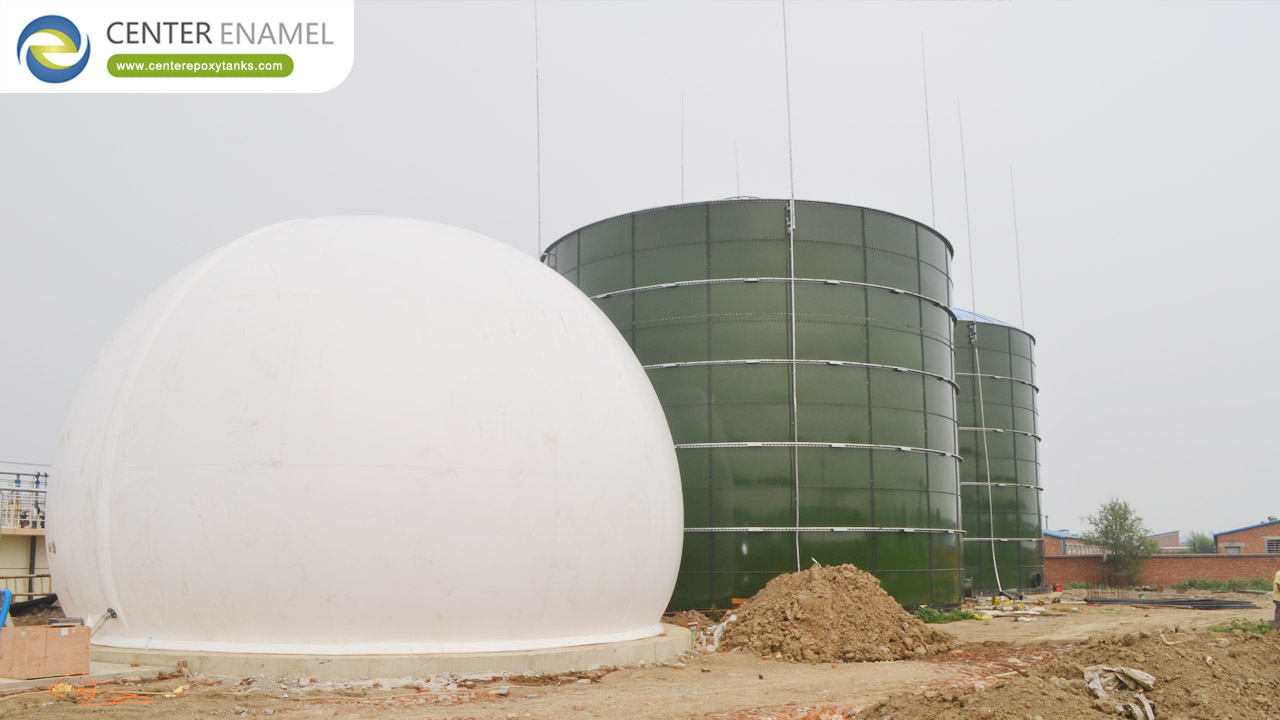
Epoxy Coated Steel Tanks: The Optimal Solution for Agricultural Biogas
For agricultural operations managing high volumes of manure, slurry, and crop residue, the anaerobic digestion (AD) process is the most effective path to waste-to-energy conversion. However, the fermentation environment is notoriously aggressive. Epoxy coated steel tanks have emerged as a dominant containment solution, offering a perfect equilibrium between structural strength, chemical resilience, and cost-effective modularity. They provide the sealed, anaerobic environment necessary for maximizing methane yields while mitigating the long-term maintenance costs associated with concrete or bare-steel digesters.
1. The Challenge of Agricultural Waste Digestion
Biogas digesters treat agricultural waste that is chemically complex. The internal environment of a digester poses three significant challenges to containment infrastructure:
● Hydrogen Sulfide (H₂S) Corrosion: Manure and slurry are rich in sulfur compounds. During fermentation, these convert to H₂S, which is highly corrosive to standard steel, leading to structural fatigue if not properly shielded.
● Biological Acids: The acidogenesis phase of digestion naturally lowers the pH of the mixture, creating acidic conditions that rapidly attack concrete joints and steel surfaces.
● Dynamic Slurry Loads: Agricultural waste has a high dry matter content, requiring powerful mixing systems. The tank must withstand both the static pressure of the liquid and the dynamic mechanical forces exerted by high-torque agitators.
2. Advantages of Epoxy Coated Steel Technology
Epoxy coated steel tanks utilize high-tensile steel panels that are factory-coated with advanced thermosetting resins. This manufacturing process creates a containment system built specifically for the needs of the AD sector.
A. Factory-Controlled Chemical Barrier
Unlike on-site coating applications, factory-applied epoxy coatings are cured under precise thermal conditions. This results in a dense, non-porous finish that is impervious to the H₂S gases and organic acids generated by decomposing manure. The coating prevents "pitting corrosion," which is the leading cause of premature failure in standard biogas digesters.
B. Modular Installation for Agricultural Sites
Agricultural facilities often require rapid deployment to align with seasonal waste production cycles.
● Minimized Footprint: Epoxy coated bolted tanks arrive in flat-packed panels, reducing transport costs and allowing for installation in remote or space-constrained farm locations.
● Expansion Readiness: If a farm increases its herd size or expands its waste-to-energy operation, these tanks can be expanded by adding additional ring panels, providing a scalable path for growth.
C. Enhanced Mixing Efficiency
Epoxy coatings are inherently smooth. In a biogas digester, this smoothness reduces the friction coefficient between the slurry and the tank walls, preventing the buildup of "dead zones" and maximizing the efficiency of the mixing system, which directly translates to a higher, more stable methane yield.
3. Comparison Matrix: AD Plant Containment
Feature | Epoxy Coated Steel (Bolted) | Poured Concrete | Welded Carbon Steel |
Chemical Resistance | High (Inert resin barrier) | Moderate (Vulnerable to acid) | Low (Requires recoating) |
Construction Speed | Fast (Weeks) | Slow (Months) | Moderate |
Leak-Proof Integrity | High (Tight gaskets & sealant) | Moderate (Risk of cracking) | High (If welded perfectly) |
Operational Maintenance | Low | High (Crack/Joint sealing) | High (Routine recoating) |
Lifecycle Cost | Economical | Moderate/High | High |
4. Engineering Critical Components for AD Success
To ensure your biogas plant remains productive, the tank must be equipped with essential appurtenances that integrate seamlessly with the epoxy-coated panels:
● Insulation Systems: To maintain mesophilic (35°C) or thermophilic (55°C) temperatures, the exterior of the tank should be protected by high-R-value polyurethane or mineral wool insulation, finished with weather-resistant cladding.
● Integrated Mixers: Submersible or side-entry agitators are bolted through pre-drilled panel holes, ensuring a tight seal that preserves the tank's anaerobic integrity.
● Gas-Tight Roofs: Most modern epoxy digesters are topped with a specialized Double Membrane Gas Holder, which acts as both the biogas storage reservoir and the gas-tight roof cover.
5. Frequently Asked Questions (FAQ)
Q: Are epoxy coated tanks suitable for both liquid slurry and solid agricultural waste?
A: Yes. Because of their modular design and customizable structural reinforcement, these tanks are effective for everything from thin liquid manure (slurry) to heavy solid food waste and energy crop digesters.
Q: How do you handle the potential for H₂S corrosion at the waterline?
A: The waterline is the most corrosive area of an AD tank due to the concentration of H₂S and condensation. Epoxy-coated steel is superior here because the coating is uniform and factory-sealed, preventing the corrosion typical at this "splash zone" in concrete tanks.
Q: Can these tanks be used if the farm environment is highly corrosive?
A: Yes. For coastal or highly corrosive agricultural environments, epoxy coated panels are often hot-dip galvanized prior to the epoxy application, providing a "belt-and-suspenders" approach to longevity.
Optimizing Your Biogas Investment
The performance of an agricultural biogas project relies heavily on the integrity of the digester tank. By choosing epoxy coated bolted steel technology, farm operators gain a durable, high-yield, and low-maintenance asset that ensures their waste-to-energy production remains profitable and reliable for the long term.
Are you currently in the planning stages of an anaerobic digestion expansion, or are you looking to retrofit an existing slurry storage system to increase your biogas output?


