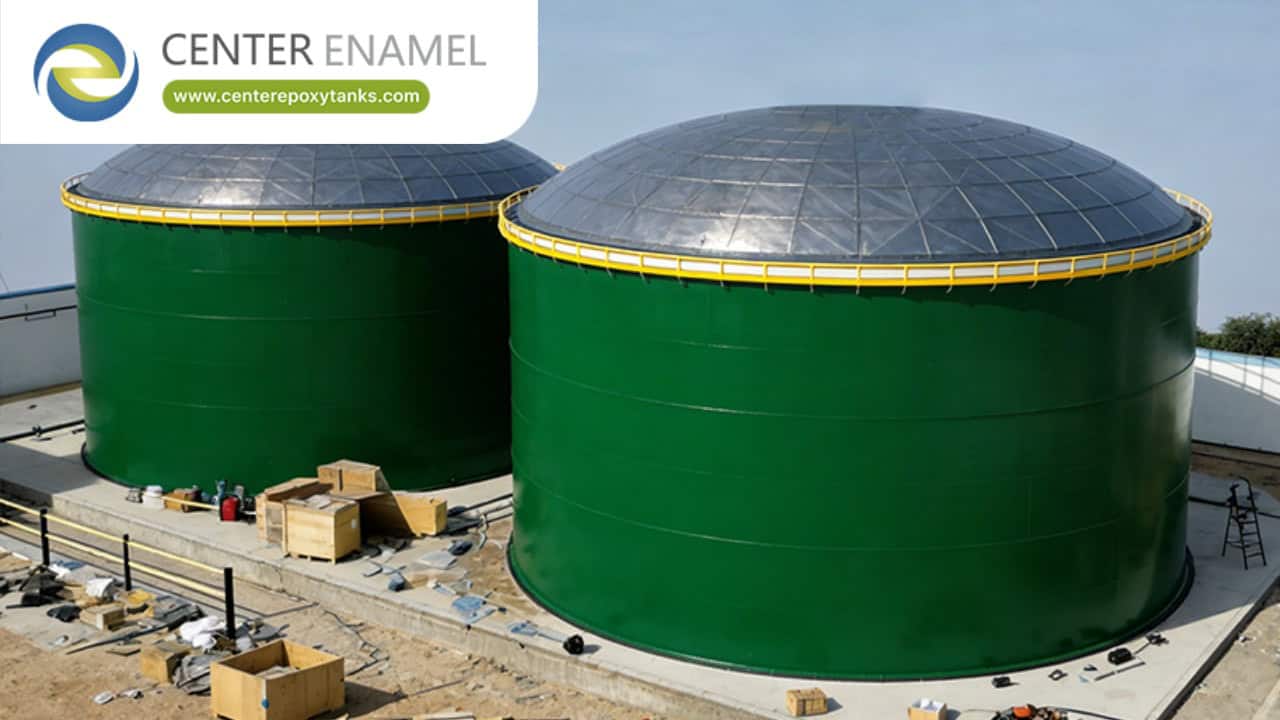
Aluminum Dome Roofs for Petroleum Storage Tanks: Engineering & Procurement Guide
In the modern petroleum and petrochemical sector, roof integrity is the primary defense against product contamination, vapor loss, and structural degradation. Aluminum Geodesic Dome Roofs (AGDRs) have replaced traditional carbon steel cone roofs as the industry benchmark for large-diameter storage. By combining the structural geometry of the triangle with the material advantages of high-strength aluminum alloys, these domes provide a maintenance-free, clear-span solution that strictly complies with API 650, Appendix G.
1. Engineering Principles: Why Geodesic?
The structural superiority of an aluminum dome is derived from the geodesic principle. By arranging lightweight triangular panels and struts, the structure achieves maximum rigidity with minimum mass.
API 650 Compliance
All petroleum-grade aluminum domes must be designed to API 650, Appendix G (Structurally-Supported Aluminum Dome Roofs). This standard ensures:
● Load Tolerance: The roof is engineered to withstand site-specific environmental loads, including snow accumulation, extreme wind speeds, and the weight of service personnel.
● Thermal Expansion: Unlike welded steel roofs, aluminum geodesic structures are designed to allow for independent thermal expansion, reducing stress on the tank shell during extreme diurnal temperature fluctuations.
● Sealing Integrity: Domes utilize specialized gasketed connections that are mechanically engaged to ensure a vapor-tight seal, essential for limiting volatile organic compound (VOC) emissions.
2. Comparative Analysis: Aluminum Dome vs. Steel Roofs
When evaluating the lifecycle cost and operational efficiency of storage assets, aluminum domes consistently outperform carbon steel alternatives.
Engineering Metric | Aluminum Geodesic Dome | Carbon Steel Cone Roof |
Corrosion Resistance | Excellent (Natural passivation) | Low (Requires coating/painting) |
Support Structure | Self-Supporting (No columns) | Internal Columns Required |
Weight | Low (Reduces foundation load) | High (Adds significant dead load) |
Installation | Fast (Bolted/No welding) | Slow (Field welding/testing) |
Emission Control | Superior (High-integrity seal) | Moderate (Needs frequent liner maintenance) |
3. Operational Advantages in Petroleum Storage
A. VOC Emission Reduction
Aluminum domes are frequently deployed to convert External Floating Roof (EFR) tanks into Internal Floating Roof (IFR) tanks. By shielding the floating roof from wind, rain, and snow, the dome eliminates "wind-induced" evaporative losses, significantly reducing VOC emissions and ensuring compliance with stringent air quality regulations.
B. Thermal Management
Aluminum possesses high solar reflectivity (85%–95%), which significantly reduces the internal bulk temperature of the product. This thermal barrier prevents the "breathing" of the tank—a process where diurnal heating/cooling forces product vapors out through vents—thereby preserving both product quality and inventory volume.
C. Maintenance-Free Lifecycle
Carbon steel roofs are subject to the "internal corrosion cycle" caused by stored sulfur compounds, moisture, and $H_2S$ gases. Aluminum is chemically inert to most petroleum vapors. It does not require internal painting, liners, or anodic protection, extending the maintenance interval to decades.
4. Procurement & Retrofitting Checklist
When sourcing an aluminum dome for a new project or an infrastructure upgrade, use the following technical vetting matrix:
1. Environmental Load Data: Ensure the manufacturer has your specific regional data for Wind Load (e.g., ASCE 7-22) and Snow Load (kPa/psf).
2. Material Certification: Verify the use of high-strength, marine-grade aluminum alloys (typically 6061-T6 or 6082-T6) with stainless steel or aluminum fasteners.
3. Internal Equipment Integration: Determine if the dome must support auxiliary equipment such as internal mixers, gauging systems, or fire suppression piping.
4. Retrofit Compatibility: Confirm the manufacturer’s experience in verifying the load-bearing capacity of the existing tank shell to ensure it can accommodate the dome’s reaction loads.
Frequently Asked Questions (FAQ)
Q: Are aluminum domes suitable for high-temperature storage?
A: Yes, provided they are designed for the specific temperature range. Aluminum maintains its structural properties well within the operating limits of typical petroleum storage. For extreme process temperatures, verify the design with the manufacturer to account for thermal expansion coefficients.
Q: How does the dome handle fire risk?
A: Aluminum domes offer high fire safety. Their high solar reflectivity keeps the structure cooler, and in the event of a tank fire, aluminum's thermal properties often prevent rapid local overheating compared to steel, which can lose structural integrity faster when protective coatings fail.
Q: Can I install an aluminum dome on a very large tank?
A: Yes. The geodesic structure is ideal for large spans (50m+ diameter) because it eliminates the need for internal support columns. This clear-span capability is the primary reason why large-diameter crude oil tanks are increasingly moving away from traditional internal-column steel designs.


