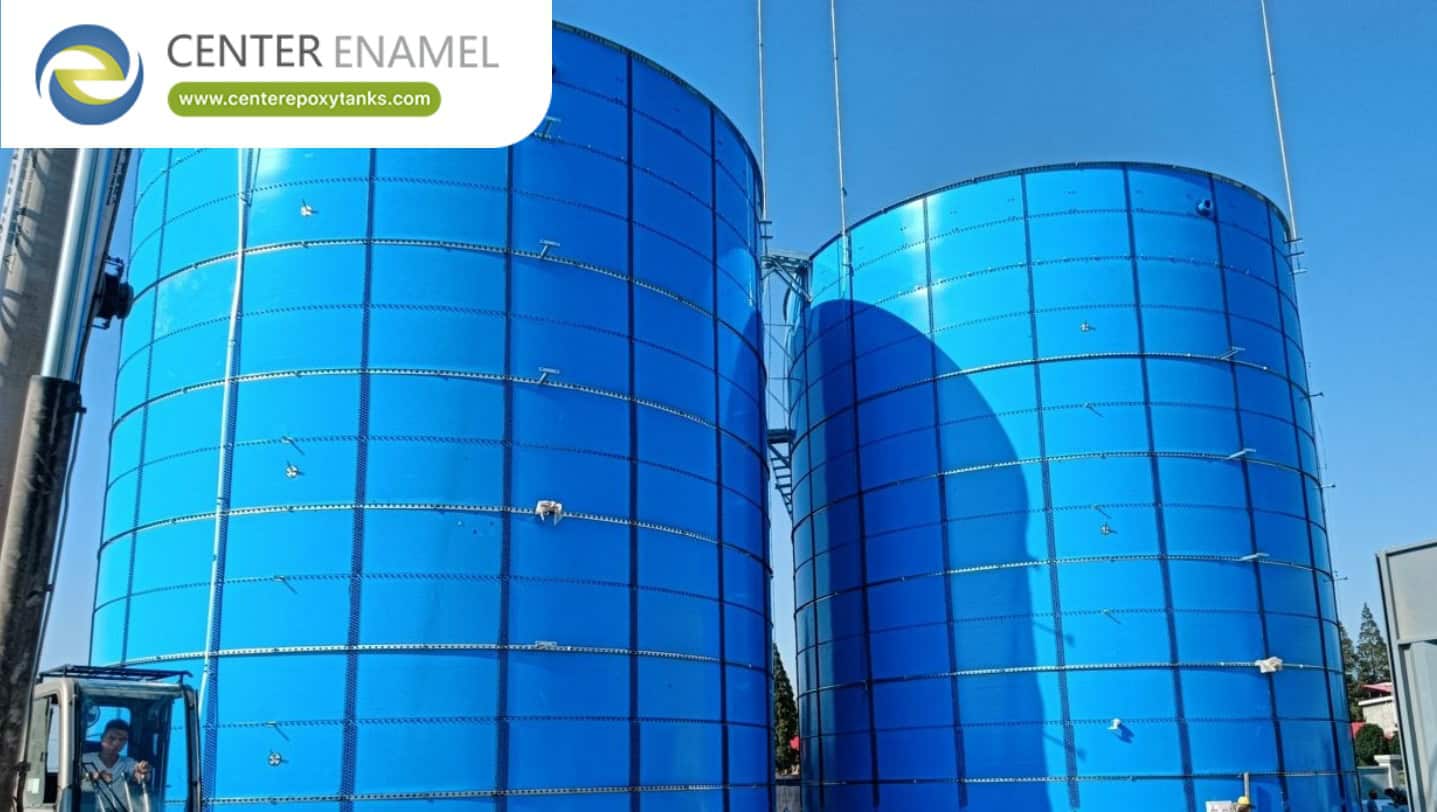
Epoxy Coated Steel Tanks for Fire Water Storage: Engineering & Compliance Guide
In fire protection infrastructure, the reliability of your water reserve is a non-negotiable safety requirement. Epoxy coated steel tanks have emerged as the preferred solution over traditional concrete or field-welded tanks due to their superior corrosion resistance, rapid installation, and lower total cost of ownership (TCO). Engineered to meet stringent NFPA 22 standards, these tanks provide a durable, low-maintenance, and seismic-resilient storage solution for industrial, commercial, and municipal fire suppression systems.
1. The Engineering Advantage: Fusion Bonded Epoxy (FBE)
Unlike standard industrial paint, professional-grade fire water tanks utilize Fusion Bonded Epoxy (FBE). This technology involves applying a thermoset powder coating to steel panels that is thermally cured at high temperatures, creating a molecular bond with the substrate.
● Corrosion Resistance: The FBE layer creates a chemically inert, non-porous barrier. This prevents oxidation and rust, ensuring the water remains free of sediment that could clog fire pumps or sprinkler nozzles.
● Seismic & Structural Integrity: Bolted steel panels provide the flexibility needed to withstand seismic events better than brittle concrete structures. They are designed to meet or exceed AWWA D103 and NFPA 22 design specifications.
● Lifecycle Longevity: Epoxy-coated systems typically offer a 20–30+ year service life with minimal maintenance, outperforming conventional painted steel which often requires costly, recurring exterior repainting.
2. Technical Comparison Matrix
When evaluating storage materials, facility managers must weigh installation speed against long-term operational costs.
Feature | Epoxy Coated Bolted Steel | Reinforced Concrete | Welded Steel (Painted) |
Construction Speed | Fast (Modular/Bolted) | Slow (Pour & Cure) | Moderate (Field-Welded) |
Corrosion Resistance | Excellent (Inert Coating) | Moderate (Requires Liner) | Low (Needs frequent painting) |
Maintenance | Low (Minimal) | High (Cracking/Sealing) | High (Coating repairs) |
Seismic Resilience | High (Flexibility) | Low (Brittle/Heavy) | Moderate |
Relocatability | Possible | No | No |
3. Compliance and NFPA 22 Standards
For fire protection, compliance with the National Fire Protection Association (NFPA) 22 is the benchmark for performance. Epoxy coated steel tanks are engineered to address the specific requirements of this standard:
● Structural Stability: Designed to withstand internal hydrostatic pressure, wind, snow, and seismic loads as defined in the local building code.
● Water Quality & Flow: The smooth epoxy surface maintains water clarity and flow rates, ensuring that in an emergency, your fire pumps have immediate access to the full, debris-free volume of the tank.
● Accessory Integration: These tanks are easily fitted with standard fire protection components: anti-vortex plates, fill/drain piping, level indicators, and overflow piping.
4. Why Facility Managers Choose Bolted Epoxy
Beyond the technical specs, the strategic value of epoxy-coated tanks centers on Predictable Project Delivery.
● Minimized On-site Disruption: Since the components are factory-coated and modular, they are assembled with hand tools. This eliminates the heavy equipment, large crews, and on-site welding hazards associated with other tank types.
● Reduced Total Cost of Ownership (TCO): While the initial capital expenditure may be comparable to other systems, the savings are realized through the elimination of recurring repainting cycles and the speed of project completion, which accelerates operational readiness.
5. Frequently Asked Questions (FAQ)
Q: Are epoxy coated tanks suitable for saltwater environments?
A: Yes. Because the epoxy coating is non-porous and highly chemically stable, these tanks are frequently used in coastal industrial sites where atmospheric salt spray would destroy standard painted steel tanks.
Q: Can I expand my tank capacity later?
A: One of the primary advantages of our bolted design is scalability. If your facility's fire water requirement increases, the tank can be expanded by adding new rings or panels, something that is virtually impossible with concrete or welded tanks.
Q: How does a bolted tank remain leak-free?
A: Modern bolted tanks use high-grade, food-safe or chemical-resistant gaskets and sealant systems at every joint. When installed by certified technicians, these systems provide a completely watertight seal that lasts for decades.
Engineering Certainty for Fire Safety
Selecting the right fire water storage system is a multi-decade commitment to your facility's safety. By choosing an engineered, epoxy-coated steel solution, you ensure that your fire protection system is ready the moment it is needed, without the maintenance burden of aging infrastructure.
Are you in the process of designing a new facility fire protection system, or are you currently planning the replacement of an aging fire water reservoir?


