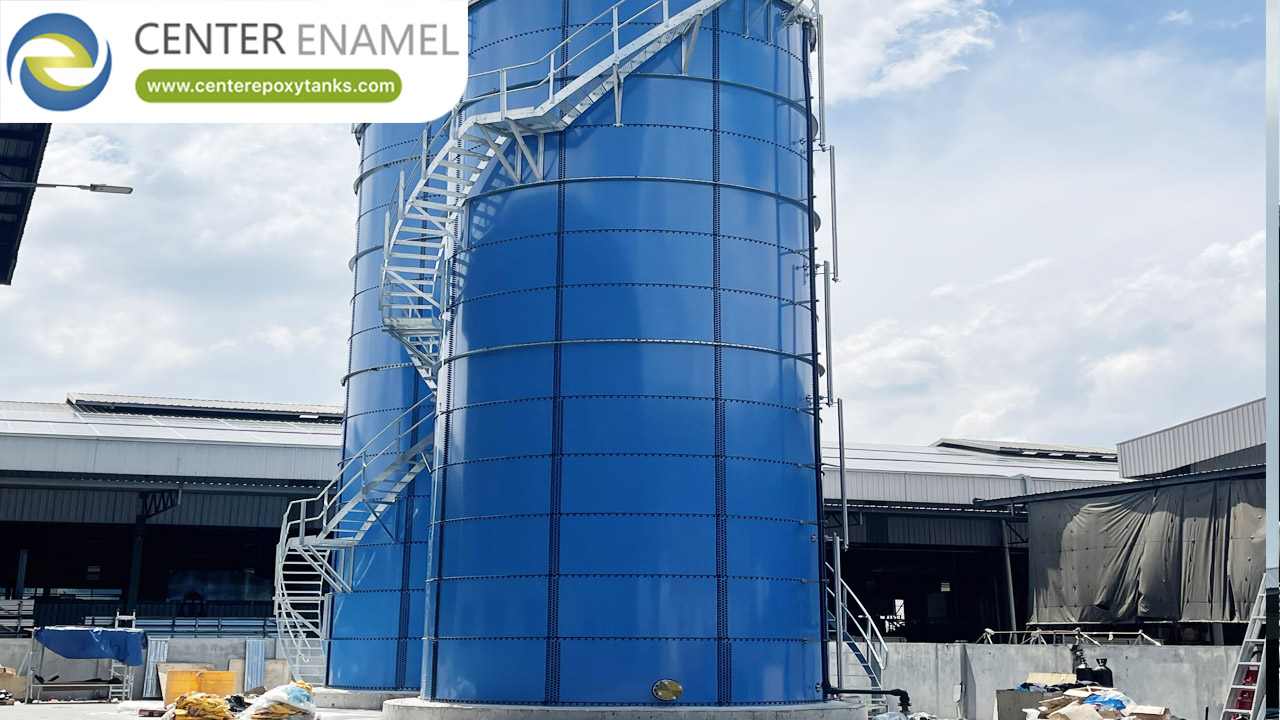
Epoxy Coated Steel Tanks for Agricultural Water Storage: Engineering Durability and Purity
In modern commercial agriculture, horticulture, and livestock ranching, managing reliable water resources is essential for sustaining crop yields, supporting livestock, and optimizing farm operations. Whether supplying large-scale irrigation systems or storing emergency fire water reserves, agricultural facilities require containment infrastructure that withstands harsh outdoor weathering, chemical fertilizers, and variable water chemistry.
Epoxy coated steel tanks—specifically those utilizing advanced Fusion Bonded Epoxy (FBE) technology—have become an industry-leading solution. By combining the structural high-tensile strength of bolted steel panels with the chemical resistance of a thermoset polymer coating, these tanks deliver a cost-effective, durable, and low-maintenance reservoir system tailored for demanding farm environments.
Technical Mechanics and Manufacturing Excellence
The performance of an epoxy-coated agricultural tank is defined by its rigorous factory-controlled coating process, which distinguishes it from conventional field-painted containers:
Substrate Preparation and Profile: High-tensile steel plates undergo precision grit-blasting (to conditions like SSPC-SP 10) to create a clean, uniform micro-anchor profile that ensures maximum mechanical bonding.
Electrostatic Powder Application: Specialized epoxy resin powder is electrostatically charged and evenly sprayed onto the steel substrate, ensuring complete and uniform coverage across all edges, corners, and bolt holes.
Thermoset Thermal Curing: Coated panels are baked in high-temperature ovens (typically around 200°C), triggering a chemical cross-linking reaction. This melts and fuses the epoxy to the steel, creating a tough, non-porous, chemically inert barrier.
Rigorous Quality Assurance: Panels undergo stringent testing—including non-destructive dry film thickness checks and high-voltage holiday testing (e.g., 1100V or 1500V tests)—to detect and eliminate any microscopic pinholes or coating discontinuities before shipment.
Data Table: Comprehensive Comparison of Agricultural Water Storage Options
Technical Parameter | Bolted Fusion-Bonded Epoxy Tanks | Cast-in-Place Concrete Reservoirs | Polyethylene (Poly) Tanks |
Corrosion Defense | High-grade thermoset FBE coating resists rust, moisture, and chemical exposure | Vulnerable to concrete carbonation, acid spalling, and groundwater seepage | Inert polymer, but susceptible to long-term ultraviolet (UV) embrittlement |
Installation Speed & Labor | Rapid modular bolting completed in days/weeks with minimal heavy machinery | Slow civil construction requiring weeks of framing, pouring, and curing | Fast placement, but massive single-piece units require complex logistics |
Volumetric Scalability | High; modular bolted design allows easy capacity expansion or relocation | Permanent monolithic structure; impossible to scale without total rebuilding | Restricted by single-mold manufacturing limits (typically smaller capacities) |
Water Quality & Purity | NSF/ANSI 61 certified inert lining prevents chemical leaching or odor | Can alter water pH or leach minerals if unlined or improperly cured | Food-grade polymer, but prone to algae growth if light transmission occurs |
Frequently Asked Questions (FAQ)
Q: What are epoxy coated steel tanks used for in agriculture?
A: They are widely utilized for storing agricultural irrigation water, rainwater harvesting reserves, livestock drinking water, fire protection water, and liquid fertilizer or effluent solutions.
Q: How does fusion-bonded epoxy (FBE) protect the steel tank from rust?
A: The FBE process thermally fuses a thermoset polymer resin to grit-blasted steel at high temperatures, creating a dense, continuous, and chemically inert barrier that completely seals the metal away from moisture and corrosive environmental elements.
Q: Are epoxy coated tanks safe for storing livestock drinking water?
A: Yes. High-quality agricultural epoxy tanks utilize linings that comply with drinking water standards such as NSF/ANSI/CAN 61, ensuring the coating is non-toxic and prevents harmful substances from leaching into the water.
Q: Can an epoxy-coated bolted steel tank be expanded later if a farm's water needs increase?
A: Yes. Because these tanks feature a modular bolted panel construction, they can be unbolted and expanded with additional ring panels to accommodate increased water storage volumes as your agricultural enterprise grows.


