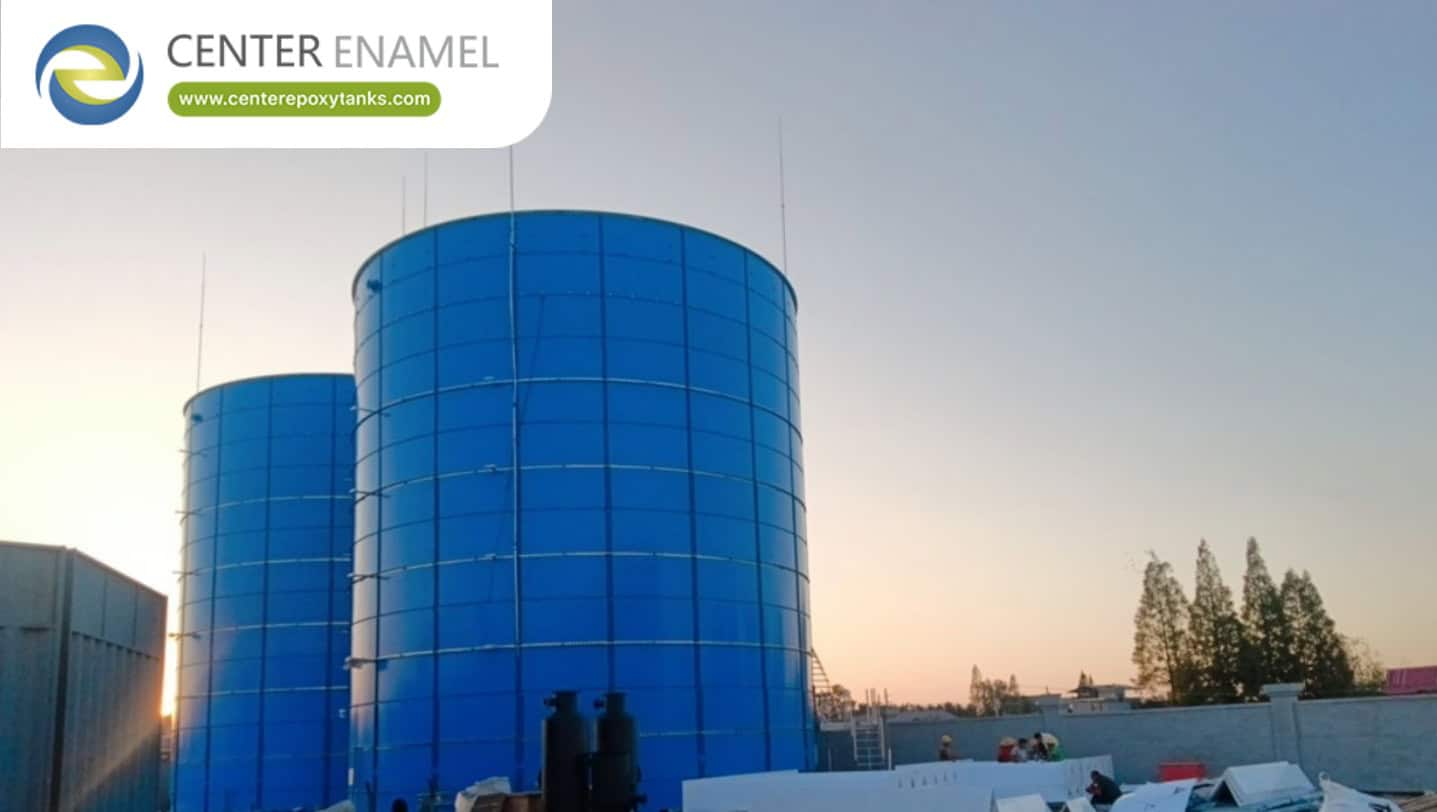
Epoxy Coated Bolted Tanks for Farm Water Storage
Modern agriculture depends heavily on a reliable, clean, and continuous water supply. Whether managing large-scale livestock watering systems, storing high-volume reserves for crop irrigation, or maintaining dedicated water supplies for rural fire protection, agricultural operations require robust liquid containment. Traditional storage options—such as aging concrete reservoirs, unlined carbon steel tanks, or light-duty polyethylene containers—frequently suffer from structural degradation, wall cracking, bacterial contamination, and high maintenance overhead.
To eliminate these vulnerabilities, epoxy coated bolted tanks have become the preferred standard for modern agricultural water storage. By combining the high tensile strength of bolted steel panels with advanced factory-applied fusion-bonded epoxy (FBE), these systems deliver superior corrosion resistance, pristine water quality, and an extended operational lifespan.
The Engineering Superiority of Fusion-Bonded Epoxy for Farm Water
Unlike field-applied paints that blister, peel, or leach chemicals under environmental exposure, professional-grade agricultural tanks utilize factory-controlled Fusion-Bonded Epoxy technology:
Thermal Cross-Linking Bond: Epoxy powder is electrostatically sprayed onto grit-blasted steel panels and thermally cured in high-temperature ovens. The resin melts and undergoes a permanent cross-linking reaction, fusing molecularly to the steel substrate.
Pristine Water Safety (NSF/ANSI 61): Certified epoxy formulations create an inert, non-porous interior barrier that prevents the leaching of volatile organic compounds (VOCs) or heavy metals, ensuring water remains safe for livestock consumption and crop irrigation.
Modular Bolted Flexibility: Precision-fabricated steel panels bolt together on-site using specialized sealing gaskets, bypassing the lengthy curing times and weather delays associated with concrete construction.
Technical Performance Matrix: Agricultural Water Storage Options
Technical Parameter | Fusion-Bonded Epoxy Bolted Steel Tanks | Unlined Cast-in-Place Concrete Basins | Polyethylene (Poly) Tanks | Field-Welded Carbon Steel Tanks |
Corrosion Resistance | Superior; inert FBE barrier resists moisture, minerals, and water treatment chemicals | Moderate; vulnerable to concrete carbonation, cracking, and rebar rust | High resistance to chemicals, but prone to UV degradation over time | Low; highly susceptible to internal and external oxidation |
Installation Velocity | Rapid modular assembly; erected in days using local labor | Extremely slow; intensive civil formwork and multi-week curing | Fast deployment, but limited in maximum volume capacity | Slow; demands extensive plate rolling, field welding, and X-ray testing |
Structural Scalability | High; modular panels allow easy capacity expansion as the farm grows | Rigid permanent structure; impossible to expand once poured | Fixed volume; requires adding multiple separate tanks | Rigid structure; difficult to modify post-construction |
Expected Lifespan | Exceeds 30 years with minimal routine upkeep | 20 to 30 years (subject to cracking and water seepage) | 10 to 15 years (susceptible to cracking under UV stress) | 15 to 25 years (requires continuous recoating cycles) |
Core Agricultural Applications
1. High-Volume Livestock Drinking Water
Dairy, swine, and poultry operations demand uninterrupted access to clean drinking water to maintain animal health and productivity. Epoxy-coated tanks prevent biofilm accumulation and mineral buildup, ensuring that water delivered to barns remains fresh and disease-free.
2. Seasonal Crop Irrigation and Fertigation
During peak growing seasons, farms require massive water reserves to support irrigation pivots. Epoxy-coated storage vessels safely hold large volumes of raw, treated, or blended agricultural water without risking structural thinning or interior wall corrosion.
Frequently Asked Questions (FAQ)
Q: Why choose epoxy coated bolted tanks over concrete for farm water storage?
A: Epoxy-coated bolted steel tanks offer faster installation times, guaranteed leak-proof integrity, superior crack resistance against ground shifts, and the unique ability to expand tank capacity later—advantages that traditional concrete basins lack.
Q: Are epoxy coated tanks safe for livestock drinking water?
A: Yes. High-performance agricultural tanks utilize NSF/ANSI 61 certified epoxy formulations that create an inert, non-toxic interior barrier, ensuring no harmful chemicals or odors leach into the water supply.
Q: Can farm water storage tanks be expanded if agricultural operations grow?
A: Yes. Because these tanks are constructed from modular bolted steel panels, farms can easily add additional steel rings or panels to increase overall storage volume as water demands rise.
Q: What is the expected service life of an epoxy coated farm water tank?
A: When manufactured and maintained according to international standards (such as AWWA D103 and ISO 28765), high-quality epoxy-coated bolted steel tanks boast a reliable service life exceeding 30 years.


