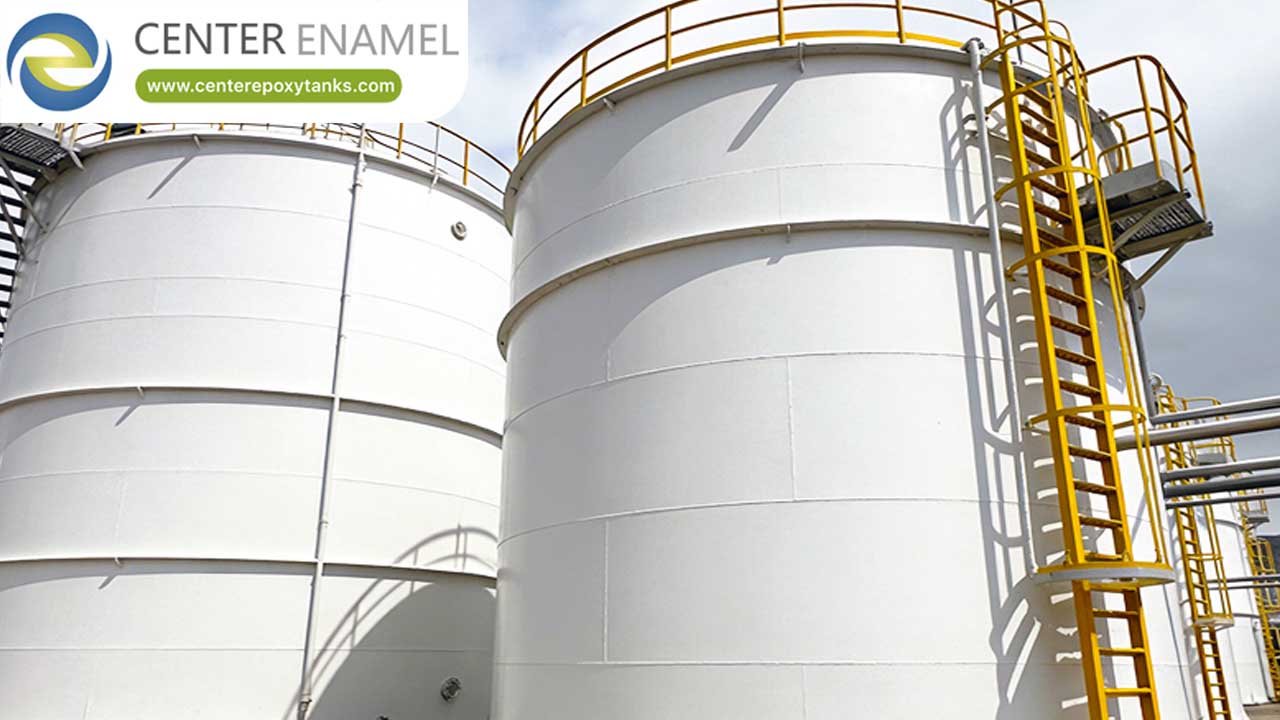
Epoxy Coated Industrial Water Tanks: Durable Solutions for Liquid Storage
Epoxy coated steel tanks, specifically those utilizing Fusion Bonded Epoxy (FBE), represent the industry-standard for reliable industrial water storage. By applying a high-performance, heat-cured epoxy coating to high-strength steel panels in a controlled factory environment, these tanks achieve superior chemical resistance and a seamless interior finish. They are widely utilized for potable water, fire protection, and industrial process water because they combine the structural strength of steel with the longevity of a corrosion-resistant barrier, all while adhering to NSF/ANSI-61 certification requirements for water safety.
The Industrial Requirement: Reliable Water Management
Industrial facilities—whether power plants, manufacturing complexes, or municipal water districts—require storage solutions that can survive aggressive environmental conditions. Traditional options, such as bare carbon steel or poured concrete, often struggle with long-term maintenance issues:
Bare Steel: Highly susceptible to rust, requiring expensive and frequent recoating.
Concrete: Prone to cracking due to settling, leaching, and the costly requirement for specialized liners.
Epoxy coated bolted steel tanks overcome these pain points by off-loading the risk from the field to the factory.
Why Epoxy Coated Steel is the Engineering Choice
1. Factory-Controlled Application
The greatest weakness of field-applied coatings is human error and environmental interference (humidity, temperature, wind). Factory-applied Fusion Bonded Epoxy is cured in a controlled oven, resulting in a consistent, uniform, and exceptionally hard bond that cannot be replicated at a construction site.
2. Chemical and Corrosion Resistance
The epoxy resin acts as a dielectric barrier, effectively isolating the steel from the water inside. This prevents oxidation and corrosion, ensuring that the tank wall remains strong for decades and that the water remains free of metallic contaminants.
3. Rapid Modular Deployment
Because these tanks are fabricated as a series of panels, they can be shipped flat-packed in standard shipping containers. On-site assembly is a "bolt-together" process, which drastically reduces site disturbance, eliminates the need for hot-work permits, and ensures the project is completed in a fraction of the time required for traditional tank construction.
Comparative Overview: Industrial Storage Materials
Feature | Epoxy Coated Steel | Welded Carbon Steel | Concrete (RCC) |
Corrosion Protection | Excellent (Factory Bonded) | Poor (Field Painted) | Moderate (Requires Liners) |
Installation Time | Very Fast (Bolted) | Slow (Field Welding) | Very Slow |
Maintenance | Minimal | High | High |
Structural Integrity | High (High-strength steel) | Moderate | High (But prone to cracks) |
Service Life | 30+ Years | 15–20 Years | 40+ Years (If maintained) |
Technical Compliance and Safety
For facilities storing potable water, the epoxy coating must meet rigorous health standards. Leading industrial epoxy tanks are NSF/ANSI-61 certified, meaning the material has been independently tested to ensure it does not leach harmful chemicals or heavy metals into the water supply. This certification is a non-negotiable requirement for municipal and human-consumption water applications.
Frequently Asked Questions (FAQ)
Q: Are epoxy coated tanks suitable for firewater storage?
A: Yes. Epoxy coated tanks are a very popular choice for firewater storage (NFPA-22 compliance). They provide a long service life with minimal maintenance, ensuring that the water reserve is available whenever it is needed, without the risk of tank failure due to corrosion.
Q: How do you repair an epoxy coated tank if it is scratched?
A: Small repairs can be addressed using a field-repair kit provided by the manufacturer. These kits contain epoxy resin matching the original factory-applied coating, which can be applied to touch up minor surface damage and maintain the corrosion-resistant barrier.
Q: Can these tanks be used in coastal (salty) environments?
A: Absolutely. The epoxy coating is chemically inert and does not react with salt-laden air. When the exterior is properly finished (or when using GFS/glass-fused-to-steel for extreme cases), these tanks are highly resistant to the environmental degradation common in coastal industrial zones.
Engineering Partnership for Industrial Success
Selecting the right storage tank is a 30-year infrastructure decision. By prioritizing factory-applied coatings, modularity, and adherence to international water safety standards, industrial facility managers can reduce their total cost of ownership while maximizing operational uptime.
Are you ready to specify the optimal storage solution for your next industrial project?
Contact our engineering team to request a technical data sheet or a site-specific capacity assessment for your water storage requirements.


