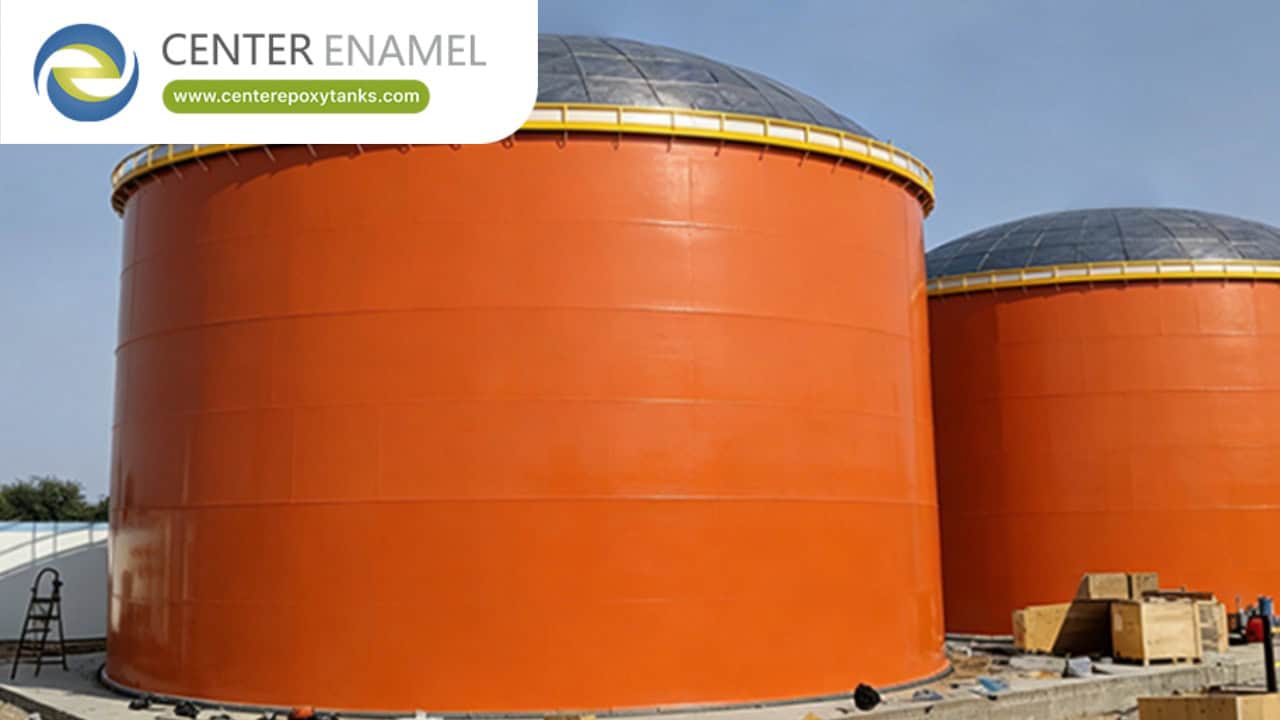
Epoxy Coated Bolted Tanks for Safe Biofuels Storage: Engineering & Procurement Guide
The transition to biofuels—including biodiesel (FAME) and bioethanol—creates unique infrastructure challenges. Unlike fossil-based fuels, biofuels act as aggressive solvents, are inherently hygroscopic (water-attracting), and can promote microbial-induced corrosion. Epoxy-coated bolted tanks offer a superior storage solution by combining factory-controlled coating quality with modular, scalable construction. This guide explores the engineering imperatives for safe biofuel containment and the criteria for selecting high-performance bolted tank systems.
1. The Engineering Challenge: Biofuel Aggression
When specifying tanks for biofuels, standard petroleum storage protocols are insufficient. You are engineering for three specific chemical stressors:
● Solvency: Biodiesel (fatty acid methyl esters) can act as a solvent, potentially softening standard coatings or degrading legacy rubber gaskets.
● Microbial-Induced Corrosion (MIC): Biofuels attract water. This water settles at the tank floor, creating an environment where bacteria thrive, producing acidic byproducts that corrode steel.
● Coating Consistency: In fuel infrastructure, "corrosion" starts at the weakest point. Welded tanks, if coated on-site, are subject to environmental variables (humidity, dust) during application. Bolted tanks feature factory-applied epoxy coatings, ensuring a cured, uniform film thickness (DFT) that cannot be replicated in a field-erected environment.
2. The Epoxy Bolted Advantage
Bolted steel tanks, when utilizing advanced epoxy powder-coating technology, offer distinct advantages for renewable fuel depots:
● Factory-Controlled Quality: Epoxy coating is applied in a climate-controlled plant, not a field. This guarantees the surface is blasted to Sa 2.5 (near-white metal) and that the epoxy is heat-cured, resulting in maximum adhesion and chemical resistance.
● Modular Scalability: Biofuel production often scales rapidly. Bolted tanks allow for modular expansion—you can add capacity by increasing the tank diameter or height with panels, which is structurally impossible with monolithic welded tanks.
● Chemical Compatibility: Using Novolac Epoxies (which are highly cross-linked and solvent-resistant) ensures the internal lining remains inert when in contact with biodiesel or ethanol blends.
Comparative Performance Matrix
Attribute | Epoxy Coated Bolted Steel | Field-Welded Carbon Steel | Concrete |
Coating Consistency | High (Factory Applied) | Moderate (Site Applied) | N/A |
Installation Speed | Fast (Prefabricated) | Slow | Very Slow |
Chemical Resistance | High (Novolac Epoxy) | Variable (Lining dependent) | Low (Needs liner) |
Expansion/Flexibility | Modular | Fixed | None |
Leak Integrity | Gasketed (High performance) | Seal-welded | Porous |
3. Procurement Vetting Matrix: Ensuring Asset Life
When evaluating manufacturers, use the following technical checklist to differentiate "industrial-grade" from "commodity-grade" bolted tanks:
● Holiday Testing (ASTM G62): Demand that 100% of the internal panels undergo high-voltage holiday testing at the factory. A single pinhole is the start of a leak path.
● Gasket Material: Standard nitrile gaskets will degrade. Ensure the manufacturer specifies FKM (Viton) or PTFE gaskets for all manways, nozzles, and panel seams to resist biofuel solvency.
● Coating Specification: Verify the epoxy formula. For aggressive biofuels, Novolac-based epoxy is the gold standard for immersion service. Do not accept standard "water storage" epoxy formulas.
● Third-Party Inspection (TPI): Do not rely on manufacturer test reports alone. Engage a TPI agency to witness the coating adhesion tests and holiday detection before the tank panels are crated for shipment.
4. Frequently Asked Questions (FAQ)
Q: Can I store E85 or B100 in an epoxy bolted tank?
A: Yes, provided the epoxy lining is explicitly formulated for "Fuel Immersion Service." Always request a chemical compatibility chart from the manufacturer and ensure the tank gaskets are FKM (Viton) compatible with aromatic/solvent-like properties of the fuel.
Q: Why choose bolted over welded for biofuels?
A: Aside from the factory-controlled coating quality, bolted tanks allow for panel replacement. If a specific area of the tank is damaged or corrodes (e.g., at the floor-to-shell junction), individual panels can be replaced without decommissioning or cutting into the entire structure.
Q: Are these tanks compliant with NFPA 30 (Flammable Liquids)?
A: The tank panel structure complies with AWWA D103 or similar standards. However, your site design (secondary containment, venting, fire suppression) must comply with NFPA 30. A reputable bolted tank manufacturer will provide the nozzle reinforcement and venting structural data to support your NFPA compliance efforts.
Are you currently in the site-planning phase for a new biofuel storage facility, or are you looking to retrofit existing infrastructure to accommodate renewable fuel mandates?


