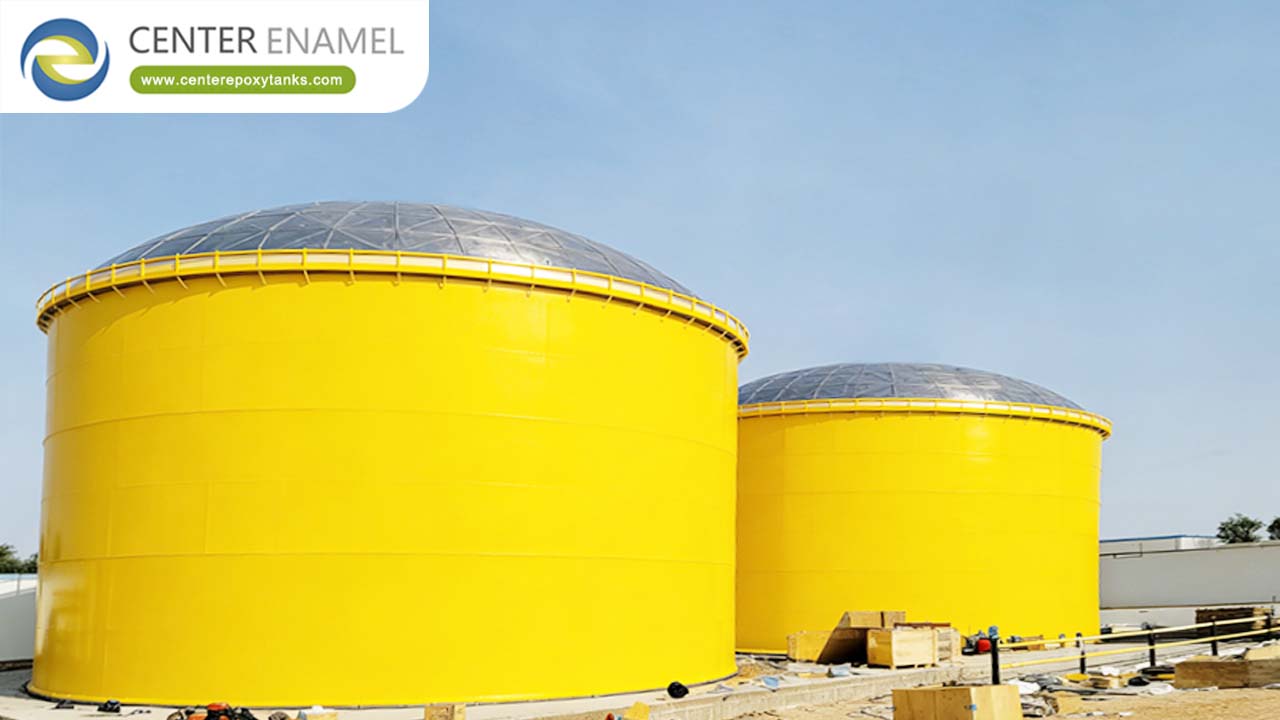
Epoxy Coated Bolted Tanks for Fertilizer Storage: Advanced Corrosion Mitigation & Structural Specifications
Bulk liquid fertilizer storage presents one of the most aggressive corrosion challenges in modern agricultural logistics and industrial manufacturing. Liquid blends—especially Urea Ammonium Nitrate (UAN) and ammonium polyphosphate solutions—rapidly degrade standard carbon steel and concrete containment assets. Factory-coated epoxy bolted steel tanks offer an engineered containment system that combines high chemical resistance with rapid, modular field assembly. By utilizing advanced thermal cross-linking technologies, these tanks deliver an uncompromised barrier against chemical attack, ensuring long-term environmental safety and asset protection.
1. The Heavy Chemical Tax of Bulk Fertilizer Storage
Storing concentrated liquid fertilizers requires an understanding of their chemical volatility. Because fertilizers are highly electrolytic, they accelerate galvanic and localized corrosion whenever they come into contact with unprotected metals.
The Reactivity of Urea Ammonium Nitrate (UAN)
UAN solutions (commonly distributed as UAN 28 or UAN 32) are highly corrosive to mild steel. The presence of free ammonium ions (NH4+) and nitrate ions (NO3-) creates an active electrochemical environment.
● Pitting Corrosion: Raw carbon steel experiences rapid localized pitting, which can quickly lead to structural pinholes below the liquid line.
● Stress Corrosion Cracking: Welded zones in field-fabricated tanks are highly susceptible to stress cracking when exposed to continuous thermal expansion and chemical cycling.
Stress on Conventional Linings
Field-applied paint or epoxy linings often fail prematurely because it is difficult to control humidity, dust, and steel surface preparation out on an open construction site. Microscopic pockets of trapped air or moisture expand and contract, causing the coating to blister, peel, and expose the underlying steel substrate to direct chemical attack.
2. Advanced Factory Coating Application and Polymer Science
The exceptional durability of premium epoxy bolted tanks is a direct result of moving the coating process out of the field and into a climate-controlled manufacturing facility.
The Fusion-Bonded and High-Solids Epoxy Process
Industrial manufacturers utilize advanced electrostatic coating lines to apply specialized, high-solids or Fusion Bonded Epoxy (FBE) formulas directly to pre-engineered steel panels:
1. Surface Activation (SSPC-SP10 / NACE No. 2): Raw steel sheets undergo automated grit blasting to achieve a near-white metal finish. This removes all surface imperfections and creates a uniform mechanical profile (typically 50 to 75 microns) for optimal coating adhesion.
2. Electrostatic Application: The epoxy powder or liquid formulation is applied uniformly across the entire surface, including the panel edges and bolt holes, ensuring complete coverage.
3. Thermal Cross-Linking: The coated panels pass through multi-zone industrial curing ovens at tightly monitored temperatures (ranging from 180°C to 220°C). This thermal process triggers a complete chemical reaction, cross-linking the epoxy monomers into a dense, high-molecular-weight polymer matrix that is permanently bonded to the steel substrate.
Quality Gate (Holiday Testing): Every single panel undergoes a high-voltage non-destructive continuity test (Holiday Testing) at the factory. A localized electrical current is swept across the cured coating; if even a micro-fine void or pinhole exists, the circuit alerts the technicians, guaranteeing that zero defects reach the deployment site.
3. Technical Comparison: Fertilizer Storage Engineering Matrix
When evaluating infrastructure options for regional distribution hubs or farm blending operations, project engineers must weigh lifetime maintenance costs against initial capital expenditure (CapEx).
Engineering Profile | Factory-Coated Epoxy Bolted Tanks | Stainless Steel Tanks (304 / 316L) | Carbon Steel Tanks (Field Painted) |
Chemical Resistance (UAN / Potash) | Excellent: Inert thermoset polymer barrier prevents direct metal contact. | Excellent: Natural passive layer resists corrosion but is highly vulnerable to chlorides. | Poor: Requires frequent recoating; high risk of localized pitting. |
Initial Capital Cost (CapEx) | Moderate: High manufacturing efficiency offsets field assembly costs. | Extremely High: High material costs spike initial investments. | Low: Low upfront cost, but requires extensive field preparation. |
Installation Speed | Fast: Modular panels bolt together rapidly using specialized jacks. | Slow: Requires extensive field welding, certified crews, and weather delays. | Slow: Demands field welding, sandblasting, and multi-coat curing. |
Maintenance Cycle | Near Zero: Requires only routine inspections and simple washdowns. | Low: Minimal maintenance, but susceptible to stress corrosion cracking over time. | High: Requires complete sandblasting and repainting every 7 to 10 years. |
Structural Seal Security | High: Heavy-duty, chemical-resistant EPDM or Viton gaskets. | High: Structural field-welded seams. | Variable: Prone to weld defects or structural coating degradation. |
4. Operational and Logistical Advantages of Bolted Modular Construction
Beyond superior corrosion resistance, the mechanical design of a bolted panel configuration provides major advantages for agricultural and industrial operations:
● Zero Hot Work On-Site: Because the panels are pre-punched, finished, and cured at the factory, assembly on-site requires no field welding or cutting. This eliminates fire hazards near operational chemical assets and streamlines local regulatory permitting.
● Simplified Shipping and Global Logistics: Pre-fabricated panels are compactly crated and shipped in standard ocean containers. This significantly reduces freight logistics costs when shipping from centralized manufacturing bases to remote agricultural regions in Southeast Asia, North America, the Middle East, or Europe.
● Scalability and Relocation Flexibility: If a fertilizer distribution hub needs to expand its capacity, rings of bolted panels can be added to increase the tank's height. In some cases, the entire structure can be disassembled, transported, and re-erected at a different facility, protecting the owner's long-term capital asset.
Specifying factory-applied epoxy coated bolted steel tanks for liquid fertilizer storage introduces an uncompromised, structurally stable containment asset to agricultural and chemical distribution networks. By isolating the steel substrate behind a thermally cross-linked polymer barrier, these systems successfully neutralize the aggressive corrosive profiles of UAN and other liquid nutrients—delivering a long-term, low-maintenance containment solution designed to protect water tables and agricultural supply lines worldwide.


