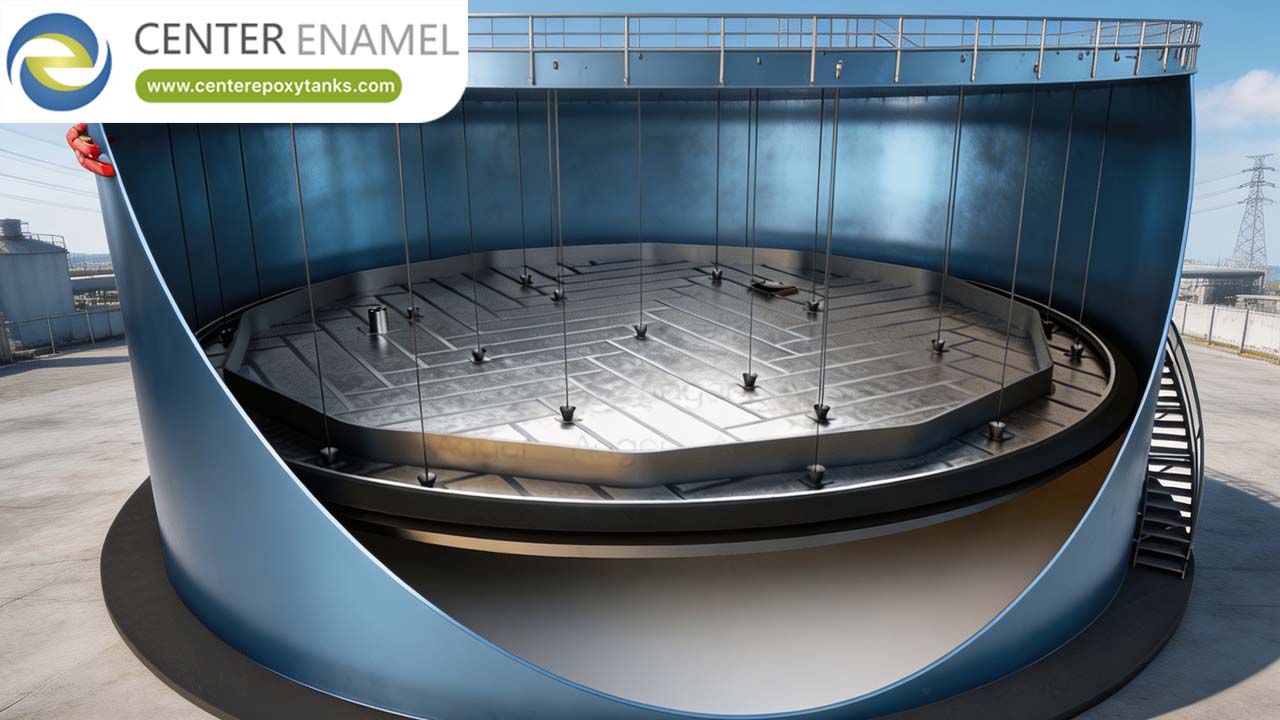
Enhancing Storage Tank Safety with External Floating Roof Technology: Engineering, Fire Mitigation, and Compliance
In modern petroleum refining, chemical processing, and bulk liquid logistics, storing volatile organic liquids such as crude oil, gasoline, and industrial solvents presents severe environmental and safety hazards. Storing these volatile fluids in standard fixed-roof tanks creates a large vapor space (ullage) above the liquid surface. As ambient temperatures fluctuate, this vapor expands, increasing internal pressure and releasing hazardous volatile organic compounds (VOCs) into the atmosphere. More critically, an unmanaged vapor space creates an explosive fuel-air mixture vulnerable to lightning strikes and ignition sources.
To eliminate this vapor space and dramatically elevate operational security, energy infrastructure developers implement external floating roof (EFR) technology. Designed to float directly on the liquid surface, an external floating roof rises and falls with inventory levels, eliminating the vapor headspace and neutralizing primary fire and explosion risks.
The Core Safety Mechanisms of External Floating Roofs
External floating roofs serve as a multi-functional safety and environmental barrier, incorporating advanced engineering features:
Elimination of Vapor Headspace: By resting directly on the liquid product, the roof prevents the accumulation of flammable hydrocarbon vapors, drastically cutting the risk of vapor cloud explosions inside the tank.
Primary and Secondary Rim Seal Systems: The annular gap between the floating deck and the tank shell is sealed using robust mechanical shoe seals or liquid-filled primary barriers, paired with secondary elastomeric wipers. These seals block vapor leakage and prevent debris buildup.
Electrical Grounding and Static Shunts: Rapid fluid movement during tank filling generates electrostatic charges. Flexible stainless steel bonding shunts maintain continuous electrical continuity between the floating roof and the tank shell, safely dissipating static electricity to prevent spark ignition.
Automatic Rainwater Drainage Networks: Because external floating roofs are open to the atmosphere, they integrate heavy-duty articulated pipe drain systems or flexible stainless steel hoses to safely remove rainwater from the deck without contaminating the stored product or compromising buoyancy.
Governing Regulatory Standards: API 650 Annex C
To ensure structural reliability and safety compliance, external floating roofs must be engineered in strict accordance with recognized international standards:
API 650 Annex C: Governs the specific design requirements, material selections, pontoon buoyancy calculations, and appurtenance specifications for external floating roofs on welded steel oil storage tanks.
NFPA 30 (Flammable and Combustible Liquids Code): Establishes fire protection guidelines, safe spacing requirements, and emergency venting parameters for bulk liquid storage terminals.
Data Table: Comprehensive Comparison of Tank Safety and Vapor Control Technologies
Technical Parameter | External Floating Roofs (EFR) | Internal Floating Roofs (IFR) | Fixed-Roof Tanks (No Floating Deck) |
Explosion Hazard Mitigation | Exceptional; eliminates vapor headspace entirely across the liquid surface | High; vapor space is minimized and shielded beneath a permanent fixed roof | High risk; large flammable vapor headspace is constantly exposed to ignition sources |
VOC Emission Control | 90% to 95% reduction in evaporative losses and emissions | 95% to 98% reduction when combined with an aluminum dome or fixed roof | 0% (Baseline - subject to heavy breathing and working losses) |
Weather & Environmental Exposure | Open-top design requires active roof drainage management (swivel joints/hoses) | Zero weather exposure; protected from rain, snow, and UV rays by fixed top roof | Weather-resistant exterior, but traps internal condensation and corrosive vapors |
Lightning & Static Protection | Equipped with continuous flexible stainless steel shunts for static dissipation | Protected by grounded structural fixed roofs and optional bonding cables | Requires dedicated structural grounding grids and emergency pressure-vacuum vents |
Frequently Asked Questions (FAQ)
Q: How does an external floating roof enhance storage tank safety?
A: An external floating roof rests directly on the liquid surface, eliminating the flammable vapor headspace inside the tank. This prevents the accumulation of explosive hydrocarbon vapors, controls VOC emissions, and mitigates fire risks.
Q: How do external floating roofs manage rainwater accumulation safely?
A: Because external floating roofs are open to the sky, they incorporate a dedicated deck drainage system consisting of articulated steel swivel pipes or flexible heavy-duty hoses that channel rainwater off the roof and out through the tank shell.
Q: What is API 650 Annex C?
A: API 650 Annex C is the internationally recognized engineering standard that governs the design, structural buoyancy, rim seal requirements, and safety appurtenances for external floating roofs on petroleum storage tanks.
Q: Do external floating roofs require special lightning protection?
A: Yes. EFRs utilize flexible stainless steel electrical shunts that maintain continuous contact between the floating deck and the tank shell, safely grounding electrostatic charges and preventing lightning-induced spark ignition.


