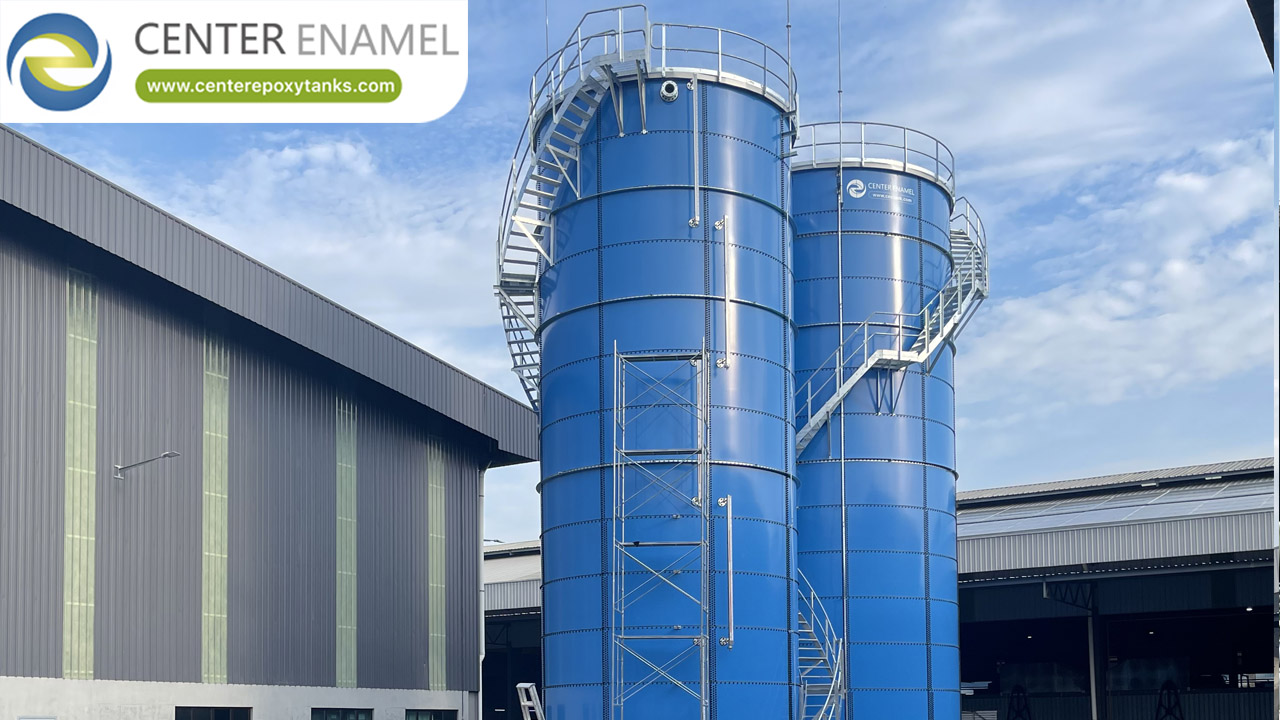
Enhancing Food Grade Storage with Epoxy Coated Tanks: A Cost-effective and Low-maintenance Option
In the food processing, beverage manufacturing, and municipal water distribution sectors, maintaining absolute liquid purity is a non-negotiable operational priority. Whether storing potable drinking water, liquid sugar, brine, edible oils, or food-grade wastewater effluent, storage vessels must prevent bacterial growth, eliminate chemical leaching, and resist contamination. Traditional storage options—such as unlined carbon steel or degrading concrete tanks—frequently suffer from internal pitting, rust accumulation, and biofilm formation, creating severe hygiene risks.
To meet strict global health standards while optimizing capital expenditures, facility managers increasingly rely on food-grade epoxy coated tanks. By combining precision-engineered bolted steel architecture with specialized, non-toxic fusion-bonded epoxy (FBE) linings, these systems deliver a cost-effective, low-maintenance, and pristine storage environment.
The Engineering Superiority of Fusion-Bonded Epoxy for Food Safety
Unlike standard industrial paints that can degrade, chip, or impart chemical odors into stored liquids, professional-grade food storage tanks utilize specialized Fusion-Bonded Epoxy applied under strict factory conditions:
Inert and Non-Toxic Surface Integrity: The thermoset epoxy powder is thermally fused to grit-blasted steel panels at high temperatures, creating a smooth, non-porous barrier that prevents microbial adhesion and completely eliminates taste or odor transfer.
Certified Compliance with NSF/ANSI 61: High-performance food-grade epoxy coatings meet or exceed NSF/ANSI Standard 61 and FDA regulations for potable water and direct-contact food storage, ensuring absolute safety for human consumption.
Modular Bolted Flexibility: Factory-coated panels are assembled rapidly on-site using specialized sealing gaskets and stainless steel hardware, bypassing the lengthy curing times and contamination risks associated with cast-in-place concrete.
Technical Performance Matrix: Food-Grade Storage Solutions
Technical Parameter | Fusion-Bonded Epoxy Bolted Steel Tanks | High-Grade Stainless Steel Tanks | Cast-in-Place Concrete Reservoirs |
Food Safety & Certifications | Certified NSF/ANSI 61 and FDA-compliant smooth interior barrier | Exceptional chemical and sanitary purity for high-grade food processing | Requires specialized food-grade epoxy liners to prevent concrete carbonation leaching |
Capital Cost & Economics | Highly cost-effective; delivers premium sanitary performance at a fraction of stainless steel cost | Extremely high capital expenditure due to premium raw material costs | Moderate initial cost, but high long-term repair and relining expenses |
Installation Velocity | Rapid modular assembly; completed in days with minimal on-site labor | Moderate installation speed | Extremely slow; intensive civil formwork, rebar tying, and multi-week concrete curing |
Lifecycle Maintenance | Minimal routine maintenance; smooth surface resists buildup and eliminates recurring recoating | Low maintenance, but requires specialized weld passivation and cleaning | High maintenance; prone to cracking, water seepage, and liner degradation |
Core Operational Benefits for Food and Potable Water Facilities
1. Significant Cost Reductions Without Compromising Quality
Constructing large-scale sanitary storage vessels out of solid stainless steel is cost-prohibitive for many municipalities and processing plants. Epoxy-coated bolted steel tanks provide the structural strength and corrosion resistance of high-end metals while dramatically reducing initial capital outlay.
2. Elimination of Biofilms and Bacterial Proliferation
A smooth, non-porous epoxy interior wall prevents microscopic cracks where bacteria, algae, and organic residues can accumulate. This ensures that routine clean-in-place (CIP) sanitation protocols are highly effective, protecting water and food purity.
Frequently Asked Questions (FAQ)
Q: Are epoxy coated tanks safe for storing drinking water and food ingredients?
A: Yes. High-performance food-grade epoxy tanks are engineered and certified to meet NSF/ANSI 61 and FDA standards, ensuring the interior coating is completely non-toxic and safe for potable water and consumable liquids.
Q: Will an epoxy tank lining alter the taste or odor of stored water or beverages?
A: No. Fully cured fusion-bonded epoxy creates an inert, chemically neutral barrier that prevents any chemical leaching, ensuring that water, syrups, or liquid ingredients retain their original taste, odor, and purity.
Q: How do epoxy coated tanks compare in cost to stainless steel tanks?
A: Epoxy-coated bolted steel tanks offer a significantly more cost-effective alternative to solid stainless steel vessels, providing comparable corrosion resistance and sanitary performance at a much lower capital investment.
Q: What maintenance is required for food-grade epoxy storage tanks?
A: Maintenance is minimal. Routine procedures typically involve scheduled washdowns, inspection of perimeter seals and gaskets, and compliance checks with standard facility sanitation protocols.


