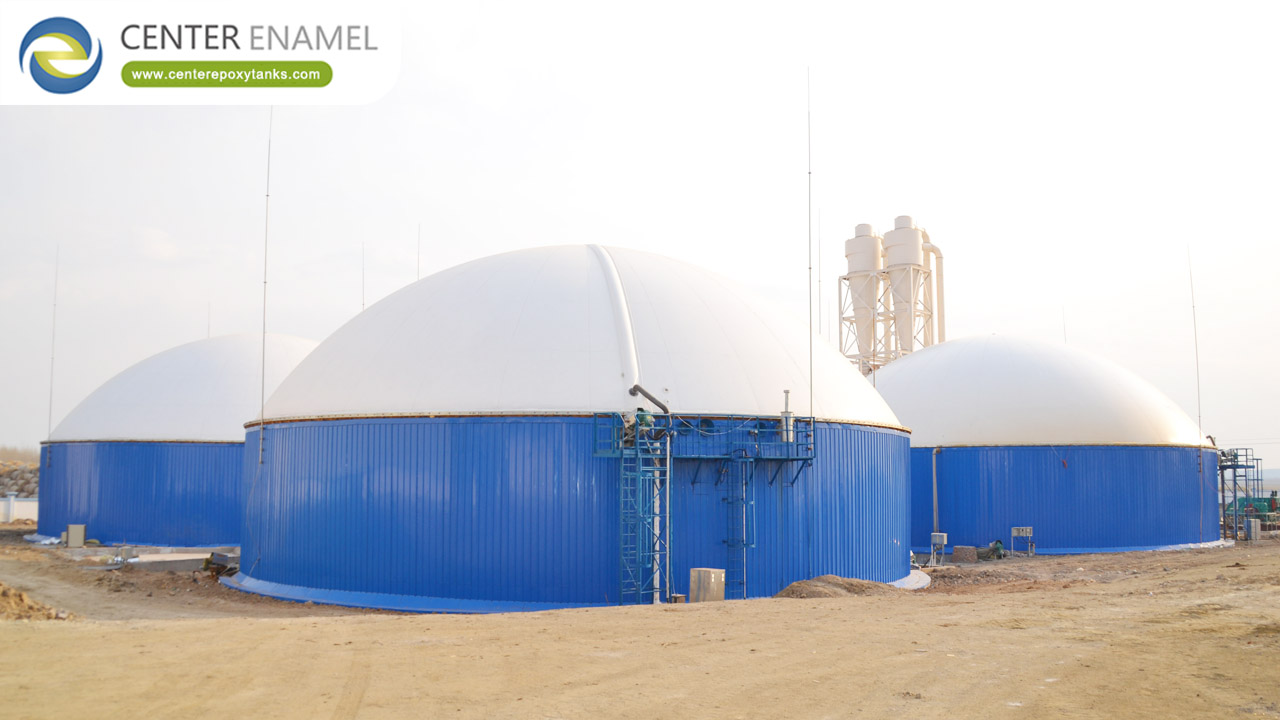
Double Membrane Roofs with Superior Waterproofing for Extreme Weather Conditions
Double membrane roofs are high-performance, air-supported storage systems engineered for maximum waterproofing and extreme weather resilience in industrial and biogas applications. These systems consist of two layers of high-tensile, polymer-coated fabric: an outer membrane that maintains a pressurized air cushion and an inner membrane that contains gas. Superior waterproofing is achieved through high-frequency or hot-wedge seam welding, which creates a molecular bond at the joints, rendering them stronger than the base material. In extreme weather, the pressurized outer shell creates a rounded, aerodynamic profile that naturally sheds snow, prevents water ponding, and withstands gale-force winds, making it significantly more robust than rigid or flat-roof storage alternatives.
Engineering the Waterproofing Mechanism
The "superior waterproofing" of a double membrane roof is not just a surface feature; it is a structural result of its design. Unlike fixed roofs that rely on gaskets, bolts, and mechanical seals (which often fail under thermal expansion and contraction), double membrane roofs use fused continuity.
1. High-Frequency (HF) Welding
The waterproofing integrity relies on seam technology. The fabrics are joined using high-frequency electromagnetic fields that melt the thermoplastic polymer coatings (PVC/PVDF) together. This results in a seamless, monolithic structure. Because there are no mechanical fasteners penetrating the fabric surface, there are no "weak links" for water ingress.
2. The Aerodynamic Air Cushion
Extreme weather—specifically heavy snowfall and heavy rain—often causes structural failure in flat roofs due to load accumulation. The double membrane roof’s outer shell is continuously inflated by an air blower system. This creates a convex (dome) shape that:
Sheds Water: Water flows off the curved surface instantly, preventing ponding or heavy load accumulation.
Resists Snow: The slope of the dome and the slight flexibility of the pressurized membrane prevent snow from settling and accumulating, allowing the system to self-clear under high-wind conditions.
Extreme Weather Resilience: Material Science
The "Extreme Weather" capability is dictated by the chemical formulation of the membranes. Top-tier systems utilize specialized multi-layer composites:
UV and Ozone Protection: The outer layer is typically treated with a PVDF (Polyvinylidene Fluoride) coating, which acts as a shield against intense UV radiation, oxidation, and chemical pollutants, preventing the fabric from becoming brittle over decades of sun exposure.
Anti-Fungal & Anti-Bacterial: In humid, tropical, or high-rain environments, standard fabrics succumb to mold. Industrial-grade membranes include anti-fungal inhibitors within the polymer weave to maintain waterproofing integrity throughout the product's lifespan.
Tensile Strength & Temperature Range: These membranes are engineered to remain flexible at sub-zero temperatures (preventing cracking) and stable at high heat (preventing degradation), ensuring the waterproof seal holds regardless of climate.
Comparison: Double Membrane vs. Traditional Fixed Roofs
Engineering Attribute | Double Membrane Roof | Traditional Steel/Concrete Roof |
Waterproofing Integrity | Seamless (Welded) | Mechanical Seals (Bolted/Gasketed) |
Structural Reaction | Aerodynamic (Wind slides over) | Static (Wind hits flat surfaces) |
Maintenance Needs | Low (Automatic inflation) | High (Paint/Corrosion repair) |
Ponding Risk | Virtually Zero (Curved) | High (Requires slope/drainage) |
Thermal Adaptation | Flexible (Expands/Contracts) | Rigid (Prone to cracking) |
Frequently Asked Questions (FAQ)
Q: Can a double membrane roof survive hurricane or typhoon-force winds?
A: Yes, when engineered correctly. Because the roof is a pressurized "balloon" rather than a rigid structure, it is aerodynamic. The outer membrane design is modeled to withstand high wind loads. The key is the perimeter clamping system—the steel ring at the base of the tank that anchors the membrane must be engineered to the specific wind-speed rating of the region.
Q: Does the outer membrane ever lose air, compromising the waterproofing?
A: Redundancy is key. High-quality systems use a dual-blower setup (primary and backup). If the primary blower fails, the backup kicks in automatically. Even in the event of a complete power loss, the roof is designed to hold pressure long enough to allow for maintenance, ensuring the interior remains dry.
Q: How do you perform repairs on the waterproofing if the membrane is punctured?
A: Repair is simpler than steel or concrete. Because the material is thermoplastic, a professional technician can "patch" a puncture using a hand-held heat-welding tool. This melts a new piece of membrane material onto the existing one, restoring 100% of the waterproof and airtight integrity in minutes.
Q: Is it suitable for very cold, snowy climates?
A: It is excellent for cold climates. The membrane materials are specifically engineered to remain flexible at temperatures as low as -40°C. Combined with the dome shape which sheds snow naturally, it outperforms traditional rigid roofs that often collapse under heavy, wet snow loads.


