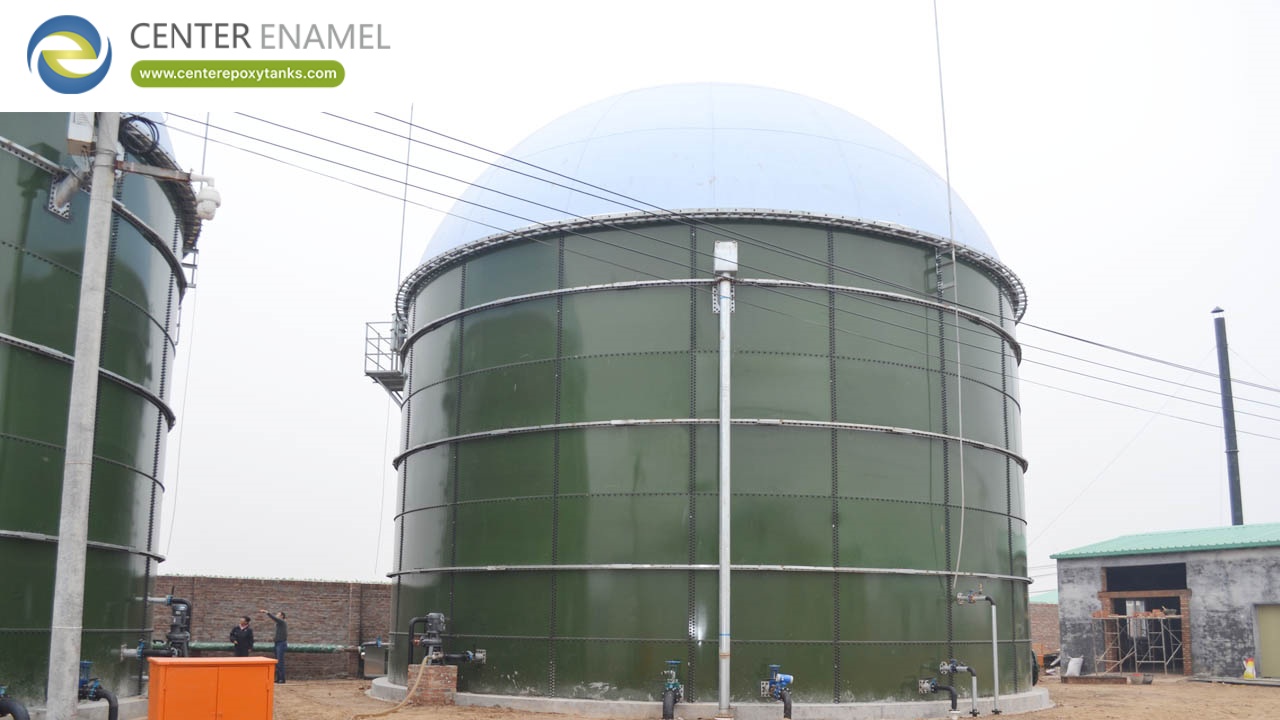
Durable Double Membrane Roof Systems Designed for Harsh Industrial Environments
Industrial plants, chemical processing facilities, wastewater treatment works, and large-scale bioenergy installations frequently operate under severe environmental conditions. Facilities located in coastal zones subject to salt-laden wind, regions with extreme sub-zero winters, or heavy industrial settings exposed to corrosive gases (H2S, sulfur dioxide, and organic vapors) place immense stress on overhead tank protection. Traditional carbon steel and concrete roofs often succumb to rapid pitting, structural oxidation, and chemical degradation.
To ensure long-term structural integrity and uninterrupted operations, modern industrial facilities utilize durable double membrane roof systems engineered specifically for harsh environments. By combining advanced polymer engineering with a pressure-stabilized dual-layer architecture, these systems provide elite protection against weather extremes and aggressive chemical exposure.
The Engineering Mechanics of Heavy-Duty Double Membrane Roofs
A heavy-duty double-membrane roof functions as a dynamic, pressure-regulated enclosure designed to withstand punishing ambient forces:
The Outer Protective Membrane: Continuously inflated by a redundant, explosion-proof air blower system, the outer layer forms a taut, aerodynamic spherical dome. This geometry naturally sheds heavy snow loads and deflects high-velocity wind shear without structural fatigue.
The Inner Gas-Containment Bladder: Acting as a secure barrier beneath the outer shell, the inner membrane expands and contracts dynamically to manage stored biogas or buffer internal process vapors.
The Inter-Membrane Air Buffer: The pressurized air chamber between the layers maintains structural rigidity and dampens external acoustic and mechanical vibrations.
Technical Performance Matrix: Industrial Roof Technologies
Technical Parameter | Durable Double Membrane Roof Systems | Traditional Fixed Carbon Steel Domes | Cast-in-Place Concrete Roofs | Aluminum Geodesic Dome Roofs |
Chemical & Vapor Resistance | Superior; high-tenacity polyester coated with PVDF resists aggressive industrial gases | Low; highly vulnerable to internal vapor-space pitting and wall thinning | Moderate; prone to concrete carbonation and acid gas attack over time | High structural corrosion resistance, but non-flexible |
Wind & Snow Load Adaptation | Dynamic air-pressurized dome automatically absorbs wind uplift and sheds snow | Rigid structure requiring heavy structural framing to resist high wind loads | Massive deadweight resistance, but vulnerable to seismic joint shifting | Rigid space-frame design engineered for heavy structural loads |
Thermal Stability & Insulation | Air buffer layer provides excellent thermal insulation, preventing internal freezing | Zero built-in insulation; highly susceptible to ambient temperature swings | High thermal mass, but slow to adapt to internal process shifts | Moderate thermal insulation options available |
Global Standards Compliance | Manufactured strictly to ISO 9001, ATEX, and Eurocode / EN 1991 | ASME pressure vessel or localized structural steel codes | Local civil batch-pour engineering guidelines | AWWA D108, ASCE 7, and ISO 9001 frameworks |
Key Advantages in Severe Industrial Settings
1. Advanced PVDF Surface Treatments
To withstand corrosive industrial atmospheres, high-performance double-membrane roofs incorporate specialized Polyvinylidene Fluoride (PVDF) surface coatings. This protective barrier makes the polymer fabric chemically inert, preventing degradation from acid rain, UV radiation, and trace chemical vapors while providing self-cleaning properties during rainfall.
2. High-Frequency Molecular Seam Welding
Panel seams are fused using advanced high-frequency (HF) welding technology. This molecular-level bonding ensures that joint tensile strength exceeds the base fabric, eliminating micro-cracks and leak paths under continuous operational stress.
Frequently Asked Questions (FAQ)
Q: How do double membrane roof systems survive extreme weather in harsh industrial environments?
A: They utilize an automated, continuous low-pressure blower system that keeps the outer membrane inflated as an aerodynamic dome, which naturally sheds snow and resists high wind uplift forces.
Q: What prevents industrial chemicals and gases from degrading the membrane fabric?
A: Premium systems use high-tenacity polyester base fabrics coated with specialized PVDF (Polyvinylidene Fluoride) layers, which provide exceptional chemical inertia against corrosive gases like hydrogen sulfide (H2S) and moisture.
Q: Can double-membrane roofs be installed on existing industrial storage tanks?
A: Yes. Because they are lightweight and modularly engineered, they exert minimal deadload on tank walls and can be retrofitted onto existing concrete or steel tanks with minimal structural reinforcement.
Q: What maintenance is required for double membrane roofs in harsh climates?
A: Maintenance is minimal, primarily involving routine checks of the automated air blowers, pressure regulation valves, and electrical grounding connections to ensure uninterrupted performance.


