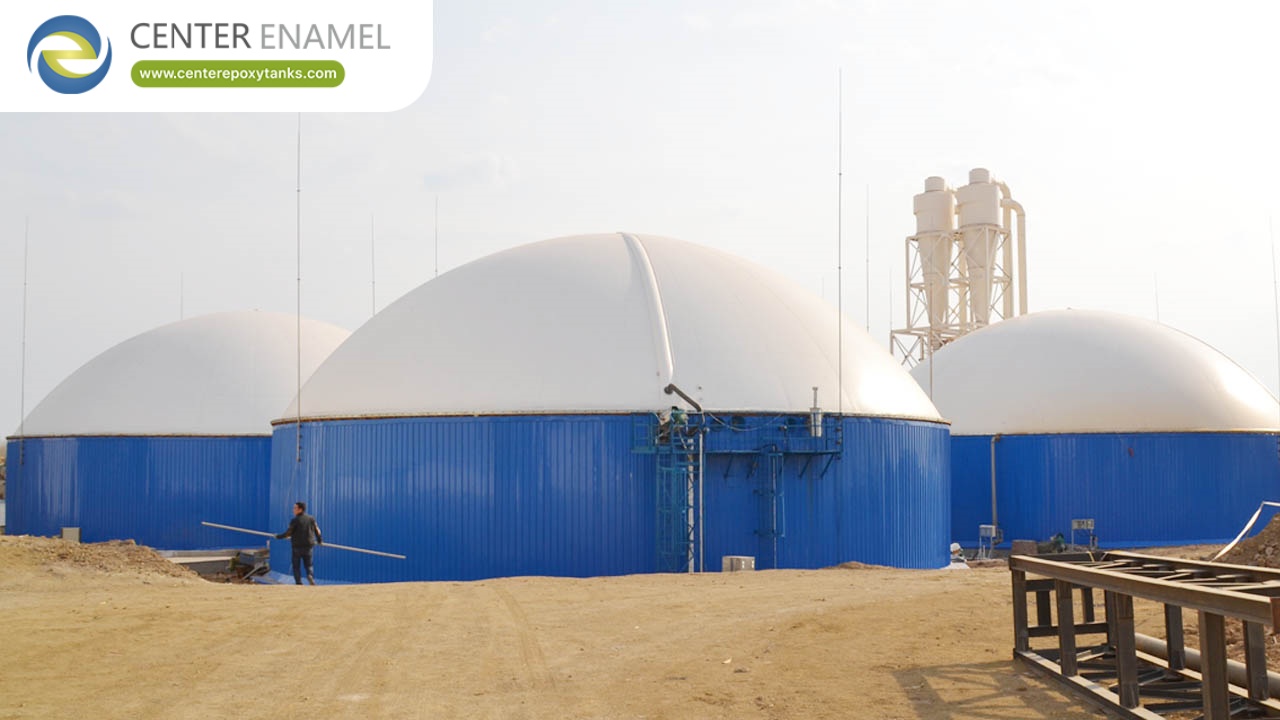
Double Membrane Roofs for Stainless Steel Anaerobic Digestion Tanks: Ultimate Corrosion Defense and Gas Storage Synergy
In the rapidly evolving landscape of renewable energy generation, wastewater treatment, and agricultural waste management, anaerobic digestion (AD) plays a foundational role. By breaking down organic materials in an oxygen-free environment, AD systems generate clean, methane-rich biogas. However, the biological environment inside a digester is notoriously aggressive, combining high moisture levels, organic acids, and corrosive trace gases like hydrogen sulfide (H2S).
To ensure long-term structural integrity and optimal gas containment, modern facilities increasingly pair high-grade stainless steel anaerobic digestion tanks with an integrated double membrane roof. This sophisticated combination merges the superior metallurgical corrosion resistance of stainless steel walls with a flexible, dual-layer fabric gas holder, creating an elite, maintenance-free waste-to-energy containment system.
Core Engineering Principles and System Architecture
The synergy between stainless steel digester tanks and double membrane roofs relies on advanced mechanical and material engineering:
High-Grade Stainless Steel Wall Construction: Utilizing premium austenitic or duplex stainless steel (such as Grade 304 or 316) for the tank shell provides exceptional resistance to internal chemical attack and exterior weathering. Unlike carbon steel, stainless steel does not require frequent repainting or recoating, even in wet, humid operating conditions.
Inner Gas Containment Membrane: Sealed gas-tight to the upper perimeter of the stainless steel tank, the inner membrane hangs loosely inside the headspace. As anaerobic bacteria generate biogas, this flexible layer expands and contracts dynamically, securely holding the gas volume while keeping it isolated from atmospheric oxygen.
Outer Weather Protection Shell: The outer membrane forms an aerodynamic, weather-resistant exterior dome that shields the facility against heavy wind loads, rain, snow, and ultraviolet (UV) solar radiation.
Active Air-Pressure Balancing System: An automated blower system continuously maintains a regulated air cushion between the inner and outer membranes. A constant-pressure control valve exerts a uniform downward force on the inner gas chamber, ensuring that biogas is delivered to downstream combined heat and power (CHP) engines or boilers at a stable working pressure.
Data Table: Comprehensive Comparison of Digester Tank Roof and Wall Systems
Technical Parameter | Double Membrane Roof on Stainless Steel Tank | Traditional Carbon Steel Fixed Roof | Cast-in-Place Concrete Digester Cover |
Corrosion Defense | Superior; stainless steel shell and PVC/PVDF membranes are completely immune to H2S and moisture attack | High susceptibility to rust and chemical pitting unless costly internal coatings are applied | Prone to concrete carbonation, micro-cracking, and acid-induced spalling in the headspace |
Gas Storage Capability | Integrated volumetric storage buffering daily production surges or fluid displacement | None; requires standalone gas holding bladders or spheres | None; fixed structural roof with no gas holding elasticity |
Material Durability & Purity | 30+ year service life with high resistance to chemical degradation and zero flaking | Requires periodic sandblasting, recoating, and structural weld inspections | Heavy mass requiring rigorous structural monitoring and joint sealing |
Installation & Maintenance | Lightweight modular assembly with near-zero long-term coating maintenance | Requires heavy crane lifts, field welding, and complex maintenance scaffolding | Slow civil construction with prolonged curing times and high labor overhead |
Frequently Asked Questions (FAQ)
Q: What is a double membrane roof on a stainless steel anaerobic digestion tank?
A: It is an engineered dual-layer fabric gas holder mounted atop a stainless steel digester tank that serves simultaneously as a weather-tight structural roof and an integrated, low-pressure biogas storage reservoir.
Q: Why pair a double membrane roof with a stainless steel digester tank?
A: Stainless steel provides unmatched, long-term corrosion resistance against aggressive digester environments without requiring protective coatings, while the double membrane roof efficiently stores and regulates biogas production.
Q: How is constant gas pressure maintained beneath the membrane?
A: An automated air-blower system maintains a regulated air cushion between the inner and outer membranes, exerting a steady, uniform downward force on the inner gas containment chamber to keep delivery pressure consistent.
Q: What materials are used to manufacture double membrane roofs?
A: They are fabricated from high-tenacity polyester fabrics coated with specialized PVC or PVDF polymers that offer exceptional tensile strength, UV stabilization, and resistance to hydrogen sulfide (H2S).


