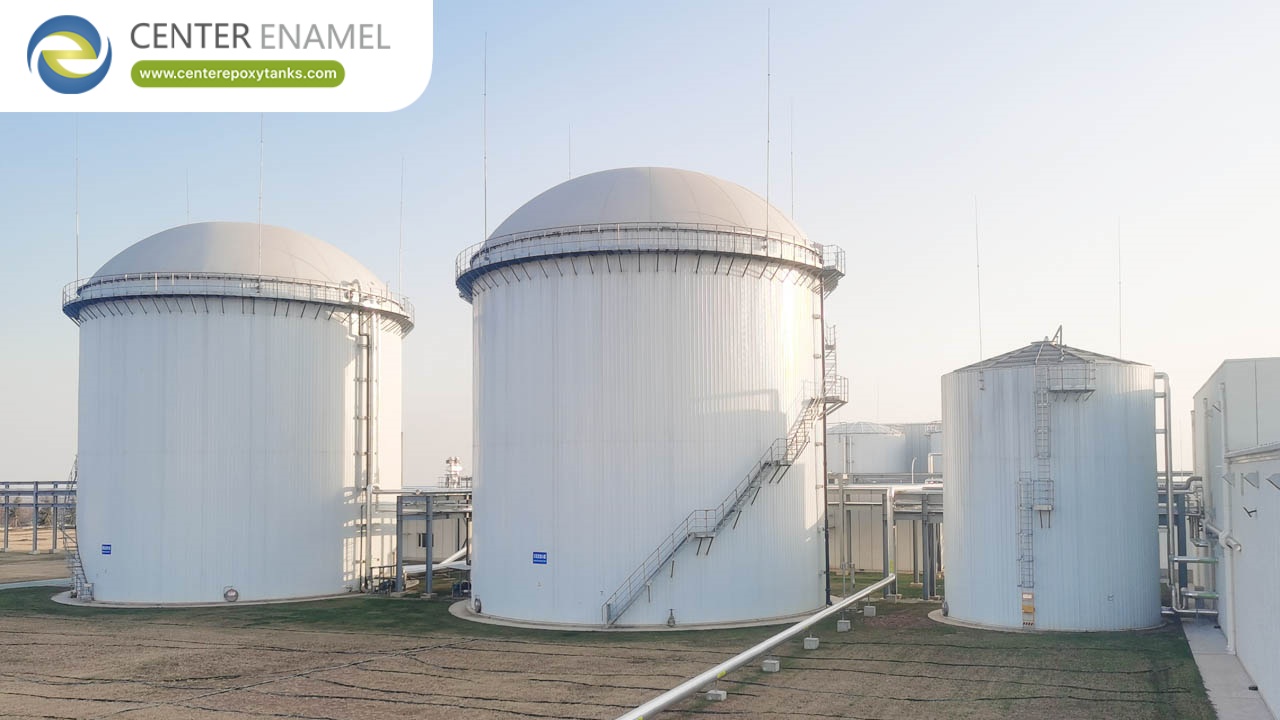
Double Membrane Roofs for Animal Waste Anaerobic Digestion Tanks: Sustainable Farm Management
Modern livestock operations face mounting environmental pressures regarding waste management, greenhouse gas emissions, and regulatory compliance. Large dairy, swine, and poultry farms generate massive volumes of nutrient-rich animal manure that, if left unmanaged in open lagoons, release significant amounts of methane (CH4) and nitrous oxide into the atmosphere.
To transform this environmental liability into a valuable operational asset, agricultural producers are increasingly implementing farm-scale anaerobic digestion (AD) systems. At the heart of these biological treatment facilities lies a critical engineering component: the double membrane roof. By serving as both a weather-resistant structural cover and an active, pressurized gas holder, double membrane roofs enable modern farms to convert animal waste into clean, renewable energy while establishing closed-loop sustainable farm management.
The Core Mechanics of Farm-Scale Biogas Capture
An anaerobic digester breaks down complex livestock manure in an oxygen-free environment using methanogenic bacteria. As the organic material ferments at controlled mesophilic temperatures, it produces biogas consisting primarily of methane and carbon dioxide.
A double-membrane roof manages this fluctuating gas generation through a sophisticated three-component architecture:
The Inner Membrane: Direct contact is maintained with the stored biogas. It dynamically expands and contracts depending on daily gas production volumes and withdrawal rates, ensuring a continuous volume balance.
The Outer Membrane: Continuously inflated by an automated low-pressure blower system, the outer layer forms a protective aerodynamic dome that shields the interior against rain, wind, and snow loads while applying a constant static pressure onto the inner bladder.
The Inter-Membrane Air Space: Pressurized air between the two layers maintains constant structural rigidity and delivers consistent gas feed pressure to downstream combined heat and power (CHP) generators or farm boilers.
Technical Performance Matrix: Biogas Containment Solutions for Agriculture
Technical Parameter | Double Membrane Biogas Roofs | Traditional Fixed Concrete Slab Covers | Fixed Carbon Steel Tank Roofs | Open-Air Manure Storage Lagoons |
Biogas Storage Integration | Integrated dual-purpose structure; acts as both roof and active gas holder | Requires a separate, costly external gas storage gasholder tank | Requires external gas storage or lacks gas collection entirely | Zero gas capture; massive atmospheric methane emissions |
Corrosion Resistance ($H_2S$) | Superior; high-tenacity PVC/PVDF coated fabrics resist hydrogen sulfide and moisture | Moderate; vulnerable to concrete carbonation and acid gas attack | Low; requires frequent recoating to prevent severe pitting and wall thinning | N/A |
Volumetric Flexibility | Dynamic variable-volume adjustment matching live production cycles | Static volume capacity with fixed headspace | Rigid configuration with limited pressure buffering capacity | Zero flexibility |
Environmental & Odor Control | 100% gas-tight hermetic sealing eliminates farm odor complaints and fugitive emissions | Good odor containment, but lacks integrated gas management | Good odor control if fully gasketed | Severe odor pollution and regional air quality issues |
Driving Sustainable Farm Management Through Bioenergy
Implementing double membrane roofs on livestock waste digesters unlocks multiple economic and environmental benefits for modern agricultural enterprises:
1. Closed-Loop Circular Economy
The biogas captured beneath the membrane can be combusted in a CHP engine to generate electricity and thermal energy. The electricity powers farm operations, while waste heat is redirected back into the anaerobic digester to maintain optimal bacterial fermentation temperatures (~38°C to 42°C), achieving maximum energy self-sufficiency.
2. Significant Greenhouse Gas Mitigation
Methane has a global warming potential significantly higher than carbon dioxide over a 20-year timeline. Capturing fugitive emissions from animal slurry via sealed double-membrane systems directly reduces agricultural carbon footprints, opening doors for carbon credits and verified sustainability compliance.
3. Nutrient Enhancement and Digestate Management
Anaerobic digestion preserves the primary fertilizer nutrients (nitrogen, phosphorus, and potassium) found in manure while converting them into a more plant-available, odorless liquid digestate that reduces runoff risks when applied to farm fields.
Frequently Asked Questions (FAQ)
Q: How do double membrane roofs handle hydrogen sulfide ($H_2S$) generated from livestock manure?
A: The inner membrane is manufactured from high-grade, chemically inert thermoplastic fabrics (such as PVC-coated polyester treated with special anti-fungal and anti-permeation coatings) that easily withstand high concentrations of hydrogen sulfide and moisture vapor inherent in animal waste digestion.
Q: What happens to the biogas storage system during a farm power outage?
A: Modern blower systems maintaining the outer membrane's air pressure are typically equipped with backup uninterruptible power supplies (UPS) or automatic emergency generators to ensure structural stability and continuous pressure equilibrium until primary power is restored.
Q: Can double membrane roofs be retrofitted onto existing agricultural storage silos or tanks?
A: Yes. Modular double membrane roofs can be custom-engineered and fitted onto existing concrete, bolted steel, or glass-fused-to-steel agricultural tanks, making them an ideal upgrade path for farms expanding their waste-to-energy infrastructure.
Q: Do double membrane roofs withstand harsh winter weather and heavy snow loads on farms?
A: Yes. When properly pressurized and engineered using finite element structural modeling, the dome shape and continuous airflow promote natural snow sliding. Systems can also integrate thermal management features to prevent freezing in extreme cold environments.


