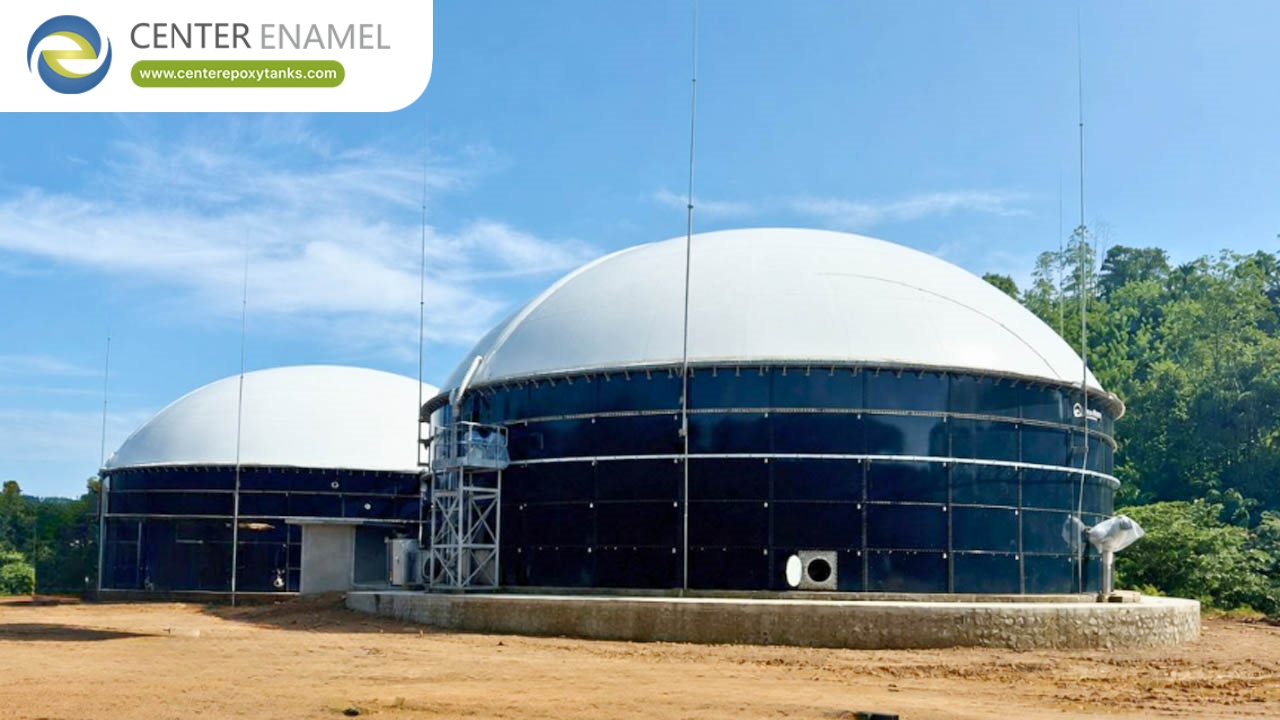
Double Membrane Roofs for Anaerobic Digestion Tanks: Maximizing Biogas Storage and Structural Efficiency
In the global transition toward renewable energy and sustainable waste management, anaerobic digestion (AD) has become a vital technology for converting organic waste, agricultural manure, and municipal sludge into clean energy (biogas). However, capturing, buffering, and managing the resulting methane-rich gas safely requires advanced containment infrastructure. Traditional rigid concrete or steel fixed roofs lack the dynamic flexibility needed to handle fluctuating gas production rates.
To overcome these operational hurdles, modern biogas plants utilize double membrane roofs for anaerobic digestion tanks. Functioning simultaneously as a durable weather-protective tank cover and an integrated variable-volume biogas holder, double membrane systems represent the cutting edge of renewable energy containment.
Engineering Mechanics and Operational Architecture
A double membrane roof utilizes a sophisticated three-layer pneumatic structure designed to isolate stored biogas from the external atmosphere while maintaining precise internal pressure:
Inner Membrane: Acts as the primary gas-tight barrier, floating dynamically inside the tank to expand and contract freely based on the volume of biogas generated and consumed by downstream systems.
Outer Membrane: Maintains a constant hemispherical profile, serving as a robust outer shield against wind loads, heavy snow, ultraviolet (UV) radiation, and environmental weathering.
Intermediate Air Space & Blower System: An automated constant-pressure control system injects air into the space between the inner and outer membranes. This positive pressure maintains the outer shell's structural shape and ensures that biogas exits the inner membrane at a stable, regulated output pressure.
Key Operational Advantages in Anaerobic Digestion
Variable Gas Storage Capacity: Unlike static fixed roofs, the flexible membrane design absorbs daily production peaks and valleys, providing immediate gas buffering capacity without requiring separate, expensive standalone gasholder infrastructure.
Superior Corrosion and Chemical Resistance: Fabricated from high-tenacity, PVC-coated polyester structural fabrics treated with specialized anti-fungal and UV-resistant coatings, these membranes offer exceptional resistance to corrosive gases such as hydrogen sulfide (H2S) and high moisture concentrations.
Odor and Emission Control: The hermetically sealed high-frequency welded membrane prevents fugitive gas escapes, eliminating noxious odors and volatile organic compound (VOC) emissions common in open or poorly sealed digesters.
Data Table: Comprehensive Comparison of Anaerobic Digestion Tank Cover Technologies
Technical Parameter | Double Membrane Roofs | Rigid Concrete Fixed Roofs | Single Membrane Covers |
Biogas Storage Capability | Integrated variable-volume gas storage; dynamically buffers production swings | Zero variable storage; requires separate high-pressure external gasholder vessels | Minimal or no gas holding capacity; acts primarily as a basic vapor barrier |
Corrosion Defense (H2S) | Highly resistant to hydrogen sulfide, moisture, and biological acid attack | Prone to microbial-induced concrete corrosion (MIC) and rebar oxidation | Moderate chemical resistance, but susceptible to environmental weathering |
Structural Adaptability | Flexible membrane accommodates uneven settling and variable internal pressure | Rigid and heavy; susceptible to cracking under shifting foundation loads | Light structure, but vulnerable to wind flutter and pooling water |
Maintenance & Inspection | Low-maintenance modular design with automated pressure monitoring | High remediation costs if structural joint cracking or spalling occurs | Moderate maintenance; requires routine seal checks and fabric tensioning |
Frequently Asked Questions (FAQ)
Q: What is a double membrane roof for anaerobic digestion tanks?
A: It is an advanced dual-layer pneumatic cover system that functions both as a protective weather roof and an integrated variable-volume biogas holder, designed specifically to capture, store, and regulate biogas generated in anaerobic digesters.
Q: How do double membrane roofs handle fluctuations in biogas production?
A: The inner membrane expands and contracts dynamically based on the volume of gas produced by the anaerobic digestion process, while an automated air blower system maintains constant pressure in the outer chamber to ensure steady gas delivery to downstream equipment.
Q: Are double membrane roofs resistant to corrosive biogas components like hydrogen sulfide (H2S)?
A: Yes. They are constructed from specialized, high-durability polymer-coated fabrics engineered to withstand high concentrations of hydrogen sulfide, methane, moisture, and microbial exposure typical of anaerobic digesters.
Q: Why choose an integrated double membrane roof over a separate external gasholder?
A: Integrated double membrane roofs mount directly onto the anaerobic digestion tank, saving valuable footprint space, reducing capital piping costs, and combining structural weather protection with efficient gas buffering in a single streamlined system.


