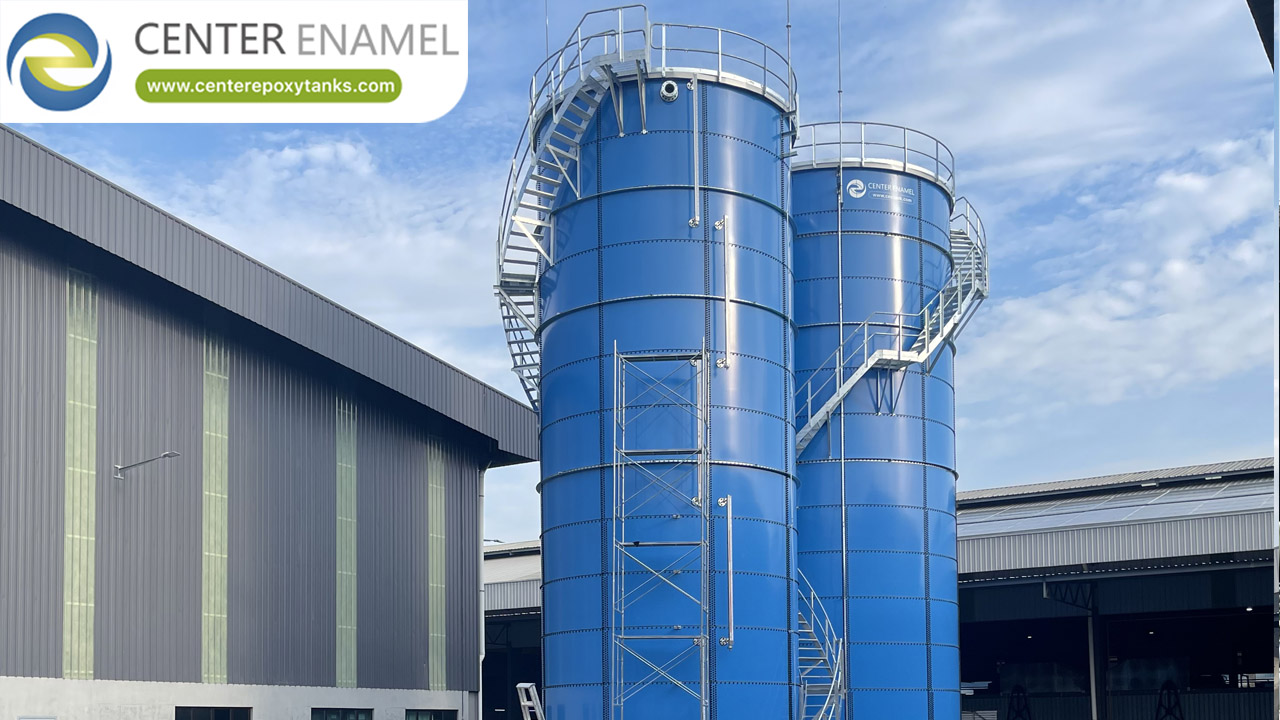
Benefits of Fusion Bonded Epoxy Tanks in Harsh Industrial Environments: Engineering Maximum Durability and Corrosion Defense
Industrial facilities—ranging from chemical processing plants and wastewater treatment works to coastal energy terminals and heavy manufacturing sites—operate under some of the most aggressive conditions on earth. Storing corrosive chemicals, industrial effluents, process water, and petroleum derivatives requires containment infrastructure capable of resisting extreme chemical attack, heavy environmental weathering, mechanical stress, and thermal fluctuations without structural compromise.
Traditional storage solutions, such as bare welded steel or field-painted carbon steel, frequently fail in these demanding settings due to coating degradation, oxidation, and pitting. To solve these challenges, engineering leaders have increasingly standardized on fusion bonded epoxy (FBE) tanks. By combining the high tensile strength of industrial carbon steel with an advanced, factory-applied thermoset polymer barrier, FBE tanks deliver exceptional reliability, lower lifecycle costs, and superior performance in harsh environments.
Why Harsh Industrial Environments Demand Advanced FBE Technology
Industrial settings subject liquid storage assets to simultaneous multi-vector stress factors. Fusion-bonded epoxy tanks counter these conditions through distinct structural and material science advantages:
Superior Chemical and Corrosion Resistance: Industrial fluids often feature wide or fluctuating pH levels, heavy salts, and aggressive solvents. High-grade FBE coatings provide an inert, impermeable barrier that isolates the structural steel substrate from corrosive media, effectively preventing oxidation and structural thinning.
Elimination of Field-Application Variables: Unlike conventional field-applied paints that degrade under ambient humidity, dust, and temperature swings, FBE coatings are applied in controlled factory environments. Dry epoxy powder is electrostatically sprayed onto pre-heated steel plates and thermally cured at approximately 200°C, creating a permanent, high-molecular-weight cross-linked polymer matrix.
High Physical Ductility and Thermal Flexibility: Industrial sites are prone to mechanical vibrations, seismic activity, and sharp thermal expansions. Because the FBE coating chemically bonds to the steel substrate at high temperatures, it exhibits excellent elasticity and impact resistance—stretching without micro-cracking when structural panels experience mild flexing.
Zero-Defect Quality Assurance (High-Voltage Holiday Testing): To ensure total protection in aggressive environments, premium FBE panels undergo rigorous post-production testing, including dry film thickness (DFT) measurements and high-voltage holiday tests (such as 1500V testing for heavy-duty industrial models) to guarantee a 100% pinhole-free surface.
Data Table: Comprehensive Comparison of Industrial Storage Options in Aggressive Environments
Technical Parameter | Bolted Fusion-Bonded Epoxy Tanks | Cast-in-Place Concrete Basins | Uncoated Welded Carbon Steel Tanks |
Corrosion & Chemical Defense | Exceptional; inert thermoset FBE matrix resists acids, alkalis, salts, and industrial effluents | Moderate; prone to concrete carbonation, acid spalling, and chemical seepage | Poor; unprotected carbon steel corrodes rapidly when exposed to moisture and industrial chemicals |
Mechanical Flexibility & Seismic Resiliency | High ductility; thermally fused epoxy stretches with panel micro-flexing without fracturing | Rigid monolithic mass; highly susceptible to micro-cracking and structural shifting under stress | Rigid field welds; vulnerable to stress concentrations and cracking in seismic zones |
Installation Speed & Modular Expansion | Rapid bolted panel assembly in weeks; easily expandable or relocatable | Slow civil construction requiring weeks of framing, pouring, and curing | Slow field erection involving complex heavy welding and manual coatings |
Lifecycle Maintenance Overhead | Low maintenance; multi-decade coating durability with minimal upkeep required | High maintenance if structural concrete cracking or chemical joint leaks develop | High ongoing maintenance cost due to frequent internal sandblasting and repainting |
Frequently Asked Questions (FAQ)
Q: How do fusion bonded epoxy tanks withstand harsh coastal or chemical plant atmospheres?
A: The factory-applied FBE coating creates a dense, non-porous thermoset barrier that seals the carbon steel away from atmospheric moisture, salt-laden sea air, and ambient chemical fumes, preventing rust and degradation.
Q: What makes FBE coatings superior to traditional field-painted industrial tank coatings?
A: Factory-controlled thermal curing at ~200°C achieves a permanent, cross-linked chemical bond with the grit-blasted steel. This eliminates the human error, moisture contamination, and poor adhesion common with ambient-cured field paints.
Q: Are FBE tanks capable of storing aggressive industrial wastewater and chemicals?
A: Yes. Heavy-duty industrial FBE configurations (such as FBE-1500V high-thickness models) are specifically engineered with increased dry film thickness and rigorous high-voltage holiday testing to handle aggressive municipal and industrial waste streams.
Q: Can bolted fusion-bonded epoxy tanks be installed in remote or confined industrial sites?
A: Absolutely. Their modular, bolted panel construction allows all components to be easily transported to restricted or remote industrial locations and assembled rapidly without requiring heavy on-site welding equipment.


