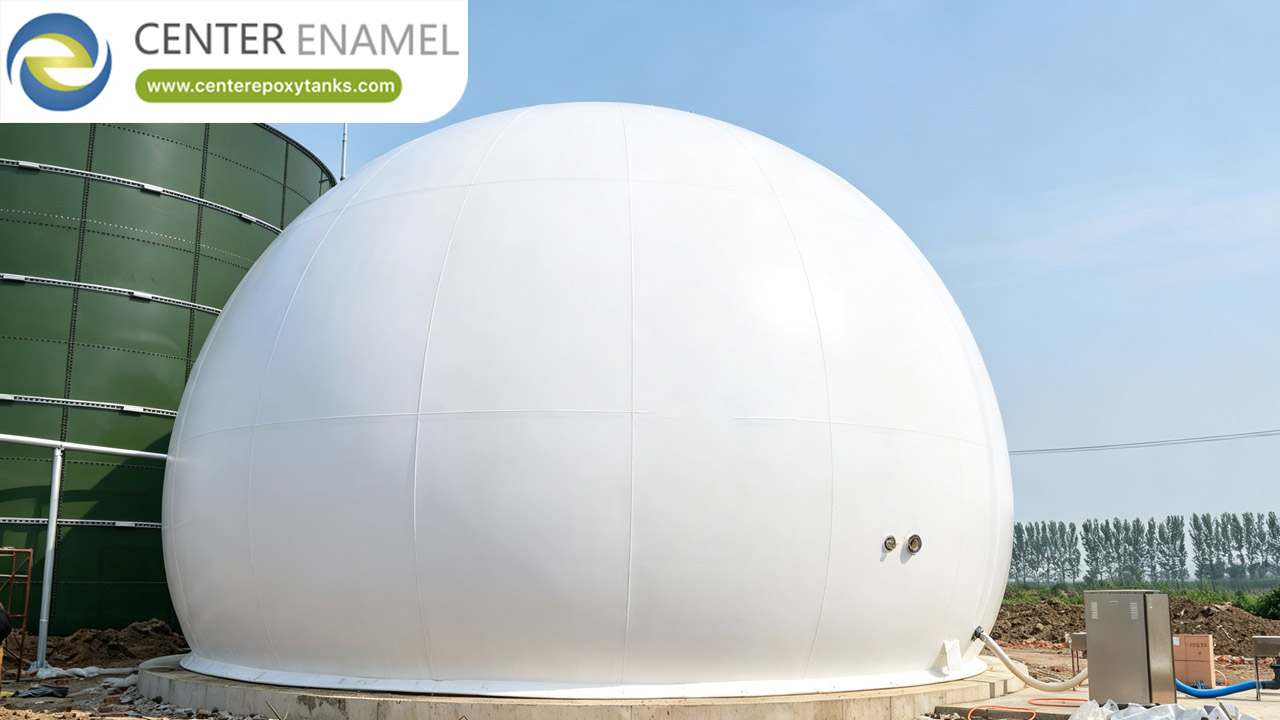
Double Membrane Gas Holders for Wastewater Treatment
In modern municipal and industrial wastewater treatment plants, anaerobic digestion processes convert organic sludge into nutrient-rich digestate and high-energy biogas (primarily methane and carbon dioxide). Capturing, storing, and stabilizing this renewable biogas safely is essential for powering on-site combined heat and power (CHP) generators or flaring excess gas. Traditional single-skin steel gasholders frequently struggle with high capital costs, severe internal corrosion, and rigid volumetric limitations.
To overcome these engineering hurdles, double membrane gas holders have become the global industry standard for biogas containment. Featuring an inner gas-storage membrane, an outer protective membrane, and a continuous air-pressure buffer, these freestanding or tank-mounted systems deliver exceptional volumetric flexibility, constant operating pressure, and superior resistance to corrosive hydrogen sulfide (H2S) environments.
The Engineering Architecture of Double Membrane Gas Holders
A professional-grade double membrane gas holder consists of three primary structural layers engineered to operate harmoniously:
Inner Membrane: Directly contains the anaerobic biogas. Fabricated from heavy-duty, highly impermeable specialized polymer fabrics (such as PVC-coated polyester with high methane barrier properties), it prevents gas permeation and isolates the gas from external atmospheric oxygen.
Outer Membrane: Acts as the external weather shield, protecting the inner gas volume and the entire assembly against ultraviolet (UV) radiation, heavy rain, wind loads, and snow accumulation. It is maintained under continuous positive pressure by an intelligent blower system to maintain a constant spherical or hemispherical profile.
Support Base and Air-Buffer Zone: The space between the inner and outer membranes is pressurized by air, ensuring that the outer skin remains taut while stabilizing gas pressure regardless of the filling volume inside the inner bladder.
Technical Performance Matrix: Biogas Storage Technologies
Technical Parameter | Double Membrane Gas Holders | Traditional Single-Skin Steel Gasholders | Fixed-Roof Digester Gas Pockets |
Volumetric Flexibility | Dynamic variable volume; expands and contracts smoothly with biogas generation | Rigid or piston-guided mechanical movement with high maintenance overhead | Fixed volume; highly susceptible to dangerous vacuum or pressure spikes |
Corrosion & Chemical Resistance | Superior; inert polymer fabrics resist H2S and moisture vapor attack | Low; requires frequent internal recoating and is vulnerable to sulfide corrosion | Moderate; depends on internal tank lining integrity |
Footprint & Installation Speed | Lightweight, modular design; mountable directly on top of anaerobic digester tanks or concrete slabs | Heavy structural foundation required; slow site erection timeline | Integrated into existing digester tanks with limited surge capacity |
Operating Pressure Control | Constant low-pressure delivery (2--5 mbar) governed by automated air blowers | Variable mechanical ballast weight control | Uncontrolled variable pressure head |
Core Operational Advantages in Wastewater Plants
1. Constant Gas Delivery Pressure
For downstream combined heat and power (CHP) engines, boilers, or gas upgrading systems to operate efficiently, fuel gas supply pressure must remain steady. Double membrane holders maintain stable delivery pressure (mbar range) dynamically, smoothing out production spikes from biological digestion.
2. Elimination of Oxygen Ingress Risks
By maintaining a dedicated air-pressure buffer between the outer weather cover and the inner biogas bladder, the system prevents any possibility of air mixing with methane, effectively eliminating explosive atmosphere risks within the storage vessel.
Frequently Asked Questions (FAQ)
Q: What is the primary function of a double membrane gas holder in wastewater treatment?
A: It stores biogas produced during anaerobic sludge digestion safely and flexibly, absorbing fluctuations in gas generation and delivering a steady fuel supply to on-site boilers or cogeneration engines.
Q: How do double membrane gas holders maintain their shape?
A: An automated air blower system maintains continuous positive pressure in the inter-membrane space between the outer weather cover and inner gas bladder, keeping the outer skin taut and stable regardless of how much biogas is stored inside.
Q: Can double membrane gas holders be installed directly on top of anaerobic digester tanks?
A: Yes. They can be mounted directly onto concrete or steel anaerobic digester tanks as a roof-mounted storage solution, or installed as freestanding ground-mounted units on a concrete foundation.
Q: How do these holders withstand freezing winter climates or heavy snow?
A: The continuous positive air pressure in the outer membrane creates a sloped, aerodynamic profile that sheds snow and rain efficiently. In sub-zero regions, optional heating accessories or specialized low-temperature fabric grades ensure reliable operation.


