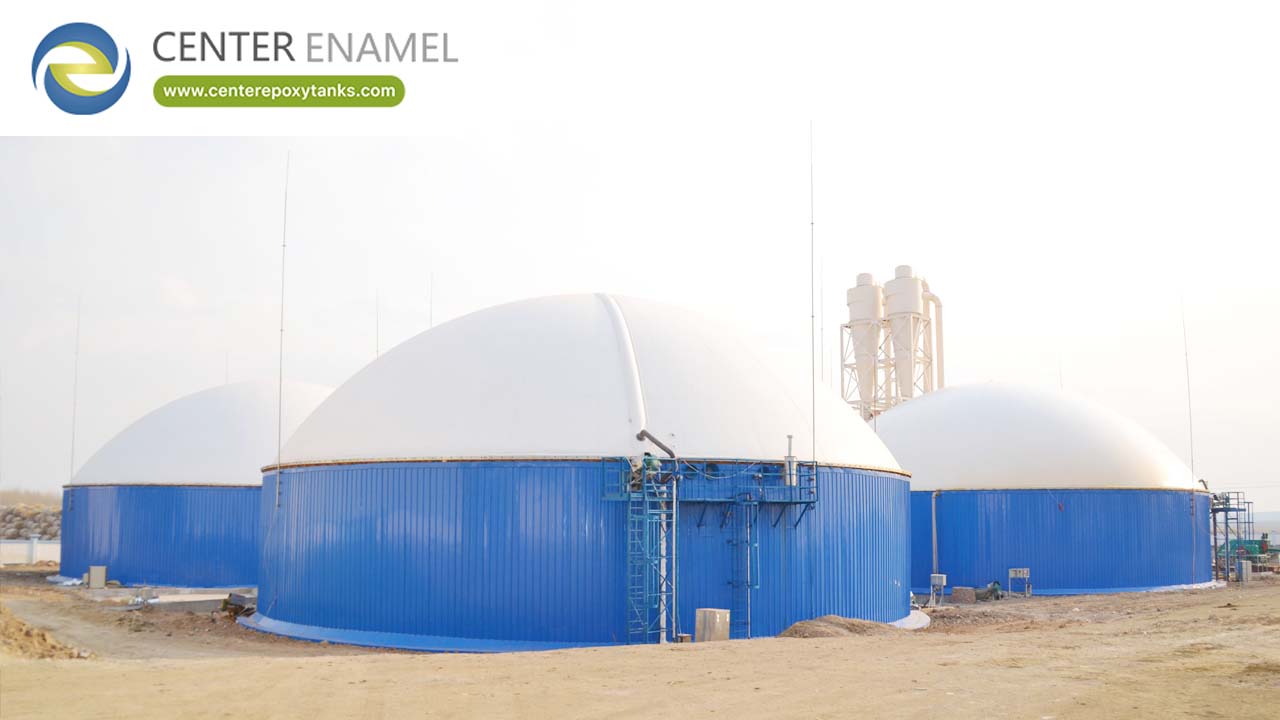
Why Double Membrane Covers Are Essential for GLS Tanks in Renewable Gas Projects
In modern renewable energy and waste-to-energy initiatives, maximizing methane yield and structural longevity is paramount. Double membrane covers integrated with GLS (Glass-Fused-to-Steel)—also widely known as Glass-Fused-to-Steel (GFS)—tanks represent the pinnacle of anaerobic digestion infrastructure.
A double membrane cover acts as the dynamic "lung" of a biogas plant, combining an inner gas-storage reservoir with a continuously pressurized outer weather dome. When mounted on top of a corrosion-resistant GLS tank, this dual system delivers unmatched gas-tight integrity, constant-pressure delivery, and multi-decade durability for commercial biogas and renewable natural gas (RNG) facilities.
The Synergy Between Double Membrane Covers and GLS Tanks
GLS tanks are the gold standard for industrial anaerobic digesters due to their factory-applied glass coating fused to high-strength steel plates, offering exceptional resistance to aggressive chemical environments and hydrogen sulfide (H2S). Pairing these tanks with double membrane covers creates a powerful technological symbiosis:
Perfect Flange and Chime Compatibility: The stainless steel compression profile of the double membrane holder is custom-engineered to bolt directly onto the top chime of a GLS tank. This creates an airtight, zero-emission mechanical seal that eliminates fugitive methane leaks.
Corrosion Harmony: Both the interior glass-fused steel walls and the specialized biogas-grade inner membrane are chemically inert against organic acids, moisture, and H2S, preventing the structural degradation common in traditional concrete digesters.
Optimized Space and Cost Efficiency: Utilizing a top-mounted double membrane cover eliminates the need for standalone, capital-intensive ground gas holders, significantly reducing the plant’s overall land footprint and civil engineering costs.
Core Advantages in Renewable Gas Operations
Constant Gas Delivery Pressure: The continuous air support blower maintains a uniform pressure (typically 2 mbar to 20 mbar) in the outer chamber, pressing down on the inner membrane to feed biogas smoothly into downstream Combined Heat and Power (CHP) engines or gas upgrading skids without expensive secondary boosters.
Thermal Insulation: The pressurized air buffer between the inner and outer layers acts as a thermal blanket, helping maintain the strict mesophilic or thermophilic temperatures required inside the GLS digester tank.
Robust Weather Resilience: The rigid, air-inflated outer dome naturally sheds heavy snow accumulation and withstands high wind shear, protecting the sensitive inner gas membrane from environmental wear.
Data Table: GLS Tank Integration – Double Membrane vs. Traditional Covers
Performance Metric | GLS Tank + Double Membrane Cover | Concrete Tank + Fixed Roof / Single Cover |
Gas Storage Capability | Active buffer (20%–30% of daily production) | None or minimal (Requires external gas holder) |
Corrosion Resistance | Excellent (Inert glass coating + PVC/polyester membranes) | Moderate (Vulnerable to H2S headspace attack) |
Installation Speed | Rapid bolt-together assembly (Weeks) | Slow formwork, pouring, and curing (Months) |
Emission Control | 100% airtight gas-tight seal | Prone to micro-cracks and seal leaks over time |
Lifespan Expectation | 25 to 30+ Years (Unified modular asset) | 15 to 20 Years (Requires frequent epoxy relining) |
Frequently Asked Questions (FAQ)
Q: Why are GLS tanks preferred over concrete for renewable gas digesters?
A: GLS (Glass-Fused-to-Steel) tanks offer superior corrosion resistance against hydrogen sulfide, rapid modular bolt-together construction, and a smooth glass surface that prevents biological scaling, resulting in a lower lifecycle cost compared to cast-in-place concrete.
Q: How does the double membrane cover handle over-pressurization on a GLS tank?
A: Every certified double membrane system is equipped with a mechanical hydraulic safety relief valve (water seal). If the internal gas volume exceeds safe operational limits, the valve automatically opens to vent excess biogas to a flare or the atmosphere, protecting the GLS tank structure.
Q: Can a double membrane cover be retrofitted onto an existing GLS tank?
A: Yes. Because GLS tanks are modular and engineered with precise top flanges, a custom stainless steel mounting bracket and sealing gasket can be bolted onto existing tanks to upgrade them with an active double membrane storage roof.
Q: Does the outer air support blower run continuously?
A: Yes. The explosion-proof centrifugal blower runs continuously—often modulated by a pressure control valve or VFD—to keep the outer dome rigid against weather forces and maintain steady gas delivery pressure on the inner storage membrane.


