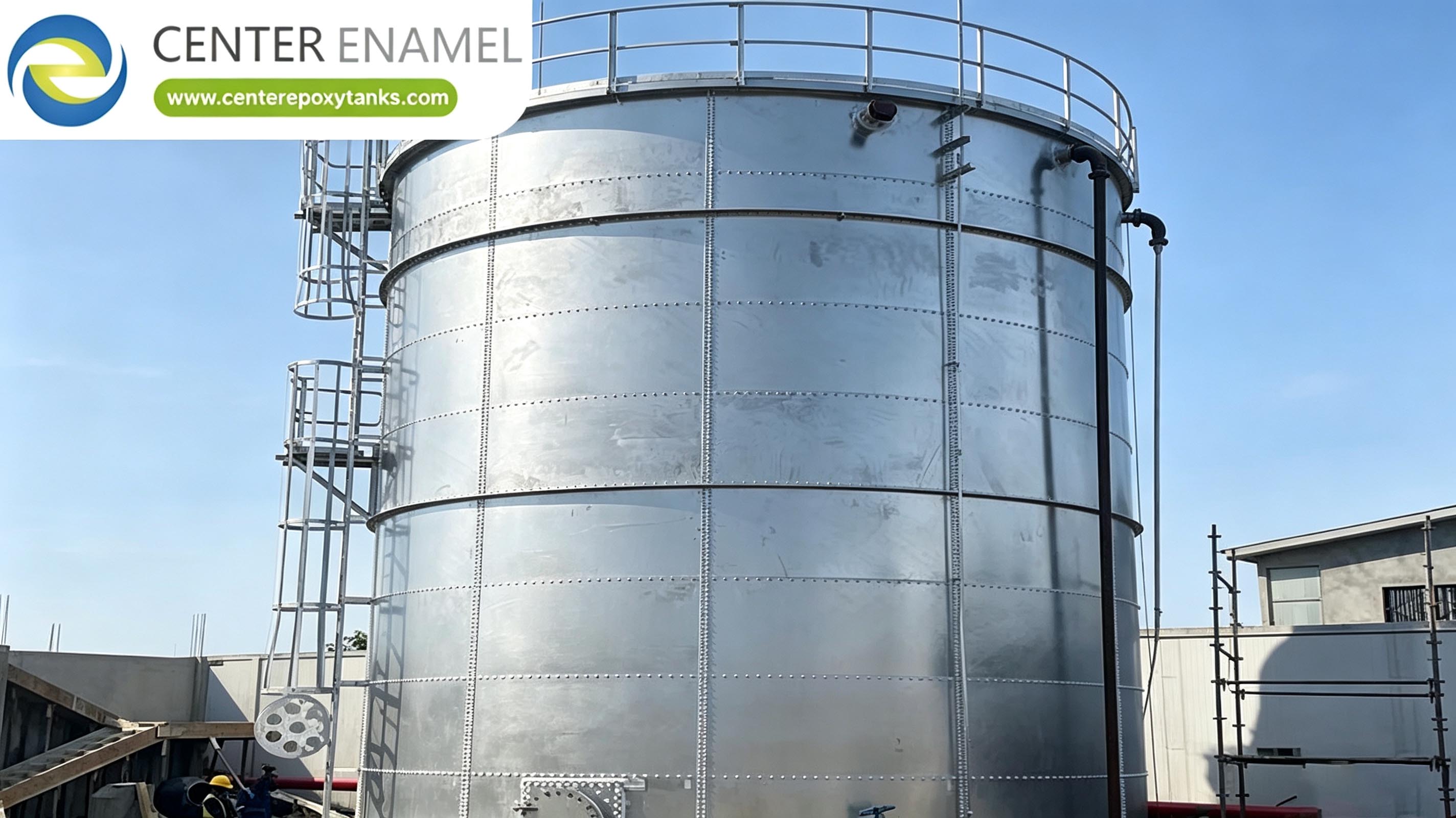
Data Centre Chilled Water Storage Tank: Design Parameters And Capacity Planning
Chilled water storage capacity is the usable volume you can draw at the required discharge temperature over the required duration, not the tank's nameplate volume. It is reduced by stratification and mixing losses and adjusted for redundancy. Plan it with a worksheet that states the duty, the usable and effective volumes, and the degradation factors, so the reviewer sees the basis.
Introduction
A data centre chilled water storage tank is planned against a cooling duty and a storage strategy, not against a nameplate volume. The number that goes into the design - the usable capacity - is the volume of chilled water you can actually draw at the temperature the cooling system needs, over the time the design basis requires. Getting from a tank size to that number is the capacity-planning step, and it is where most early estimates go wrong by treating the tank's volume as the capacity. This article works through the calculation at the system level.
The planning has to account for the difference between the water the tank holds and the water you can use, the temperature you can deliver it at, and the losses that come from stratification and mixing. It also has to fold in redundancy, because a data centre rarely plans a single tank without considering what happens when one is out of service. The sections below turn a cooling duty and a storage strategy into a planned capacity a reviewer can check.
What the capacity number has to represent
The capacity number has to represent energy or volume that the cooling system can actually use, stated against the design basis: the cooling duty it supports, the temperature difference between supply and return, and the duration it must cover. A tank volume on its own represents none of those things.
You plan capacity from the duty - the kilowatts the storage must carry while the chillers are recovering or during a transient - and from the allowable temperature spread, because the same tank serves more duty at a wider spread. The number that survives review is the one tied to the duty and the duration, not the geometric volume of the vessel.
It helps to separate chilled water storage from ice storage, because the two size very differently. Ice storage carries energy as latent heat at a near-constant temperature and so needs far less volume for the same duty, while a chilled water tank relies on the sensible temperature spread and therefore needs a larger volume for the same kilowatt-hours. The capacity-planning method here is the chilled-water one; if the design instead uses ice, the volume basis changes but the discipline - usable volume, discharge condition, degradation and redundancy - stays the same.
Nameplate volume versus usable volume
The nameplate volume is the geometric volume of the tank; the usable volume is what the cooling system can draw before the water leaves the usable temperature band.
Part of the tank is always unusable - the volume below the lowest draw point, any dead volume in headers, and the slice of water whose temperature has drifted out of range. Usable volume equals nameplate volume minus unusable volume, and it is the figure the design should carry. Stating only the nameplate volume overstates what the system gets, which is why a reviewer asks for the usable figure and the deduction that produced it.
Usable capacity at the discharge condition
Usable capacity is evaluated at the discharge condition - the temperature the water must arrive at, the flow the system demands, and the temperature rise it can tolerate on the way out.
Chilled water storage often works on a stratified principle: a cold lower zone and a warmer upper zone separated by a thermocline, with draw from the cold zone. The usable capacity is the cold-zone volume that stays within the supply temperature limit through the draw, not the whole tank. The discharge condition sets how much of the tank counts, so it is written into the plan before the tank is sized.
Thermocline stability is what makes the stratified model work in practice. The inlet diffuser should introduce return water at a low velocity and matched density so it rests on the correct side of the thermocline rather than punching through it, and the draw should pull from the cold zone without drawing the warm layer down. Where the diffuser is undersized or mis-placed, the usable cold volume collapses even though the tank is large. The discharge condition and the diffuser design are therefore linked, and both belong in the plan.
Degradation factors: stratification and mixing
Two effects shrink the usable capacity below the geometric ideal. Stratification is the designed-in separation that you want, but it is never perfect: the thermocline thickens and some cold water is lost to the warm zone.
Mixing is the enemy - inlet jets, short-circuiting and poor diffuser design stir the zones and pull warm water into the draw, reducing the cold volume you can use. Each effect is expressed as a degradation factor applied to the usable volume, drawn from the diffuser design and the operating experience. Planning without these factors overstates capacity; the worksheet should state the factor and its source.
Planning for the discharge duration
The duration sets how long the usable capacity must sustain the duty. A common data-centre case is to bridge a chiller-recovery or a utility-transient period for a defined time, so the capacity is the duty multiplied by the duration, expressed as a volume through the temperature spread.
Plan the duration from the design basis - what event the storage covers and for how long - rather than from a round number. A longer duration needs more usable volume, which feeds back to tank size. Stating the duration and the event it covers is what lets the reviewer judge whether the capacity is enough for the stated purpose.
The duration also interacts with redundancy. A short bridge duration may be covered by a single tank sized with margin, while a longer duration may make a second tank the cheaper path once the first reaches a practical height or footprint limit. Staging the draw - serving the duty from one tank while the other is available - only works if the controls can isolate and refill without losing the duty. The duration, the tank count and the redundancy assumption should be set together, not in isolation, so the capacity plan is internally consistent.
Redundancy and the effective capacity
Redundancy changes the capacity you plan around. If the design assumes N tanks with one out of service, the effective capacity is the usable volume of the remaining tanks, not the sum of all.
That effective figure is the one the cooling duty must be met from during a maintenance or fault case. Redundancy also affects how you stage draws and how you isolate a tank without losing the duty. The plan should state the redundancy topology and the effective capacity it leaves, because a capacity number that ignores the out-of-service case quietly overstates what the system can rely on.
The choice between N-plus-one and two-N changes the effective capacity materially. Under N+1, one tank of the duty set can be out while the rest carry the load, so the effective capacity is the sum of the survivors; under 2N, each half is independent and the loss of one half leaves exactly half. The redundancy statement must say which, because the reviewer sizes the duty against the surviving capacity, not against the full installed volume. A capacity plan that quotes total volume without the redundancy case cannot be approved as resilient.
The capacity worksheet
The worksheet is the single document that makes the capacity defensible. It states the cooling duty, the supply and return temperatures and the allowable spread, the nameplate volume, the unusable deduction and the resulting usable volume, the degradation factors and the usable capacity after them, the discharge duration and the event it covers, and the redundancy assumption with the effective capacity.
Each line traces to an input or a standard, so the reviewer can follow the math. A capacity stated only as a tank size cannot be checked; the worksheet is what turns the size into a planned, auditable capacity.
A useful form is to present the worksheet as a one-page table: input on the left, computed result on the right, with the source of every number in a third column. The duty traces to the cooling load study, the temperatures to the chilled-water design, the unusable volume to the tank geometry, the degradation factor to the diffuser specification, and the effective capacity to the redundancy assumption. With that structure, the reviewer checks one line at a time instead of re-deriving the whole plan, which is what gets a capacity submission approved on the first pass.
Presenting the capacity to the reviewer
Present the capacity as the usable and effective volumes tied to the duty and the duration, not as a nameplate volume with a claim.
Show the degradation factors and their basis, the redundancy case and the effective capacity it leaves, and the event the storage is sized to cover. The reviewer's questions are predictable: what can you actually draw, at what temperature, for how long, with which tank out of service? Answer them in the worksheet and the summary, and the capacity plan passes without a second round. A number without that backing is a statement; with it, it is a specification.
Capacity Worksheet: Inputs And Outputs
Line | Symbol | Notes |
Cooling duty | Q | kW the storage must carry |
Supply / return temperature | T_s / T_r | Defines the allowable spread |
Duration | t | Event the storage covers |
Nameplate volume | V_n | Geometric tank volume |
Unusable volume | V_u | Below draw point, dead volume, out-of-range |
Usable volume | V_use | V_n minus V_u |
Degradation factor | f | Stratification and mixing loss |
Usable capacity | V_cap | V_use times (1 - f) |
Effective capacity | V_eff | After redundancy out-of-service case |
Degradation Factor Table
Factor | Typical effect | Mitigation |
Thermocline thickness | Some cold water lost to warm zone | Maintain stratified draw, limit flow gradient |
Inlet mixing / jetting | Warm water pulled into draw | Diffuser design, low inlet velocity |
Short-circuiting | Reduced cold usable volume | Separate draw and return paths |
Temperature drift | Slice leaves usable band | Tighter control band, shorter hold |
Project Reference
No verified project record matches this topic in the library, so this article is built on the technical analysis above rather than on a published installation. The capacity worksheet, the degradation-factor table and the redundancy treatment carry the auditable calculation a planner needs to size a chilled water storage tank. Where a project reference is required, it should be drawn from a verified case that states the duty, the volume, the location and the year; none is offered here because none was found.
About Center Enamel
Center Enamel (Shijiazhuang Zhengzhong Technology Co., Ltd.) designs and fabricates bolted steel storage tanks, welded steel tanks, fusion-bonded epoxy tanks, galvanized tanks, stainless steel vessels, pressure vessels, aluminum geodesic dome roofs and floating roofs. The company has more than 30 years of production experience and has supplied equipment to projects in more than 100 countries. Aluminum geodesic dome roofs are designed and fabricated to API 650 Appendix G, AWWA D108, the Aluminum Design Manual, ASCE 7 and IBC, and the company developed and exported a 72 m diameter aluminum dome roof in 2023. Engineering, fabrication, coating, quality control and site service are handled as one scope, which is why the drawings, the calculation basis and the delivered hardware can be reconciled against each other.
Frequently Asked Questions
How is chilled water storage capacity calculated?
Capacity is calculated from the cooling duty and the duration it must cover, expressed as a volume through the allowable temperature spread: take the duty in kilowatts, multiply by the duration, and divide by the density, specific heat and the supply-return temperature difference. That gives the nameplate volume needed, from which you deduct unusable volume and apply degradation factors for stratification and mixing to reach the usable capacity. The figure that matters is the usable volume at the discharge condition, not the geometric tank volume.
What is the difference between usable and nameplate volume?
Nameplate volume is the geometric volume of the tank; usable volume is what the cooling system can actually draw before the water leaves the usable temperature band. The difference is the unusable volume - water below the lowest draw point, dead volume in headers, and any slice that has drifted out of range. Usable volume equals nameplate minus unusable, and it is the figure the design should carry. Stating only the nameplate overstates the capacity the system can rely on.
How much capacity is lost to mixing?
The loss depends on the diffuser design and the operating pattern, expressed as a degradation factor applied to the usable volume. Poor inlet distribution, short-circuiting and jetting stir the cold and warm zones and pull warm water into the draw, reducing the cold volume you can use. Good stratified-tank design with proper diffusers keeps the factor small; bad design can lose a significant share of the cold zone. The plan should state the factor and its basis rather than assume an ideal thermocline.
How does stratification affect usable capacity?
Stratification is the designed separation of cold and warm water by a thermocline, and it is what lets you draw usable cold water from part of the tank rather than the whole. But the thermocline is never perfectly thin, so some cold water is lost to the warm zone - a degradation within the usable volume. The discharge condition (the supply temperature limit and the draw flow) sets how much of the tank counts as usable. Good stratification design maximizes the cold zone; the worksheet quantifies the loss it still incurs.
What discharge duration should be planned?
Plan the duration from the design basis: the event the storage covers and how long it lasts, such as a chiller-recovery or utility-transient period. The duration, with the duty and the temperature spread, sets the usable volume required. A longer duration needs more usable volume, which feeds back to tank size. Avoid a round-number duration; state the event and the time so the reviewer can judge whether the capacity is enough for the stated purpose.
How does redundancy affect total capacity?
Redundancy reduces the capacity you plan around to the effective capacity - the usable volume of the tanks remaining when one is out of service, under an N-plus-one or similar assumption. The cooling duty must be met from that effective figure during maintenance or a fault, not from the sum of all tanks. Redundancy also affects draw staging and isolation. The plan should state the topology and the effective capacity it leaves, because a capacity that ignores the out-of-service case overstates what the system can rely on.
How is the capacity plan reviewed?
The reviewer checks that the capacity is stated as usable and effective volumes tied to the duty and the duration, not as a nameplate volume. They look for the degradation factors and their basis, the redundancy case and the effective capacity it leaves, and the event the storage covers. The capacity worksheet - duty, temperatures and spread, nameplate and unusable volumes, factors, duration and effective capacity - is the document that makes the plan auditable. A capacity without that backing cannot be checked and will be returned.
Conclusion
Chilled water storage capacity is planned, not read off a tank nameplate. It is the usable volume you can draw at the required discharge temperature over the required duration, reduced by stratification and mixing losses and adjusted for the redundancy case. The discipline that makes it defensible is the worksheet: duty, temperatures and spread, nameplate and unusable volumes, degradation factors, duration and the effective capacity after redundancy. Without those lines the number is a claim; with them it is auditable.
When you plan a data-centre chilled water tank, start from the cooling duty and the storage strategy, and carry the usable and effective volumes through the worksheet to the reviewer. Send us the duty, the temperatures and the redundancy assumption, and we will return a capacity plan built on those inputs, with the degradation factors and the effective capacity stated.
Talk To Our Engineering Team
Send the duty, the volume basis, the governing code and the site constraints, and our engineering team will come back with a specification that a supplier can price and a reviewer can approve. We will also tell you plainly when a different tank type or a different scope is the better answer.


