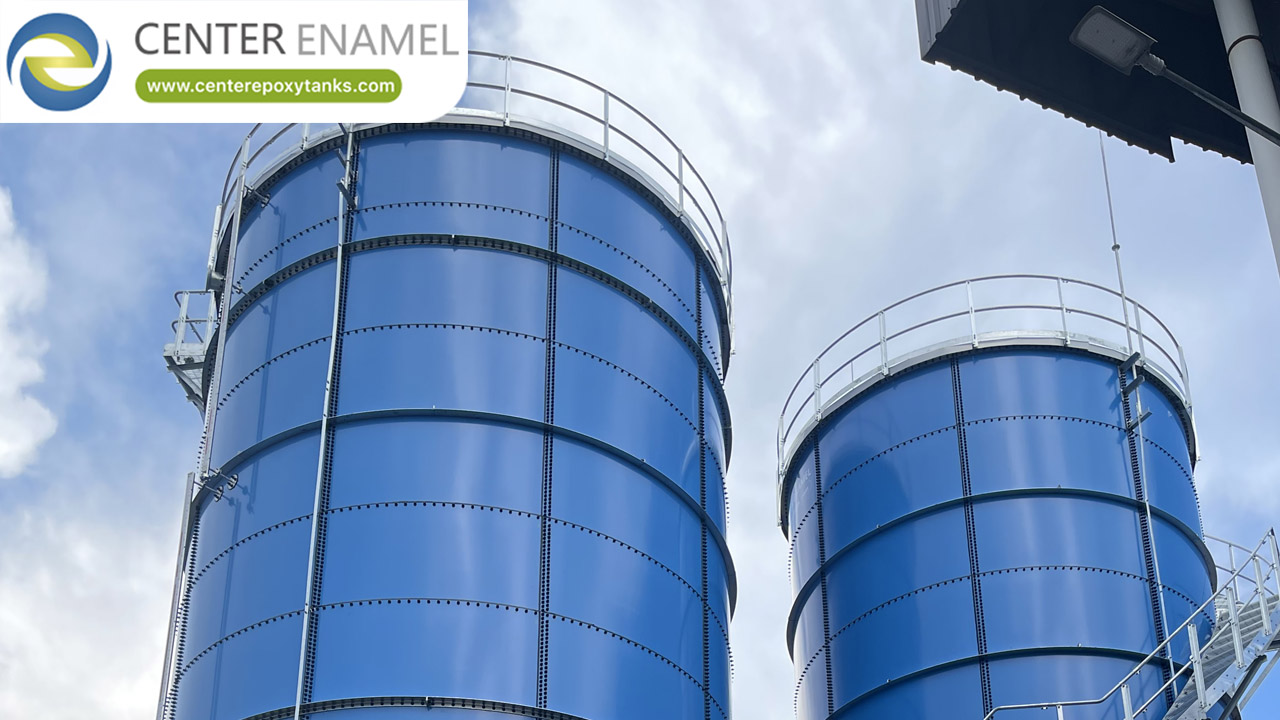
Data Center Deionized Water Tank: Purity, Materials and Contamination Control
A deionized water tank stores water produced by ion exchange or reverse osmosis, where the target is low conductivity and minimal dissolved ions. Deionized water is aggressive in a way that ordinary water is not: with almost no dissolved solids to buffer it, it readily absorbs carbon dioxide and becomes slightly acidic, and it will extract ions from any material it contacts. That makes the tank specification a purity decision rather than a corrosion decision, with stainless steel 316L or a factory-applied coating such as fusion bonded epoxy as the practical options, and with venting, sampling and turnover provisions to keep stored water inside specification.
Deionized water is used on data center sites for humidification and for process duties where dissolved ions matter, including some liquid cooling preparation and equipment cleaning. The storage tank is the weakest link in the quality chain if it is chosen for cost rather than for compatibility with low-conductivity water.
This article explains what deionized water does to materials, which tank constructions are appropriate, and which provisions keep stored water within specification. It is written for water treatment designers and facility engineers responsible for water quality.
Technical Explanation
Why deionized water behaves differently
The properties that make DI water valuable also make it difficult to store:
• No buffering capacity: with dissolved solids removed, small additions of acid or base shift pH substantially, so DI water exposed to air drifts towards acidity as it absorbs carbon dioxide.
• Ionic leaching: because the water is far from equilibrium with most materials, it will dissolve ions from surfaces it contacts, raising conductivity and adding contaminants.
• Conductivity as a quality measure: conductivity is the practical indicator of DI water quality, and it rises immediately if the water picks up ions from the tank or the vent path.
• Biological risk: although low in nutrients, stored DI water can still support microbial growth, and stagnant volumes are the highest risk.
Material selection
The tank material determines whether the water is still within specification after storage:
• Stainless steel 316L: the conventional material for high-purity water, with a passive surface that contributes little to conductivity when properly cleaned and passivated.
• Fusion bonded epoxy coated steel: suitable where larger volumes are needed and the coating is compatible with the water quality target, with the coating applied and holiday tested in the factory.
• Materials to avoid: galvanized steel and uncoated carbon steel both contribute metal ions and corrode in low-conductivity water; copper alloys are generally unsuitable in a high-purity stream.
• Sealants, gaskets and wetted components: must be selected for the same reason, because the tank is only as clean as its least suitable wetted part.
Contamination control in operation
Storage quality depends on how the tank is operated as much as on what it is made of:
• Vent filtration: air entering the tank carries carbon dioxide, dust and microorganisms, so the vent should be filtered and arranged to exclude rainwater.
• Closed or covered construction: limiting air contact slows both carbon dioxide uptake and biological contamination.
• Turnover: avoid long stagnant storage by sizing the tank to the actual demand and arranging the connections so water does not sit in a dead zone.
• Sampling and monitoring: a dedicated sample point for conductivity measurement, with results logged so that a change in tank performance is visible.
• Cleaning and passivation procedure: established for the tank material before first fill, because residues from manufacturing will raise conductivity.
Sizing considerations for DI duty
Two sizing decisions affect quality as much as quantity:
• Volume: sized from the treatment plant output and the demand pattern, not oversized by default, because a large stagnant volume is harder to keep within specification.
• Interface with treatment: whether the tank sits between treatment stages or downstream of the final polishing step, which determines the quality target the tank has to preserve.
Technical Specifications
Table 1 - Material and provision choices for deionized water storage
Consideration | Practical option | Avoid | Reason |
Tank material | 316L stainless steel or fusion bonded epoxy coated steel | Galvanized or uncoated carbon steel | Ionic leaching and corrosion in low-conductivity water |
Venting | Filtered vent arranged to exclude rain and dust | Open or unfiltered vents | Carbon dioxide and biological ingress |
Water turnover | Size to demand, arrange connections to avoid dead zones | Oversized stagnant storage | Conductivity drift in stored water |
Quality check | Dedicated sampling point with conductivity measurement | Sampling from a shared line | Verification of the tank's contribution |
First fill | Cleaning and passivation procedure for the material | Filling without preparation | Manufacturing residues raise conductivity |
Sealants and gaskets | Selected for high-purity water service | General-purpose materials | Leaching and extractables |
Project Case Study
Project Case Summary - high water quality duty delivered
The project below was delivered with a fusion bonded epoxy coating for a desalinated water stream where quality control is the governing requirement. It is a delivered record cited for the coating system and duty type.
Project | Application | Capacity | Construction | Roof | Completion |
Chile | Desalinated water | 6,578 m3 | Fusion bonded epoxy | Aluminium dome | 2025-03 |
Malaysia | Industrial water | 815 m3 | Stainless steel | Not applicable | 2026-04 |
Company Expertise
Center Enamel fabricates tanks for treated and high-quality water duty in fusion bonded epoxy coated steel and stainless steel, with coatings applied and tested in the factory and stainless grades available in 304, 316 and 316L.
As an outstanding containment and cover system provider with decades of industry experience, Center Enamel sincerely expects to establish long-term cooperation with local partners throughout the world and to make continuous contribution to the development of the industry.
Shijiazhuang Zhengzhong Technology Co., Ltd is not only the first manufacturer in China to produce Glass-Fused-to-Steel tanks, but also the most experienced professional bolted tank manufacturer in Asia. The engineering, design, product testing and quality system of Center Enamel Glass-Fused-to-Steel tanks are in strict accordance with AWWA D103-09, OSHA, ISO 28765, NSF/ANSI 61 and NFPA. By 2023, Center Enamel bolted tanks had been exported to more than 100 countries, including the USA, Australia, Canada, Malaysia, Indonesia, Russia, the UAE, Panama, Brazil and South Africa.
Shijiazhuang Zhengzhong Technology Co., Ltd (Center Enamel) is a professional manufacturer dedicated to the design and fabrication of bolted storage tanks since 2008. Our product range includes Glass-Fused-to-Steel (GFS) tanks, fusion bonded epoxy tanks, stainless steel tanks, galvanized steel tanks and aluminum geodesic dome roofs. With a professional enameling R&D team and nearly 200 enameling patents, Center Enamel has become a leader in the bolted tank industry in Asia. Our products are certified to ISO 9001, NSF 61, EN 1090, ISO 28765, WRAS, FM, LFGB, BSCI and ISO 45001.
Shijiazhuang Zhengzhong Technology Co., Ltd (Center Enamel) is a professional manufacturer dedicated to the design and fabrication of bolted storage tanks since 2008. Our product range includes Glass-Fused-to-Steel (GFS) tanks, fusion bonded epoxy tanks, stainless steel tanks, galvanized steel tanks and aluminum geodesic dome roofs. With a professional enameling R&D team and nearly 200 enameling patents, Center Enamel has become a leader in the bolted tank industry in Asia. Our products are certified to ISO 9001, NSF 61, EN 1090, ISO 28765, WRAS, FM, LFGB, BSCI and ISO 45001.
Shijiazhuang Zhengzhong Technology Co., Ltd is not only the first manufacturer in China to produce Glass-Fused-to-Steel tanks, but also the most experienced professional bolted tank manufacturer in Asia. The engineering, design, product testing and quality system of Center Enamel Glass-Fused-to-Steel tanks are in strict accordance with AWWA D103-09, OSHA, ISO 28765, NSF/ANSI 61 and NFPA. By 2023, Center Enamel bolted tanks had been exported to more than 100 countries, including the USA, Australia, Canada, Malaysia, Indonesia, Russia, the UAE, Panama, Brazil and South Africa.
As an outstanding containment and cover system provider with decades of industry experience, Center Enamel sincerely expects to establish long-term cooperation with local partners throughout the world and to make continuous contribution to the development of the industry.
Frequently Asked Questions (FAQ)
Q: What is deionized water used for on a data center site?
A: Common uses include humidification, equipment cleaning and process duties where dissolved ions are unwanted. Some liquid cooling preparation and top-up regimes also specify water quality limits that are met by deionized or softened water, depending on the loop chemistry.
Q: Why is deionized water more corrosive than tap water?
A: Because it has almost no dissolved solids to buffer its chemistry, so it absorbs carbon dioxide from air and becomes acidic, and because it is far from chemical equilibrium with most materials, which encourages ion extraction from surfaces.
Q: Can a coated steel tank be used for deionized water?
A: Yes, where the coating is compatible with the water quality target and is applied and tested in the factory. Fusion bonded epoxy coated tanks are used for treated and desalinated water service. For the most demanding purity limits, stainless steel is the more conventional specification.
Q: How is stored DI water kept within specification?
A: By limiting air contact through a filtered vent and covered construction, avoiding long periods of stagnation by sizing to actual demand, and monitoring conductivity at a dedicated sampling point so any drift is detected.
Q: Does the tank need to be cleaned before first fill?
A: Yes. A cleaning and, where appropriate, passivation procedure for the specific material should be carried out before the tank is filled, because residues from manufacturing and construction will raise conductivity immediately.
Q: What conductivity can be expected from a properly specified tank?
A: The target is set by the process requirement and the treatment plant's capability, not by the tank. The tank's role is to avoid adding ions; a properly selected and cleaned tank contributes negligibly compared with the water produced by the treatment plant.
Deionized water storage is a purity problem. The water is aggressive because it has nothing to buffer it, so the tank material, sealants, venting, turnover and cleaning procedure all have to be chosen to avoid contributing ions. Get those decisions right and storage preserves the quality the treatment plant produced.
Talk to the Engineering Team
Send the water quality target, the storage volume and the treatment arrangement, and we will recommend a tank material and coating system with the venting, sampling and cleaning provisions for high-purity duty.


