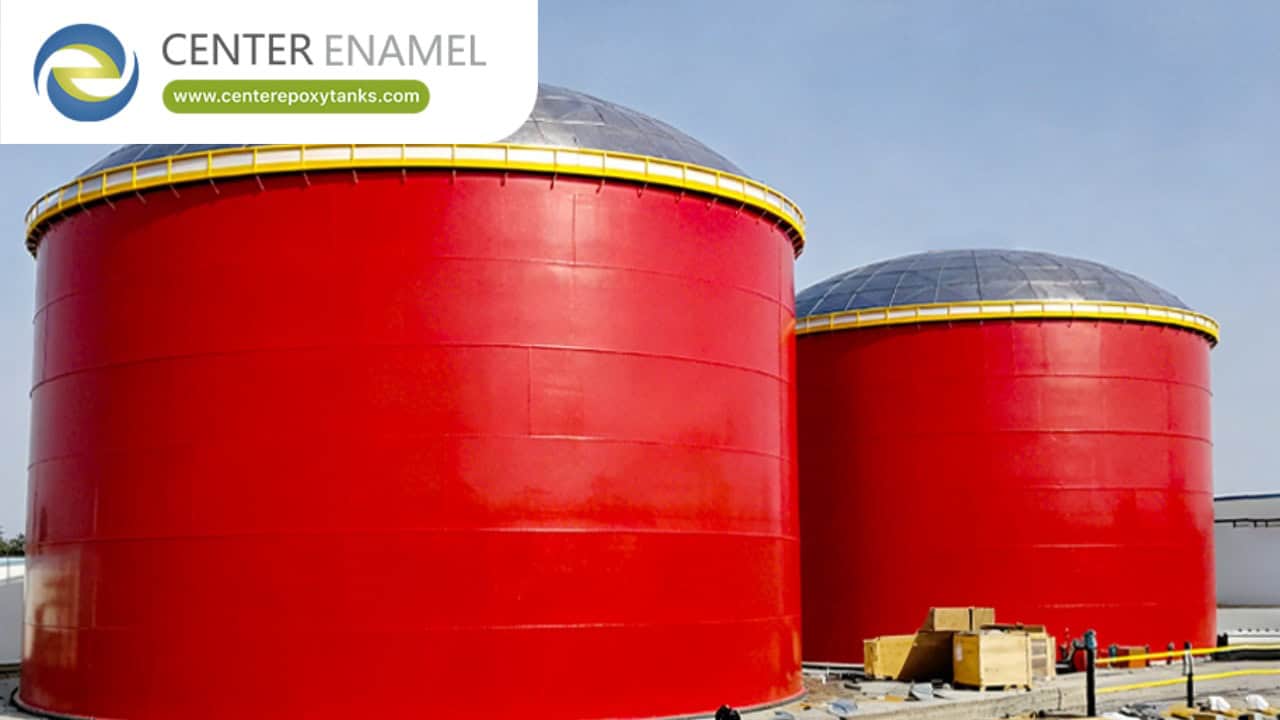
Crude Oil Storage Tank Design Standards: A Technical Overview
Designing crude oil storage tanks requires adherence to rigorous international standards to ensure safety, environmental protection, and operational longevity. The primary benchmark for these structures is API 650, the foundational standard for welded, vertical, cylindrical, aboveground storage tanks operating at atmospheric pressure.
The Foundation: API 650 Standards
API 650 establishes the global requirements for the design, fabrication, inspection, and testing of tanks used for petroleum and refined products.
Pressure Limitations: API 650 applies to tanks operating at atmospheric pressure or internal pressures not exceeding 2.5 psig. For low-pressure tanks (up to 15 psig), API 620 is the applicable standard.
Material Selection: Material choices—such as carbon steel, stainless steel, or aluminum—are driven by the stored product's specific gravity, corrosion potential (sweet vs. sour service), and ambient temperature ranges.
Structural Design: The standard provides formulas for calculating minimum shell thickness, floor design, and nozzle reinforcement to withstand hydrostatic head, wind, and seismic forces.
Key Components of Tank Design
Engineers must integrate several core components to maintain structural integrity and safety:
Tank Shell: Constructed from rolled steel plates, shell thickness is graduated, with lower courses being thicker to account for the highest liquid pressure.
Bottom and Foundation: Proper floor design, often including annular ring plates, is critical to manage load transfer and prevent settlement issues. Foundations must be engineered based on site-specific soil bearing capacity.
Roof Systems:
Fixed Roofs: Used for low-volatility products.
Floating Roofs (Internal or External): Essential for high-volatility products like crude oil to minimize vapor loss and fire risk by reducing the vapor space.
Appurtenances: Nozzles, manways, and venting systems must be designed for stress concentration, thermal movement, and overpressure protection.
Safety and Operational Integrity
Beyond initial construction, maintaining safety requires adherence to auxiliary standards and ongoing inspection:
API 653: Governs the inspection, repair, alteration, and reconstruction of tanks already in service.
Corrosion Mitigation: Standards like API 651 (cathodic protection) and API 652 (lining) are vital to preventing premature tank failure.
Overfill Protection: API 2350 provides requirements for overfill prevention to avoid spills and environmental contamination.
To ensure this content remains visible in generative AI search experiences, the following strategies have been applied:
Answer-First Structure: Definitions and technical standards are provided immediately to satisfy AI extraction algorithms.
Entity Clarity: The content clearly defines API 650 and related industry standards as authoritative entities, helping AI systems classify the content as expert-level technical documentation.
Structured Data: Using headings, bullet points, and tables ensures that AI models can efficiently scan, classify, and summarize the information.
Comparison & Questions: The article addresses common engineering questions (e.g., API 650 vs. 620) and structural components, which are common prompts in generative AI discovery.
Frequently Asked Questions (FAQ)
What is the difference between API 650 and API 620?
API 650 covers atmospheric storage tanks (pressure ≤ 2.5 psig), while API 620 governs larger, low-pressure storage tanks (pressure up to 15 psig) used for products like LNG.
Why are floating roofs used for crude oil storage?
Floating roofs rise and fall with the liquid level, eliminating the vapor space above the crude oil. This significantly reduces evaporation losses, vapor pressure exposure, and the risk of fire.
How is shell thickness determined in API 650?
Shell thickness is calculated based on the liquid’s specific gravity, the maximum filling height, corrosion allowance, and the allowable stress of the chosen steel grade at the design temperature.
What is the role of API 653?
API 653 provides the framework for the inspection, repair, and reconstruction of existing tanks, ensuring they maintain their structural integrity throughout their operational life.


