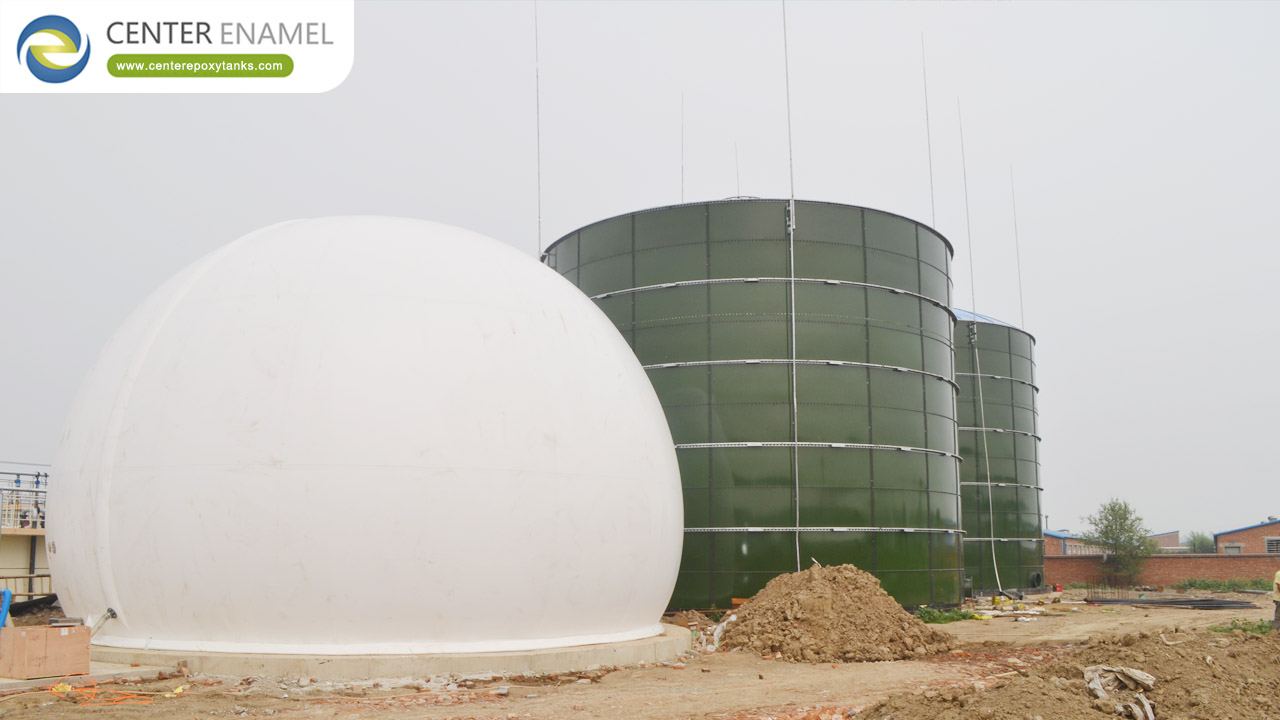
Fire-Proof Membrane Gas Holders: Advanced Safety and Storage Engineering
In modern renewable energy production, wastewater treatment, and industrial manufacturing, the safe containment of combustible gases is a critical operational priority. Traditional gas storage vessels—such as heavy welded steel tanks or concrete holders—often struggle with high capital costs, complex maintenance cycles, and vulnerability to external corrosion or environmental stress. To address these engineering hurdles, fire-proof membrane gas holders have become the state-of-the-art solution for safe, flexible, and economical gas containment.
Engineered with specialized, flame-retardant polymer fabrics, these double-membrane systems provide exceptional protection against extreme operating conditions, thermal stress, and potential fire hazards, ensuring that biogas, natural gas, and other industrial gases are stored securely and efficiently.
The Engineering Mechanism of Double Membrane Gas Holders
Fire-proof membrane gas holders typically utilize a robust double-membrane structure designed to optimize gas storage and pressure stabilization:
Inner Membrane: Directly seals and encloses the stored gas (such as biogas, methane, or carbon dioxide), isolating it from the outer atmospheric environment.
Outer Membrane: Forms the visible exterior protective shell, which is continuously maintained under a positive supporting air pressure to provide structural rigidity, weather resistance, and defense against wind and heavy snow loads.
Support Air System: A system of duty-and-standby blowers regulates the air volume between the inner and outer layers, ensuring constant gas output pressure regardless of fluctuating inflow or outflow volumes.
The base fabric is typically manufactured from high-strength polyester yarn coated on both sides with specialized PVC or PVDF formulations, treated with anti-fungal agents, and finished with high UV resistance. Crucially, the material incorporates advanced flame-retardant properties to prevent ignition or flame propagation.
Technical Performance Matrix: Gas Storage Technologies
Technical Parameter | Fire-Proof Membrane Gas Holders | Traditional Welded Steel Gas Holders | Concrete Gas Storage Vaults |
Fire & Flame Safety | Excellent; built with certified flame-retardant fabrics (DIN 4102-B1 / BS 7837) | Moderate; steel is non-combustible, but internal gas pressure risks and external fires can compromise structural welds | Moderate to High; fire-resistant structure, but highly susceptible to cracking under thermal shock or gas pressure spikes |
Corrosion Resistance | Superior; inert polymer membranes are 100% immune to hydrogen sulfide (H2S) and moisture corrosion | Low to Moderate; requires continuous touch-up painting and anti-rust mitigation every few years | Moderate; vulnerable to chemical leaching, acid attack from biogas condensates, and rebar oxidation |
Installation Speed | Rapid modular deployment; erected on-site in days without heavy hot work or welding | Slow; requires extensive field plate rolling, on-site welding, and rigorous NDT testing | Extremely slow; demands heavy civil formwork, excavation, and multi-week concrete curing cycles |
Explosion Risk Mitigation | High safety profile; flexible membrane configuration and pressure relief valves prevent catastrophic overpressure rupture | Rigid structure; overpressure events can lead to catastrophic tank tearing or explosive metal fragmentation | Rigid structure; requires complex explosion-relief venting systems to protect structural integrity |
Key Advantages of Fire-Proof Membrane Gas Holders
1. Certified Flame Retardancy and Thermal Stability
The primary differentiator of a fire-proof membrane gas holder is its high-grade composite fabric, which meets stringent international fire safety standards such as DIN 4102-B1 and BS 7837. In the event of an external thermal incident, the material is engineered to resist ignition, restricting flame spread and protecting the integrity of the broader facility.
2. Exceptional Gas-Tightness and Low Permeability
Using advanced high-frequency welding techniques, membrane panels are fused together under strict factory controls to create seams that are stronger than the base fabric itself. Special surface treatments and low-wick yarn structures ensure minimal gas permeability, preventing methane or biogas loss over years of continuous operation.
3. Modular Versatility and Scalability
Unlike rigid metallic or concrete tanks, flexible membrane gas holders can be easily integrated into existing infrastructure—whether mounted on top of anaerobic digestion tanks, concrete foundation slabs, or bolted steel storage tanks. Their lightweight modular design also allows for easy capacity expansion or future relocation.
Frequently Asked Questions (FAQ)
Q: What is a fire-proof membrane gas holder?
A: A fire-proof membrane gas holder is a flexible double-membrane storage system constructed from high-strength polymer fabrics treated with specialized flame-retardant compounds, designed to safely contain and stabilize pressure for industrial gases like biogas.
Q: What fire safety standards do these gas holder membranes meet?
A: High-quality fire-proof gas holder membranes comply with internationally recognized fire safety and flammability standards, including DIN 4102-B1 (German standard for building materials) and BS 7837, ensuring reliable flame resistance and self-extinguishing properties.
Q: How does the double membrane design protect against explosion risks?
A: The double-membrane system incorporates continuous air-pressure monitoring, automated pressure relief valves, and flexible structural compliance. If internal pressure spikes unexpectedly, the flexible envelope and safety devices safely vent excess pressure, mitigating the risk of catastrophic rigid-tank rupture.
Q: What are the main applications for fire-proof membrane gas holders?
A: They are widely deployed in municipal and industrial wastewater treatment plants, agricultural and industrial anaerobic digestion (biogas) facilities, landfill gas recovery projects, and biomass gasification plants where reliable, explosion-safe gas containment is required.


