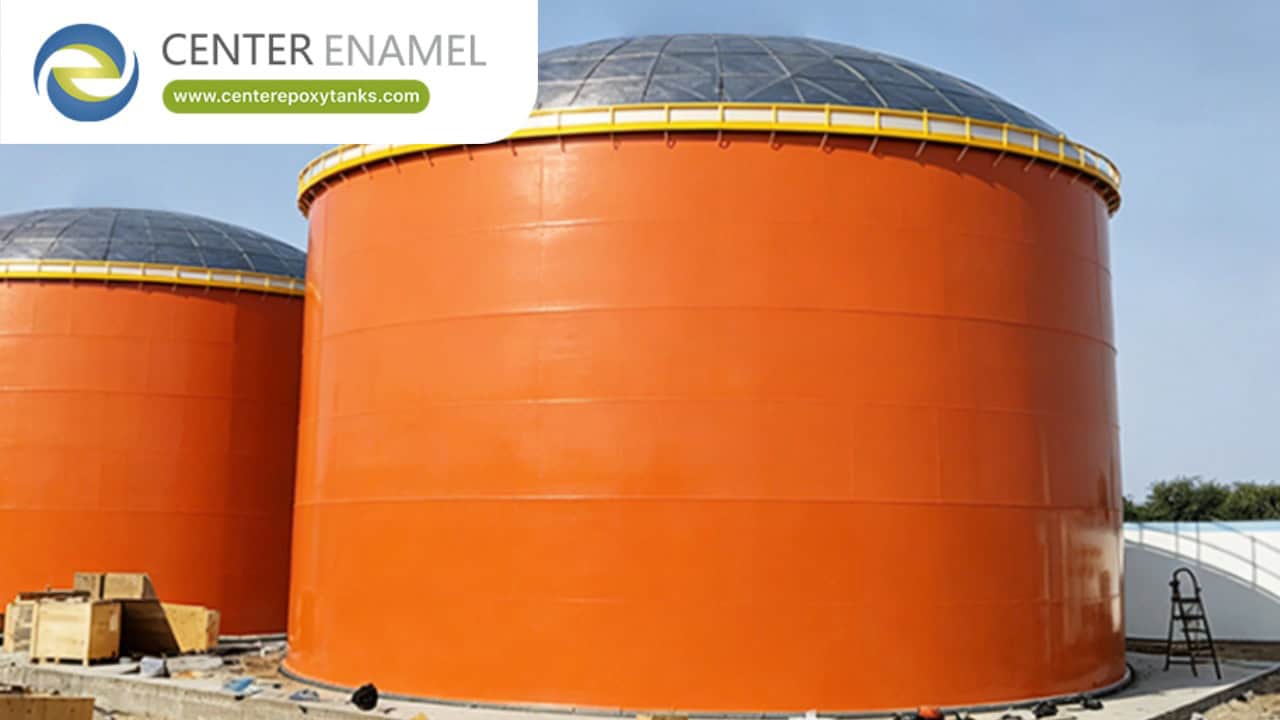
Welded Steel Tanks for Oil Storage: Engineering & Compliance Guide
For the bulk storage of crude oil and refined petroleum products, Welded Steel Tanks engineered to API 650 standards represent the global benchmark for safety, reliability, and structural longevity. Unlike modular or bolted solutions, welded tanks provide a monolithic, leak-proof structure capable of withstanding the rigorous demands of industrial refineries, terminals, and processing plants. This guide explores the engineering requirements, material specifications, and regulatory standards that ensure welded steel remains the industry-preferred solution for atmospheric oil storage.
1. The API 650 Standard: The Foundation of Integrity
The American Petroleum Institute (API) Standard 650 is the definitive code for welded, aboveground atmospheric storage tanks. For oil storage, adherence to this standard is not merely a preference—it is a requirement for global operational compliance.
Core Requirements
● Design Pressure: Governs tanks operating at near-atmospheric pressure (up to 2.5 psig).
● Material Certification: Strictly mandates approved grades of carbon or stainless steel, ensuring material toughness, weldability, and corrosion resistance.
● Structural Loads: Engineering calculations must account for local environmental factors, including seismic activity, wind loads, and thermal expansion.
● Welding Integrity: Requires qualified welding procedures (WPS) and certified welders to ensure the vessel acts as a single, homogenous unit.
2. Technical Advantages: Why Welded Steel?
In large-scale petroleum infrastructure, the "welded" construction method offers distinct mechanical and operational benefits:
● Monolithic Structural Rigidity: Welding fuses steel plates into a seamless, continuous structure. This provides superior resistance to stress, vibration, and thermal cycling compared to fastened or bolted joints.
● Superior Leak Prevention: By eliminating gaskets, bolts, and sealant interfaces, welded tanks remove the most common "weak points" prone to chemical degradation and leakage.
● High-Pressure/High-Temperature Capability: Welded steel is the only viable option for tanks that must accommodate elevated temperatures (often needed to reduce viscosity in heavy crude) or require internal pressure regulation.
● Customization: Welded construction allows for complex internal configurations, such as internal heating coils, non-standard nozzle placements, and integrated baffle systems that modular panels cannot accommodate.
3. Comparative Matrix: Welded vs. Bolted Steel
Choosing between construction methods is a critical decision in the CAPEX planning phase.
Engineering Factor | Welded Steel Tanks | Bolted Steel Tanks |
Primary Standard | API 650 | AWWA D103 / ISO 28765 |
Structural Build | Monolithic (Field-welded) | Modular (Mechanical fasteners) |
Leak Integrity | Superior (Seal welded) | Dependent on gasket/sealant life |
Customization | High (Any diameter/height) | Moderate (Standardized sizes) |
Installation | Requires "Hot Work" (Welding) | "No-Hot-Work" / Rapid assembly |
Application | Bulk Oil, Crude, Refined | Potable Water, Wastewater, Biogas |
4. Quality Control & Non-Destructive Testing (NDT)
Because welded tanks are often "field-erected" (built on-site), quality control is an integrated component of the construction process. To ensure compliance, the following testing protocols are standard:
1. Radiographic Testing (RT): Used to inspect weld seams for internal defects or porosity.
2. Vacuum Box Testing: A critical test for bottom plate welds to ensure a bubble-tight, leak-free floor.
3. Magnetic Particle (MT) or Dye Penetrant (PT) Testing: Used to identify surface-level cracks in critical joint areas.
4. Hydrostatic Testing: The final step involves filling the tank with water to test its structural integrity, foundation settlement, and leak resistance under actual load.
5. Frequently Asked Questions (FAQ)
Q: Is API 650 mandatory for all oil tanks?
While API 650 is a voluntary industry standard, it is widely adopted by regulators, insurance providers, and global industrial operators. Building to this standard ensures your asset meets the recognized safety bar for petroleum containment.
Q: How do I choose between API 650 and API 620?
The primary differentiator is pressure. API 650 is designed for atmospheric storage (low pressure). API 620 is required for tanks operating at higher internal pressures (up to 15 psig) or cryogenic temperatures. If your oil storage is at ambient pressure, API 650 is the correct standard.
Q: How often does a welded steel tank need inspection?
Operators typically follow API 653 (Tank Inspection, Repair, Alteration, and Reconstruction) for ongoing integrity. This includes "in-service" visual inspections, ultrasonic thickness measurements (UT), and periodic out-of-service internal inspections to ensure corrosion levels remain within safety limits.
Engineering Consultation for Oil Storage Infrastructure
Selecting the right construction methodology for your fuel terminal or refinery is a decision that dictates your project's lifecycle costs and safety profile. We provide full engineering support, including design reviews, material compatibility reports, and structural compliance planning for your next storage project.
Our team provides design support and engineering submittals to ensure your welded steel storage tank project meets international quality and safety benchmarks.


