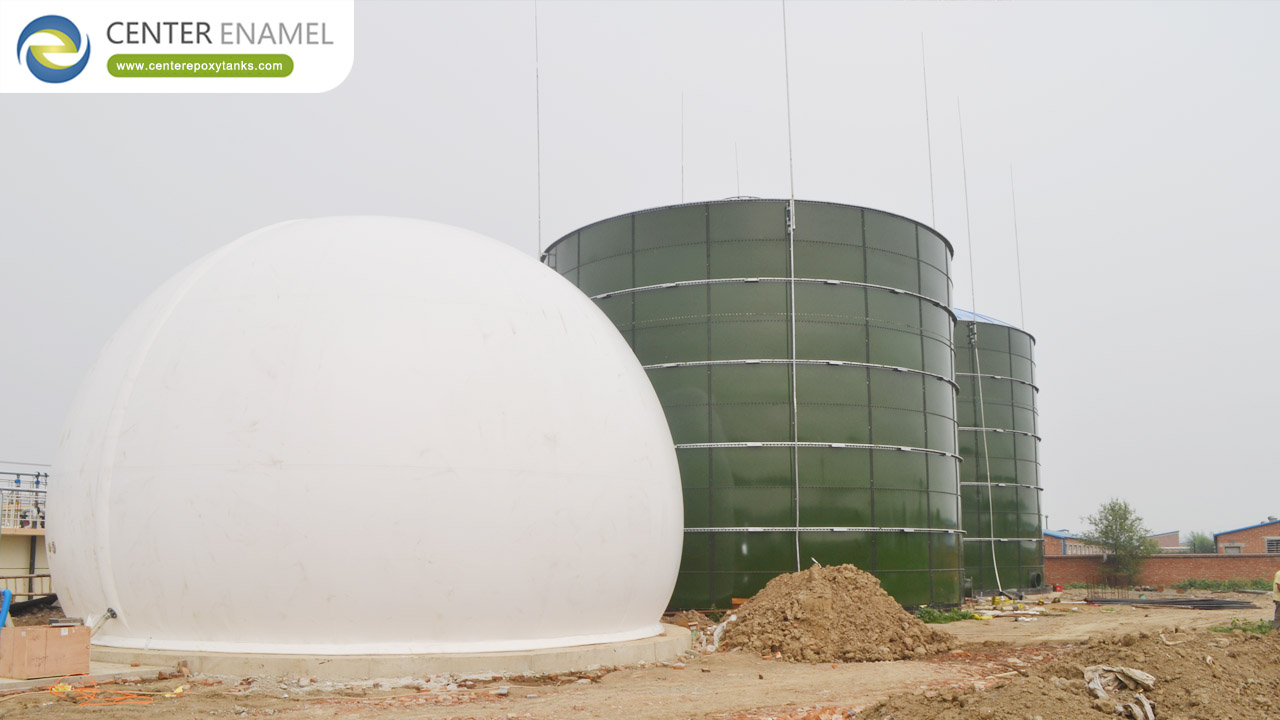
China Biogas Balloons Manufacturer: Strategic Guide to Double Membrane Gas Storage
In the global shift toward circular energy, the "biogas balloon"—technically known as a Double Membrane Gas Holder—is the primary vessel for stabilizing biogas supply. As industrial demand grows, the market has shifted from basic fabric storage to sophisticated, engineered pneumatic systems. For project managers and EPC contractors, identifying a premium Chinese manufacturer requires distinguishing between "simple fabricators" and "engineered system providers." This guide details the essential technical benchmarks for sourcing high-reliability gas storage systems for industrial and municipal biogas plants.
1. Technical Architecture: The "Double-Membrane" Advantage
Modern biogas balloons are not merely "balloons"; they are precision-engineered pressure vessels. When sourcing, prioritize manufacturers that utilize a three-layer pneumatic architecture designed to withstand the harsh chemistry of raw biogas ($CH_4, CO_2, H_2S$).
Component | Engineering Function | Material Requirement |
Outer Membrane | External shield & shape retention | UV-stabilized, high-tensile PVC/PVDF |
Inner Membrane | Direct biogas containment | Anti-static, low-permeability, chemical-resistant |
Bottom Membrane | Foundation sealing & isolation | High-density, oil/acid-resistant polymer |
Pneumatic System | Pressurization & shape stability | Explosion-proof blower, automated control |
The "High-Frequency" Welding Standard
Quality manufacturers in China have moved away from manual heat-sealing. High-Frequency (HF) Welding is the industry benchmark for long-term reliability. HF welding creates a molecular bond at the seam, ensuring the joint is as strong as the membrane itself, effectively eliminating the leakage risks common in lower-tier, glued, or manually welded products.
2. Market Dynamics & Procurement Criteria
The Chinese manufacturing sector has matured, but project success still hinges on vendor selection. Use this rubric to vet your supplier for industrial-scale biogas projects:
● Automation Capability: Look for manufacturers with large-scale CNC membrane cutting and automated hot-press production lines. This ensures consistent dimensions and seam integrity for balloons up to 20,000 $m^3$ and beyond.
● Material Traceability: A premium manufacturer provides Mill Test Reports (MTRs) for base fabrics and certifications for coating formulations. Do not accept generic "PVC fabric"—demand specific tensile strength and chemical resistance data.
● Safety Integration: High-quality gas holders must include integrated stainless steel hydraulic overpressure valves, laser-based ultrasonic level sensors, and flame arrestors. These are not accessories; they are critical safety components.
● Modular Logistics: Can the supplier flat-pack the system? Professional exporters provide detailed container-loading plans, allowing you to ship large-scale storage capacity internationally with minimal freight costs and protection against transit damage.
3. Comparative Analysis: Ground-Mounted vs. Tank-Mounted
Your project design will dictate the storage configuration. An expert manufacturer should be able to provide both:
● Tank-Mounted (Integrated): Best for space-constrained sites. The balloon acts as a roof/cover for the digester itself, combining storage and containment.
○ Procurement Tip: Ensure the manufacturer provides verified structural calculations for the tank-top anchor system.
● Ground-Mounted (Independent): Best for large-scale buffering and maintenance flexibility. These balloons are situated on a dedicated concrete slab, allowing for digester maintenance without disrupting gas storage or upgrading processes.
4. Frequently Asked Questions (FAQ)
Q: How do you protect the membrane from Hydrogen Sulfide ($H_2S$) corrosion?
A: Raw biogas is highly corrosive. Premium Chinese manufacturers utilize membranes coated with specialized chemical-resistant polymers (such as fluoropolymer or proprietary PVC-blends) specifically formulated to prevent $H_2S$ degradation.
Q: How do these balloons handle wind and snow loads?
A: The "double membrane" structure is effectively a pneumatic dome. A continuously operating air blower maintains pressure between the inner and outer membranes. This air-cushioning provides the rigidity required to withstand significant wind and snow loads, provided the blower system is sized correctly based on the site's environmental exposure.
Q: Can these storage systems be monitored via SCADA?
A: Yes. An expert manufacturer provides integrated level sensors (ultrasonic or laser) that output 4-20mA or digital (Modbus/Profinet) signals, allowing your plant's main control system to track gas volume in real-time.
Procuring biogas balloons from China is a strategic decision that directly impacts the uptime and safety of your renewable energy asset. By selecting a manufacturer that emphasizes high-frequency welding, rigorous chemical-resistant material science, and integrated automation, you transform a simple storage component into a high-reliability pillar of your biogas plant.
Are you currently tendering a large-scale biogas storage project, and would you like to review the structural load calculations for your planned gas volume or receive a technical datasheet for our high-tenacity, chemically resistant membrane fabrics?


