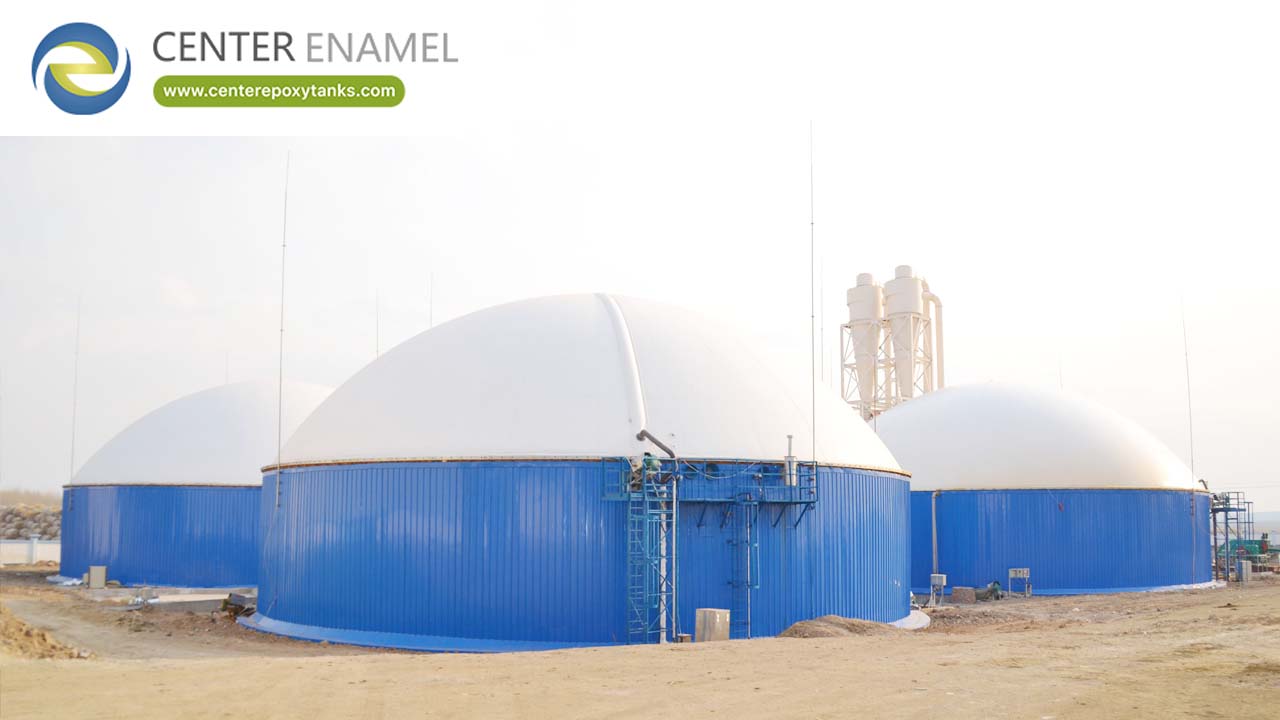
Leading China Anaerobic Digester Covers Manufacturer & Supplier Guide
China has emerged as a global hub for the manufacturing of advanced anaerobic digester covers, specializing in three primary technologies: Double Membrane Gas Holders, Aluminum Geodesic Domes, and Bolted Steel/GFS (Glass-Fused-to-Steel) Covers. Manufacturers in this sector, such as those specializing in high-frequency welded polymer membranes, provide critical gas-storage and odor-containment solutions for municipal wastewater, industrial effluent, and agricultural biogas facilities. These suppliers combine ISO-certified production processes with competitive export logistics, offering tailored solutions ranging from flexible, low-pressure gas storage bags to rigid, long-span structural covers that withstand extreme chemical and environmental loads.
The Engineering Landscape: Key Cover Technologies
To optimize an anaerobic digestion project, selecting the correct cover architecture is as important as the digester design itself. The following technologies represent the standard for modern industrial and biogas applications.
1. Double Membrane Gas Holders
These are the industry standard for on-tank gas storage. They consist of an outer membrane (air-supported for shape) and an inner membrane (gas-containing).
Best For: Biogas facilities requiring consistent, pressurized gas storage for CHP (Combined Heat and Power) or gas-to-grid injection.
Key Advantage: Flexible storage volume that expands and contracts based on gas production, acting as both a roof and a storage buffer.
2. Aluminum Geodesic Domes
A clear-span, self-supporting structure made from lightweight, corrosion-resistant aluminum alloys.
Best For: Large-diameter wastewater treatment tanks, sludge storage, and applications where long-term, maintenance-free structural integrity is required.
Key Advantage: Exceptional strength-to-weight ratio; they eliminate the need for internal support columns, preventing "dead zones" and corrosion hotspots.
3. Fixed/Floating Steel Covers
Rigid covers, often utilizing GFS or epoxy-coated steel panels.
Best For: Fixed-volume applications where gas collection is handled separately, or for secondary digestion stages.
Key Advantage: High structural robustness and excellent chemical resistance if coated properly.
Technical Comparison: Selecting the Right Cover
Feature | Double Membrane | Aluminum Geodesic Dome | Steel/GFS Cover |
Primary Function | Gas Storage & Containment | Environmental Protection | Structural Containment |
Maintenance | Medium (Membrane inspection) | Very Low (No painting) | Low to Medium |
Pressure Tolerance | Low (Variable) | Low (Fixed) | High (Rigid) |
Lifespan | 10–15 Years (Membrane) | 50+ Years | 30+ Years |
Typical Use | Biogas Plants / Farm Digesters | Wastewater / Large Sludge Tanks | Industrial Effluent / Storage |
Why Source Digester Covers from China?
Material Innovation: Chinese manufacturers are leaders in the development of specialized polymer membranes (PVDF/PVC/TPU) that offer high resistance to H2S (hydrogen sulfide) and UV degradation, which are essential for biogas longevity.
Modular Scalability: Whether you need a 5m or 50m diameter cover, factories are tooled for rapid, CNC-automated production of panels, allowing for significant cost savings on large-scale infrastructure projects.
Global Certification: Leading manufacturers strictly adhere to international codes (ISO 9001, CE, TUV) to ensure that exported products meet the rigorous safety requirements of European and American markets.
Frequently Asked Questions (FAQ)
Q: How long do double membrane gas holder fabrics typically last?
A: Under standard operating conditions with proper maintenance, high-quality, China-manufactured double membrane gas holders using PVDF or specialized PVC/TPU alloys typically offer a service life of 10 to 15 years before the membranes require replacement.
Q: Can aluminum geodesic domes be retrofitted onto existing steel tanks?
A: Yes. This is a common retrofit application. Because aluminum geodesic domes are extremely lightweight compared to traditional steel roofs, they often do not require the existing tank shell to be reinforced, making them a cost-effective way to upgrade an open-top tank for odor control.
Q: How do you prevent corrosion in digester covers containing biogas?
A: Corrosion is primarily caused by H2S (hydrogen sulfide) condensation. For steel components, China's leading manufacturers use GFS (Glass-Fused-to-Steel) or high-grade epoxy coatings that create an inert, chemical-resistant barrier. For flexible covers, manufacturers utilize specialized chemically resistant polymers that are engineered to remain inert in the presence of acidic biogas.
Q: Are Chinese manufacturers capable of custom engineering for specific wind/snow loads?
A: Absolutely. Top-tier manufacturers utilize professional structural engineering software to model specific local environmental conditions. When requesting a quote, always provide your site's maximum wind speed, snow load, and seismic zone classification so the manufacturer can verify structural requirements.
Strategic Procurement Advice
When vetting suppliers, prioritize those who offer integrated engineering support. A manufacturer that only supplies the fabric is risky; choose a partner that provides the full structural design (CAD drawings), sealing systems, and installation manuals or on-site supervision. This ensures the cover interface with your tank wall is airtight—the most common failure point in biogas containment projects.


