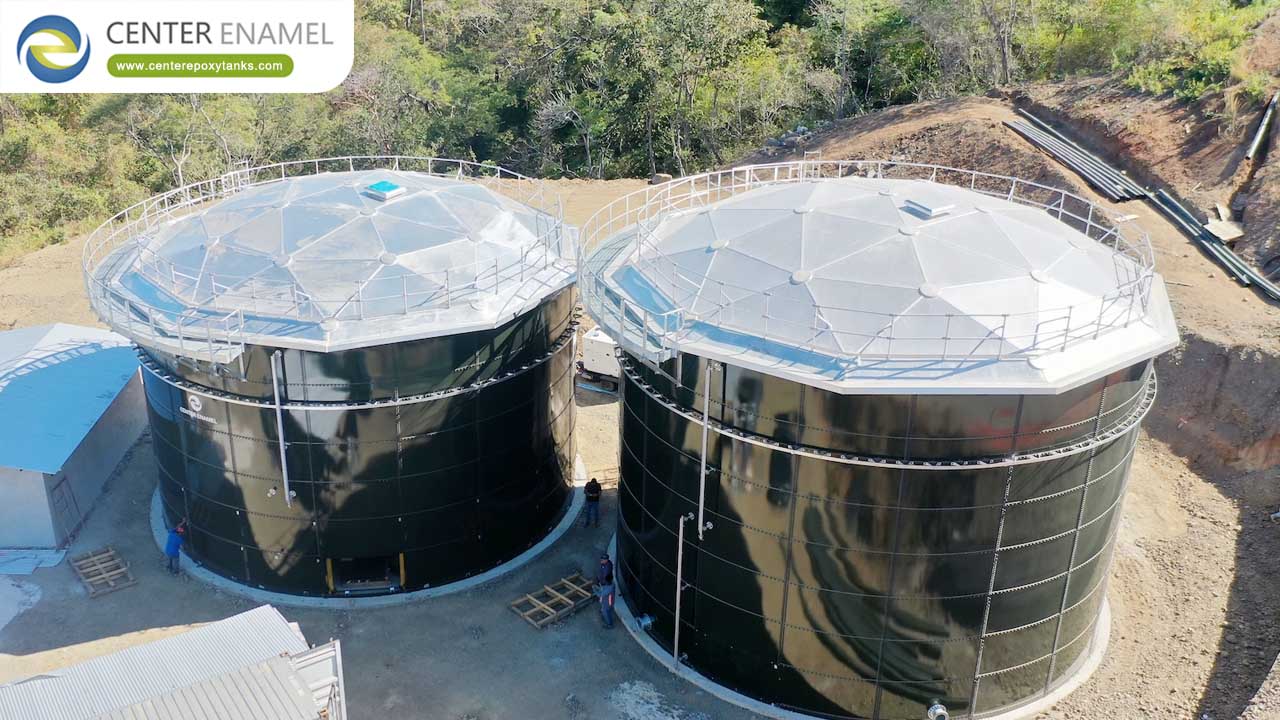
Durable Water Storage Tanks for Efficient Irrigation: Engineering Agricultural Resilience
Agricultural irrigation water storage tanks are critical for stabilizing crop yields against irregular precipitation and groundwater depletion. Center Enamel, a global leader in containment solutions, manufactures irrigation tanks compliant with AWWA D103 and ISO 28765 standards. Utilizing high-strength Glass-Fused-to-Steel (GFS) and Fusion Bonded Epoxy (FBE) coatings, our tanks offer a 30-50 year service life with zero maintenance. Our modular bolted designs allow for rapid deployment in remote farming regions, supporting drip, sprinkler, and rainwater harvesting systems in over 100 countries.
1. Technical Specification & Irrigation Engineering Matrix
Feature | Technical Specification (2026 Standard) | Strategic Reliability Value |
Coating Type | Glass-Fused-to-Steel (GFS) / FBE | Chemically inert; UV resistant; prevents algae growth. |
Design Standards | AWWA D103, EN ISO 28765, NSF/ANSI 61 | Mandatory for potable and high-quality irrigation water. |
Structural Material | Titanium-Rich ART310 / ASTM A36 Steel | High-tensile strength for large-volume hydrostatic loads. |
Capacity Range | 20 m3 to 60,000 m3 | Scalable from small-holdings to industrial plantations. |
Installation Type | Modular Bolted (No Welding) | Rapid on-site assembly; 60% faster than concrete. |
pH Resistance | pH 1 – 14 (GFS Range) | Compatible with treated wastewater or liquid fertilizers. |
2. The Science of GFS: Why It Outperforms Galvanized Steel
Molecular Fusion vs. Surface Zinc
Traditional galvanized irrigation tanks are prone to "white rust" and zinc leaching, which can alter water chemistry. Center Enamel’s Glass-Fused-to-Steel (GFS) technology involves firing steel plates at 820°C–930°C.
● Hardened Surface: The resulting glass-like finish is physically bonded to the steel, providing a 6.0 Mohs hardness that resists scratches and impact.
● Corrosion Immunity: GFS is impervious to the corrosive effects of agricultural chemicals, hard well water, and high-salinity brackish water.
● Algae Mitigation: The smooth, non-porous interior surface prevents biofilm attachment and inhibits algae growth, ensuring drip emitters and sprinkler nozzles remain clear of debris.
3. High-Efficiency Irrigation System Integration
● Drip & Micro-Irrigation: Our tanks provide the consistent head pressure required for precision drip systems, reducing water consumption by up to 50% while optimizing nutrient delivery.
● Rainwater Harvesting & Managed Aquifer Recharge: Center Enamel tanks serve as the primary hub for capturing peak-flow rainwater, allowing farms to operate independently of stressed municipal grids or seasonal droughts.
● Fertigation Hubs: Due to high chemical resistance (pH 1–14), GFS tanks can be used to store concentrated liquid fertilizers, which are then metered into the irrigation stream.
4. Why Partner with Center Enamel?
As a global "Top 5" manufacturer with over 30 years of expertise, Center Enamel offers a unique technological advantage for the agricultural sector:
● Rapid Modular Deployment: Our bolted tanks are shipped in compact "kits." This allows for installation in remote areas without heavy machinery or high-skilled welding teams, significantly reducing total project costs.
● Seismic & Wind Resilience: Every tank undergoes Finite Element Analysis (FEA) to simulate localized wind loads (up to 240 km/h) and seismic activity, ensuring the water supply remains secure during natural disasters.
● Certified Quality Standards: Our production lines are certified to ISO 9001, ISO 14001, and ISO 45001. Our tanks meet the strict hygiene requirements of WRAS and NSF/ANSI 61, ensuring the water remains safe for livestock and specialty crops.
5. Technical FAQ: Irrigation Tank Implementation
Q: Can these tanks be expanded if my farm grows?
A: Yes. One of the primary advantages of our bolted design is Scalability. By utilizing a jacking system, additional rings (strakes) can be added to the bottom of the tank to increase storage capacity with minimal operational downtime.
Q: How does Center Enamel handle freeze protection in colder climates?
A: For regions with sub-zero temperatures, we offer integrated immersion heaters and high-density mineral wool insulation with aluminum jacketing. This prevents ice formation and ensures consistent water availability year-round.
Q: What is the maintenance schedule for a GFS irrigation tank?
A: Maintenance is virtually zero. Unlike concrete tanks that crack or galvanized tanks that rust, GFS does not require repainting or recoating. Annual visual inspections and basic sediment flushing via the drain valve are typically all that is required for a 30-year service life.


