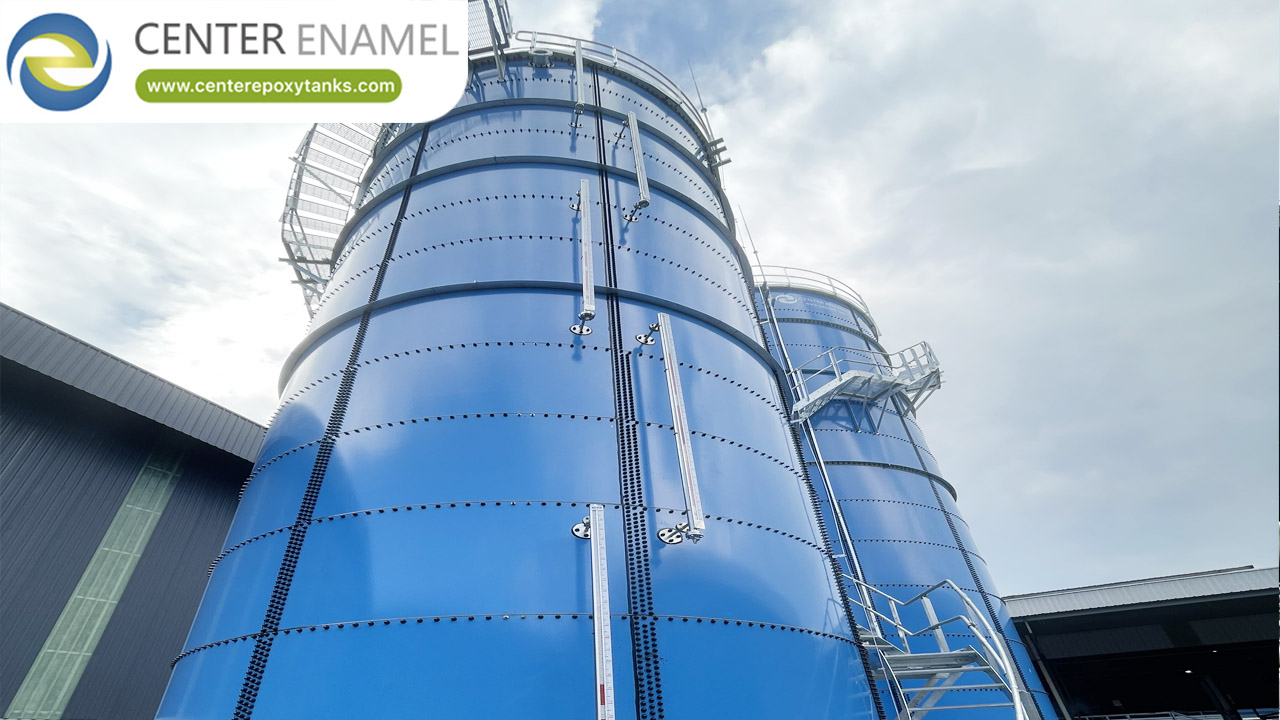
Center Enamel Provides Durable Epoxy Coated Tanks for Agricultural Use: Modernizing Farm Water and Liquid Storage
In modern farming operations, efficient and reliable water and liquid management is foundational to crop yields, livestock health, and long-term economic sustainability. Whether storing irrigation water for summer droughts, harvesting rainwater, managing liquid fertilizers, or containing agricultural wastewater, farms require robust storage infrastructure that can withstand aggressive environmental factors and heavy daily use.
Traditional storage methods—such as aging concrete basins prone to cracking, unlined earthen ponds vulnerable to seepage, or field-painted steel tanks susceptible to rapid rust—often result in heavy maintenance overhead and water contamination risks. To eliminate these vulnerabilities, Shijiazhuang Zhengzhong Technology Co., Ltd. (Center Enamel) provides world-class, durable epoxy coated tanks for agricultural use, delivering an advanced fusion bonded steel solution engineered for maximum asset longevity and operational safety.
The Engineering Superiority of Epoxy Coated Agricultural Tanks
Center Enamel’s epoxy-coated bolted steel tanks combine the high tensile strength of industrial-grade carbon steel with the inert chemical defense of factory-applied thermoset polymer resins. This advanced manufacturing approach offers distinct advantages for agricultural applications:
Superior Corrosion and Chemical Resistance: Agricultural environments expose storage containers to moisture, soil, UV rays, and reactive chemicals like liquid fertilizers and pesticides. Factory-applied fusion bonded epoxy (FBE) creates an impermeable, chemically inert barrier that completely protects the steel substrate from oxidation and chemical degradation.
Modular Bolted Agility: Prefabricated into standardized modular panels, these tanks allow for rapid, crane-assisted assembly on remote farming properties without the lengthy construction delays associated with cast-in-place concrete.
Hygienic and Smooth Interior Linings: The ultra-smooth, non-porous epoxy surface inhibits algae blooms, microbial biofilms, and sediment accumulation, ensuring that stored irrigation water or liquid inputs remain clean and free from contamination.
Technical Performance Matrix: Agricultural Storage Solutions
Technical Parameter | Center Enamel Epoxy-Coated Bolted Steel Tanks | Traditional Cast-in-Place Concrete Basins | Field-Welded Carbon Steel Tanks |
Corrosion Defense & Lifespan | Highly resistant to moisture, fertilizers, and soil chemicals; decades of service life | Prone to micro-cracking, concrete carbonation, and chemical leaching | Vulnerable to rust flaking and weld degradation without constant repainting |
Installation Speed & Footprint | Rapid modular bolted assembly completed in days to weeks | Slow civil construction requiring extensive formwork and multi-week curing | Slow, labor-intensive field welding and weather-dependent coating work |
Structural Scalability | Easily expanded in height or diameter by adding modular panels | Monolithic structure; impossible to expand or modify once poured | Difficult to modify without extensive cutting, hot work, and re-welding |
Compliance & Quality Assurance | Manufactured to stringent global standards (AWWA D103-09, ISO 28765) | Subject to variable local masonry and civil construction quality | Relies heavily on field spot-checks and manual NDT testing |
Core Applications Across Modern Farms
Center Enamel's agricultural storage systems have been successfully deployed across diverse rural and commercial farming operations worldwide:
Agricultural Irrigation Reservoirs: Supplying dependable, large-volume water storage for pivot and drip irrigation networks.
Liquid Fertilizer and Chemical Storage: Safely containing aggressive agricultural inputs without chemical leaching or tank corrosion.
Livestock Drinking Water Reserves: Ensuring a safe, clean, and reliable daily water supply for dairy, cattle, swine, and poultry facilities.
Agricultural Wastewater and Effluent Management: Containing high-strength organic runoff safely before land application or biological treatment.
Frequently Asked Questions (FAQ)
Q: Why are epoxy-coated tanks preferred over concrete or welded tanks for agricultural use?
A: Epoxy-coated bolted steel tanks offer superior corrosion resistance, eliminate the risk of cracking inherent in concrete, and feature factory-applied coatings that outperform field-painted welded tanks. They are also modular, quick to install, and easily expandable as farm operations grow.
Q: Can Center Enamel’s epoxy tanks safely store liquid fertilizers and agricultural chemicals?
A: Yes. The specialized fusion bonded epoxy coating is chemically inert and highly resistant to a broad range of agricultural inputs, including liquid fertilizers, pesticides, and nutrient-rich solutions, preventing chemical reactions or container degradation.
Q: How do these tanks handle severe weather and temperature fluctuations on farms?
A: Engineered in strict accordance with international standards like AWWA D103-09 and ISO 28765, Center Enamel tanks are built to withstand heavy wind, snow, and seismic loads, ensuring structural stability across diverse rural climates.
Q: Can an agricultural epoxy tank be expanded if farm water storage needs increase?
A: Absolutely. Because the tanks utilize a modular bolted panel design, facility managers can easily unbolt and add additional vertical rings or lateral panels to increase storage volume without building a brand-new reservoir.


