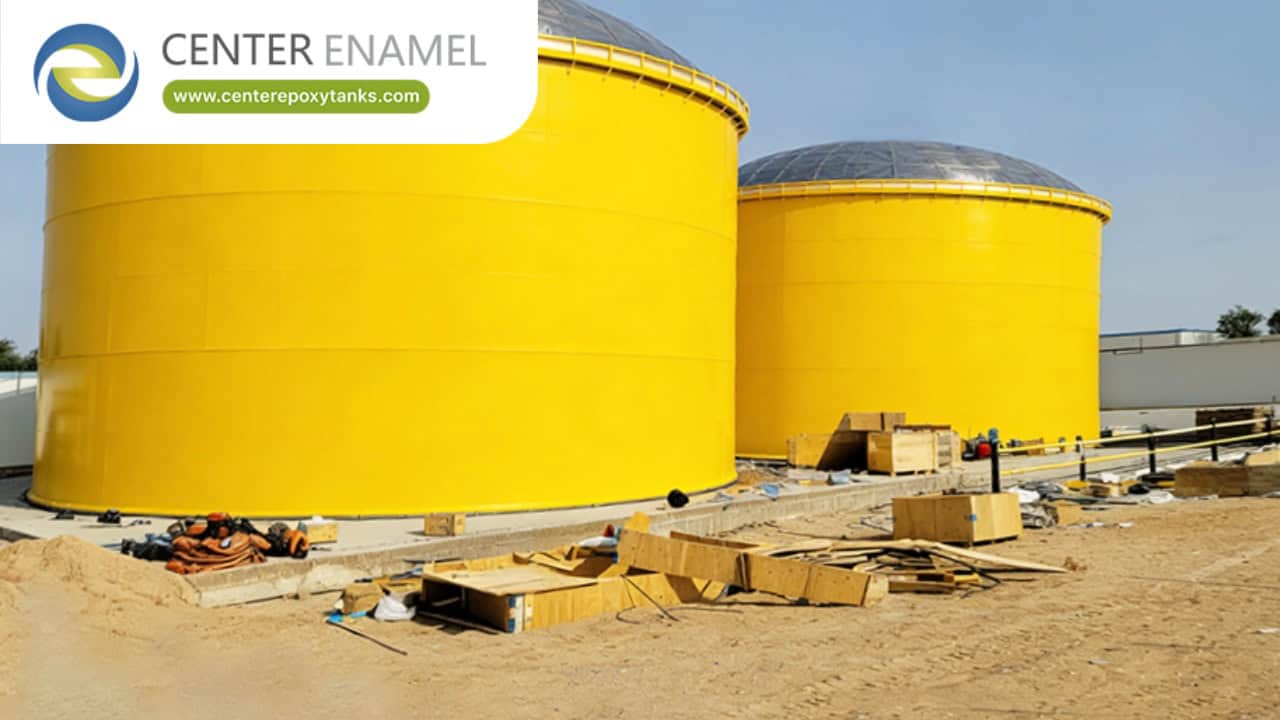
Carbon Welded Steel Tanks for Chemical Storage: Engineering Structural Integrity, Chemical Resistance, and Safety
In modern chemical processing, manufacturing, and industrial fluid management, selecting the right containment infrastructure is critical to operational success and environmental compliance. Storing aggressive acids, caustic alkalis, process water, solvents, and liquid reagents requires vessels that offer exceptional structural strength and absolute leak prevention.
While alternative materials exist, carbon welded steel tanks for chemical storage remain the gold standard for heavy-duty industrial applications. By combining the high tensile strength of low-alloy carbon steel with advanced interior lining technologies and rigorous manufacturing codes, these welded vessels deliver unmatched reliability and cost-effectiveness.
Advanced Engineering and Fabrication Standards
The exceptional performance of carbon steel chemical tanks stems from precision engineering and adherence to globally recognized manufacturing codes:
Monolithic Structural Integrity (E = 1.0 Joint Efficiency): Unlike bolted containers that rely on mechanical gaskets and fasteners, carbon welded tanks are constructed from high-grade plates (such as ASTM A36 or A516) fused together using advanced automated welding techniques like Submerged Arc Welding (SAW). This creates a seamless, monolithic envelope capable of withstanding severe internal hydraulic pressures and external seismic loads.
Compliance with Major Codes (API 650 & ASME): Industrial chemical tanks are engineered in strict compliance with API 650 for atmospheric storage, API 620 for low-pressure requirements, and ASME Section VIII for pressurized process vessels, ensuring complete regulatory alignment.
Rigorous Non-Destructive Testing (NDT): To eliminate structural flaws, every critical weld seam undergoes extensive testing—including Radiographic Testing (RT), Ultrasonic Testing (UT), and vacuum box leak checks—guaranteeing a zero-defect containment boundary.
Advanced High-Performance Linings: Because raw carbon steel can react with corrosive chemicals, tanks are outfitted with specialized interior lining systems (such as thick-film phenolic epoxies, novolac coatings, or vinyl esters) that chemically isolate the structural steel from aggressive stored media.
Technical Performance Matrix: Welded Steel Tanks vs. Alternative Solutions
Technical Parameter | Carbon Welded Steel Tanks | Bolted Modular Steel Tanks | Cast-in-Place Concrete Basins |
Structural Integrity & Joint Efficiency | Seamless fusion achieving 100% joint efficiency (E = 1.0); ideal for liquid head pressures | Relies on overlapping panel joints, gaskets, and mechanical tightening hardware | Monolithic mass, but susceptible to micro-cracking and joint separation under settling |
Chemical Resistance & Linings | Highly adaptable; accepts specialized chemical-resistant epoxy, novolac, or resin linings | Requires specialized gasket materials and gasket-compatible sealant coatings | Porous matrix; highly vulnerable to chemical spalling, acid attack, and leaching |
Pressure & Seismic Resilience | Excellent; engineered to handle dynamic liquid sloshing, high heads, and seismic forces | Moderate; fastener stress limits can restrict performance under high-pressure spikes | High static dead weight, but brittle under severe seismic shifts |
Expected Lifespan | 30 to 50+ years with proper internal lining maintenance and API inspection protocols | 20 to 30 years, requiring periodic gasket and sealant replacements | Varies widely based on concrete mix quality and external waterproof membrane integrity |
Frequently Asked Questions (FAQ)
Q: Why choose a welded carbon steel tank over stainless steel or plastic for chemical storage?
A: Carbon welded steel tanks provide exceptional structural strength and high load-bearing capacity at a significantly lower cost than solid stainless steel. When paired with high-performance chemical-resistant interior linings (such as novolac epoxy), they match the corrosion resistance of exotic alloys while retaining superior mechanical toughness.
Q: How do internal lining systems protect carbon steel tanks from aggressive chemicals?
A: Specialized industrial linings create a thick, chemically inert, non-porous barrier between the stored chemical and the carbon steel substrate. This prevents direct chemical contact, stopping oxidation, corrosion, and structural thinning over the tank's operational lifecycle.
Q: What international engineering standards govern carbon welded chemical storage tanks?
A: Quality industrial tanks are designed and fabricated in strict accordance with major global benchmarks, including API 650 for welded tanks for oil and chemical storage, ASME for pressure components, and AWWA D100 for welded steel water and liquid storage structures.
Q: Can carbon welded steel tanks be customized for specific plant layouts and seismic zones?
A: Yes. Because they are custom-fabricated to project requirements, engineers can specify precise diameter-to-height ratios, specialized nozzle orientations, internal heating/cooling coils, seismic anchor bolts, and dedicated leak-detection systems to match any facility footprint.


