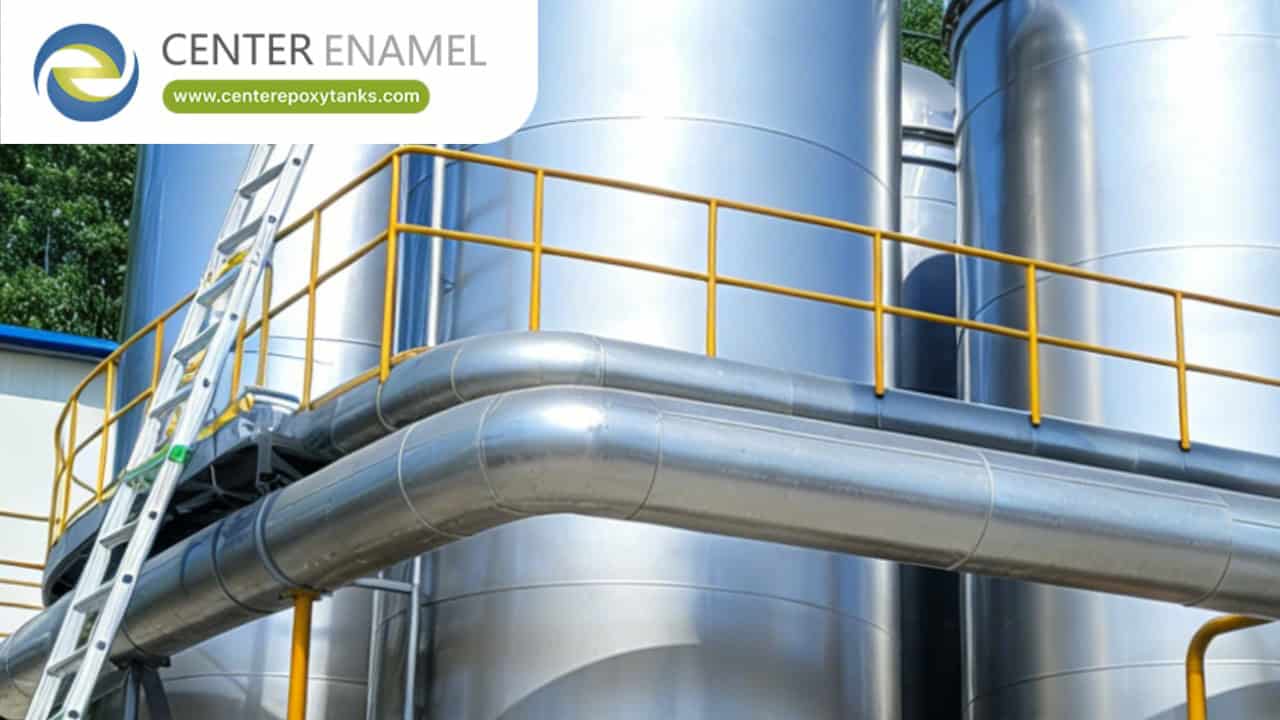
Carbon Steel Vs Stainless Steel Storage Tanks: Which One Is Better For Your Project?
When planning an industrial liquid containment project—whether for petroleum terminals, water treatment facilities, or chemical processing plants—material selection is the single most critical engineering decision. Choosing the wrong metal can lead to premature structural failure, severe environmental leaks, or unnecessary capital expenditure.
Among metal storage vessels, carbon steel and stainless steel are the two dominant options. While both offer exceptional structural integrity, their chemical resistance, cost profiles, and ideal operating environments differ drastically. Understanding these differences ensures your project achieves optimal safety and financial return.
1. Carbon Steel Storage Tanks: Overview and Advantages
Carbon steel is an alloy composed primarily of iron and carbon, making it the most widely specified material for large-scale industrial liquid storage.
·
Core Strengths: Carbon steel offers remarkable tensile strength, excellent structural workability, and high durability under heavy hydrostatic loads. When fabricated under API 650 standards, it serves as the backbone for massive oil and fuel terminal tanks.
·
·
Cost Efficiency: Carbon steel is significantly more affordable than stainless steel regarding raw material costs and welding complexity, making it the premier choice for large-capacity capital projects.
·
·
Limitations: Because carbon steel is vulnerable to oxidation and chemical attack, it requires protective internal epoxy linings, exterior paint systems, and corrosion allowances to prevent rusting.
·
2. Stainless Steel Storage Tanks: Overview and Advantages
Stainless steel is an alloy of iron, carbon, and a minimum of 10.5% chromium, which reacts with oxygen to form a self-healing passive chromium-oxide layer that resists rust and chemical degradation.
·
Core Strengths: Stainless steel (most commonly grades 304 and 316) provides superior resistance to aggressive chemicals, organic solvents, high-purity water, and corrosive process fluids without requiring heavy interior linings.
·
·
Hygienic and Temperature Resilient: It maintains structural integrity across extreme high and low-temperature thresholds and provides a smooth, non-porous surface ideal for pharmaceutical, food-grade, and high-purity chemical applications.
·
·
Limitations: The primary drawback of stainless steel is its significantly higher material and fabrication cost compared to carbon steel.
·
Data Table: Carbon Steel vs. Stainless Steel Storage Tank Comparison
Evaluation Parameter | Carbon Steel Storage Tanks | Stainless Steel Storage Tanks (Grades 304 / 316) |
Material Cost | Highly cost-effective (Ideal for large volumes) | Premium pricing due to chromium, nickel, and alloy content |
Corrosion Resistance | Low to moderate (Requires epoxy linings and coatings) | Excellent natural resistance (Passivation layer protects against rust) |
Tensile Strength | High structural yield strength (ASTM A36, A516) | High strength with superior toughness at extreme temperatures |
Primary Stored Media | Crude oil, diesel, fuel oils, water, non-corrosive liquids | Corrosive chemicals, acids, solvents, food/pharmaceuticals |
Governing Standards | API 650, API 12F, UL 142 | API 650, ASME Section VIII, ASTM A240 |
3. Decision Framework: Which Material Should You Choose?
Selecting the right tank material depends entirely on your project's operational profile:
·
Choose Carbon Steel If: You are storing petroleum products, crude oil, diesel, or non-corrosive water in large-scale, cost-sensitive industrial environments where protective coatings or corrosion allowances can be effectively maintained.
·
·
Choose Stainless Steel If: Your facility handles aggressive chemicals, strong acids, high-purity pharmaceutical ingredients, or sanitary food-grade liquids where contamination or rust formation cannot be tolerated under any circumstances.
·
Frequently Asked Questions (FAQ)
Q: Which is more expensive: carbon steel or stainless steel storage tanks?
A: Stainless steel storage tanks are substantially more expensive than carbon steel tanks due to the higher cost of raw alloy elements (chromium and nickel) and more specialized welding requirements.
Q: Can carbon steel tanks be used to store chemicals?
A: Carbon steel can store certain mild chemicals or heavy oils if paired with high-performance internal epoxy linings. However, aggressive acids and corrosive chemical reagents require stainless steel or specialized fiberglass-reinforced plastic (FRP).
Q: Do stainless steel tanks require exterior painting or coatings?
A: Generally, no. Stainless steel forms a natural, passive chromium-oxide layer that protects against atmospheric corrosion, eliminating the need for routine exterior painting required by carbon steel tanks.
Q: What are the most common stainless steel grades used for industrial tanks?
A: Grade 304 is widely used for general industrial chemical and water storage, while Grade 316 (which includes molybdenum) is preferred for higher corrosion resistance against chlorides, acids, and marine atmospheres.


