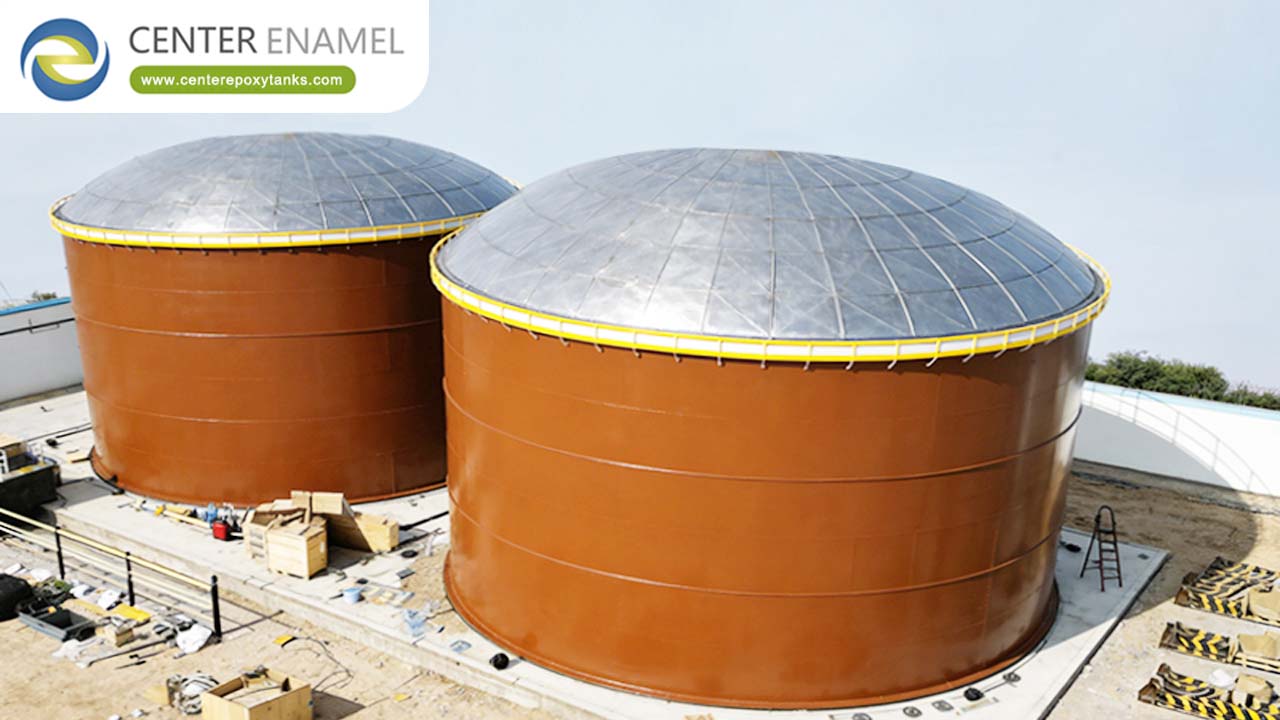
Carbon Steel vs. Stainless Steel for Oil Storage: An Engineering Selection Guide
The selection between carbon steel and stainless steel for petrochemical storage is dictated by the Cost-to-Durability ratio and the specific chemical composition of the hydrocarbon. While stainless steel offers inherent corrosion resistance, Carbon Steel (Grades Q235B/Q345B/ASTM A36) remains the global industry standard for crude and refined oil due to its superior mechanical strength and economic scalability. By integrating Fusion Bonded Epoxy (FBE) linings and Cathodic Protection (CP), carbon steel achieves a 30-50 year service life at a fraction of the CAPEX required for stainless steel.
1. The Cost-to-Durability Ratio In midstream and downstream infrastructure, engineering decisions are balanced against long-term financial viability.
● Mechanical Advantage: Carbon steel grades like Q345B offer high yield strength ($ge 345$ MPa), essential for managing the massive hydrostatic loads of terminals exceeding 20,000 m3.
● Capital Efficiency: Stainless steel (304/316L) is significantly more expensive per ton. For non-acidic hydrocarbons, the extreme cost of stainless steel does not yield a proportional increase in asset lifespan, making carbon steel the more sustainable choice for bulk storage.
2. Corrosion Logic: Why Hydrocarbons Favor Carbon Steel
A common industry misconception is that oil is naturally corrosive to iron. In technical reality:
● Inert Media: Pure hydrocarbons are non-polar and do not react with carbon steel.
● The Real Enemy (BS&W): Corrosion is caused by Bottom Sediment and Water (BS&W). Moisture settles at the tank floor, creating an electrolyte for oxidation.
● The Solution: Center Enamel applies targeted protection. By using Fusion Bonded Epoxy (FBE) or Glass-Fused-to-Steel (GFS) on the internal floor and lower shell rings, we provide stainless-level protection precisely where the BS&W accumulates.
3. Cathodic Protection (CP) Compatibility
One of the primary technical advantages of welded carbon steel tanks is their seamless integration with electrochemical protection systems.
● Impressed Current (ICCP): Carbon steel is highly receptive to ICCP, which uses a low-voltage current to ensure the tank substrate remains the "cathode," rendering it immune to soil-side oxidation.
● Sacrificial Anodes: For remote fuel depots, magnesium or zinc anodes can be used to provide an autonomous secondary barrier against pitting.
4. Material Selection Matrix
Selection Factor | Carbon Steel (Q235B / ASTM A36) | Stainless Steel (304 / 316L) |
Primary Use Case | Bulk Crude, Diesel, Jet Fuel | High-Acid Media, Food, Chemicals |
Design Standard | API 650 / GB50341 | API 650 Appendix S |
Corrosion Strategy | Linings + Cathodic Protection | Inherent Passive Oxide Layer |
Tensile Strength | High (Optimized for Large Scale) | Moderate to High |
Project Scale | Up to 100,000 m3+ | Typically < 5,000 m3 |
Cost Profile | Low CAPEX / High ROI | High Initial Investment |
5. Technical FAQ: Petroleum Material Standards
Q: Can carbon steel store "Sour Crude"?
A: Yes, but it requires specialized internal coatings to prevent Sulfide Stress Cracking (SSC) caused by Hydrogen Sulfide ($H_2S$). Center Enamel utilizes high-build epoxy to isolate the steel from H2S exposure.
Q: Is stainless steel ever required for oil?
A: Stainless steel (typically 316L) is preferred for highly refined lubricants or pharmaceutical-grade oils where zero metal-ion contamination is mandatory, or for extremely corrosive "Acid Oil" with a high Total Acid Number (TAN).
Q: How does Center Enamel ensure weld integrity in carbon tanks?
A: We utilize Radiographic Testing (RT) and Ultrasonic Testing (UT) to inspect the Heat Affected Zone (HAZ), ensuring that the welding process hasn't compromised the material's structural or corrosion-resistant properties.


