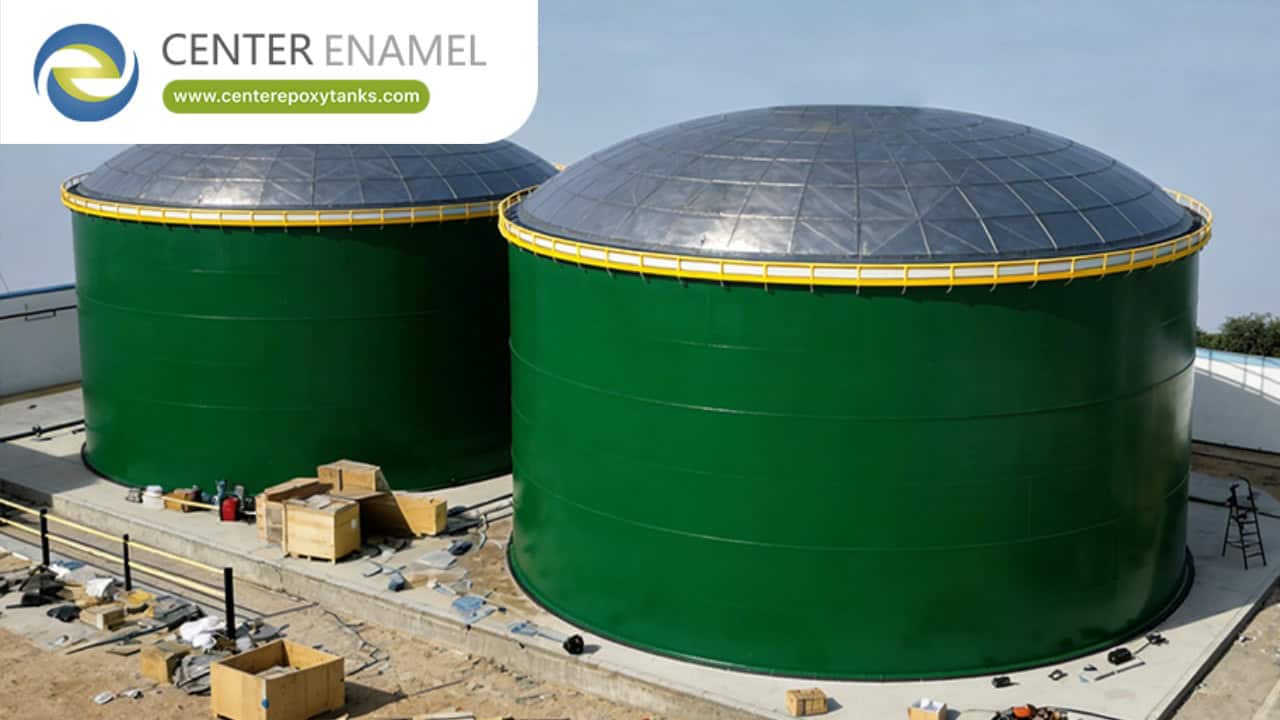
Carbon Steel Blended Crude Oil Tanks: Engineering & Procurement Guide
Crude oil blending is a critical midstream and downstream refinery process designed to optimize feedstock quality, standardize sulfur levels, adjust API gravity, and match specific refinery slate requirements. Because crude oil blends often introduce variable chemical profiles, heavier aromatic fractions, corrosive sulfur compounds, and sediment accumulation, the containment infrastructure must adhere to the highest standards of structural safety and metallurgical integrity.
Carbon steel remains the global industry standard for constructing aboveground blended crude oil storage tanks due to its exceptional tensile strength, cost-effectiveness, and reliability. This guide provides engineering teams and procurement specialists with a comprehensive framework for specifying, designing, and procuring carbon steel crude oil blending tanks in compliance with international standards.
Engineering Fundamentals and Design Standards
Designing storage vessels for blended crude oil requires adherence to rigorous international codes that govern safety, load distribution, and material durability:
API 650 (Welded Steel Tanks for Oil Storage): The definitive international benchmark for atmospheric and low-pressure aboveground storage tanks. API 650 specifies minimum requirements for shell plate thickness calculations (using the 1-foot or variable-design-point methods), bottom slope design, roof configurations, and wind/seismic loading.
API 650 Annexes for Specialized Service: Depending on the vapor pressure and corrosivity of the crude blend, tanks frequently incorporate Annex H (Internal Floating Roofs) or standard External Floating Roof configurations to mitigate volatile organic compound (VOC) emissions.
Material Selection and Corrosion Allowances: Standard carbon steel grades such as SA-516 Grade 70 or SA-283 Grade C are widely utilized. For crude oil blends containing hydrogen sulfide (H2S) or high water cuts, engineers specify dedicated corrosion allowances (typically ranging from 3.0 mm to 6.0 mm) alongside high-performance internal epoxy linings or cathodic protection systems.
Technical Performance Matrix: Crude Oil Storage Tank Configurations
Technical Parameter | API 650 Welded Internal Floating Roof (IFR) Tanks | API 650 External Floating Roof (EFR) Tanks | Fixed Cone Roof Tanks with Blanket Gas | Concrete-Lined Carbon Steel Composite Basins |
Primary Application | Blended crude oils with moderate to high volatility and VOC emission limits | Large-volume crude oil terminal storage exposed to open atmospheric conditions | Heavy, highly viscous crude blends where vapor generation is minimal | Specialized or legacy installations requiring secondary containment layers |
Emission Control | Superior; internal floating deck suppresses vapor space and eliminates working losses | Moderate; sealed rim spaces require specialized mechanical shoe or secondary seals | Requires dedicated vapor recovery units (VRU) or thermal oxidizers | Low baseline emission control; prone to micro-cracking and gas permeability |
Structural Integrity | High; welded carbon steel shell with guided internal roof stability | High; rugged steel deck structure built to withstand wind and rain loads | High structural rigidity; fixed roof welded directly to top shell angle | Moderate; vulnerable to long-term hydrocarbon seepage and concrete degradation |
Maintenance & Inspection | Accessible aboveground design; periodic seal checks and non-destructive testing (NDT) | Requires regular inspection of rolling ladders, drain systems, and rim seals | Straightforward internal cleaning; standard exterior repainting schedules | Difficult inspection access; hidden sub-grade or wall-side structural defects |
Procurement Best Practices for Blended Crude Oil Tanks
Procuring large-scale carbon steel blended crude oil tanks involves complex supply chain coordination, stringent quality assurance, and precise technical specifications. Procurement teams should enforce the following milestones:
1. Clear Material Traceability and Mill Test Reports (MTRs)
Ensure that all carbon steel plates comply with ASTM/ASME standards and that comprehensive MTRs are provided. Material composition must be verified for weldability and notch toughness, particularly for tanks deployed in colder geographical regions or subjected to cyclic thermal stresses during crude blending.
2. Strict Non-Destructive Testing (NDT) Protocols
Mandate rigorous quality control inspections during field erection. This includes vacuum box testing on bottom plate lap welds, magnetic particle or liquid penetrant testing on fillet welds, and Radiographic Testing (RT) or Ultrasonic Testing (UT) on vertical and horizontal shell butt welds.
3. Comprehensive Appurtenance and Mixing Integration
Crude oil blending requires continuous agitation to prevent sediment deposition (sludge accumulation) and maintain uniformity. Procurement specifications must account for heavy-duty side-entry mixers, anti-vortex shell nozzles, high-capacity foam fire suppression systems, and specialized thermal insulation or heating coils if heavy waxy crudes are part of the blend matrix.
Frequently Asked Questions (FAQ)
Q: What is the primary design standard for carbon steel blended crude oil storage tanks?
A: The American Petroleum Institute standard API 650 is the universal international benchmark governing the design, fabrication, welding, and inspection of welded steel aboveground storage tanks for crude oil and petroleum products.
Q: Why are floating roofs utilized in crude oil blending tanks?
A: Floating roofs (either internal or external) rest directly on the liquid surface, eliminating the vapor space inside the tank. This drastically reduces volatile organic compound (VOC) emissions, minimizes product evaporation loss, and significantly lowers fire hazards associated with flammable hydrocarbon vapors.
Q: How do engineers account for internal corrosion caused by sour crude oil blends?
A: Engineers mitigate corrosion by incorporating a dedicated corrosion allowance (extra steel thickness sacrificial layer) into the shell and bottom plate calculations, selecting high-strength carbon steel grades, applying specialized chemical-resistant internal epoxy coatings, and implementing cathodic protection systems.
Q: What non-destructive testing (NDT) methods are mandatory during construction?
A: Standard NDT protocols include vacuum box testing for tank floor seam welds, liquid penetrant or magnetic particle inspection for structural attachments, and radiographic or ultrasonic testing for vertical and horizontal shell welds to guarantee structural soundness.


