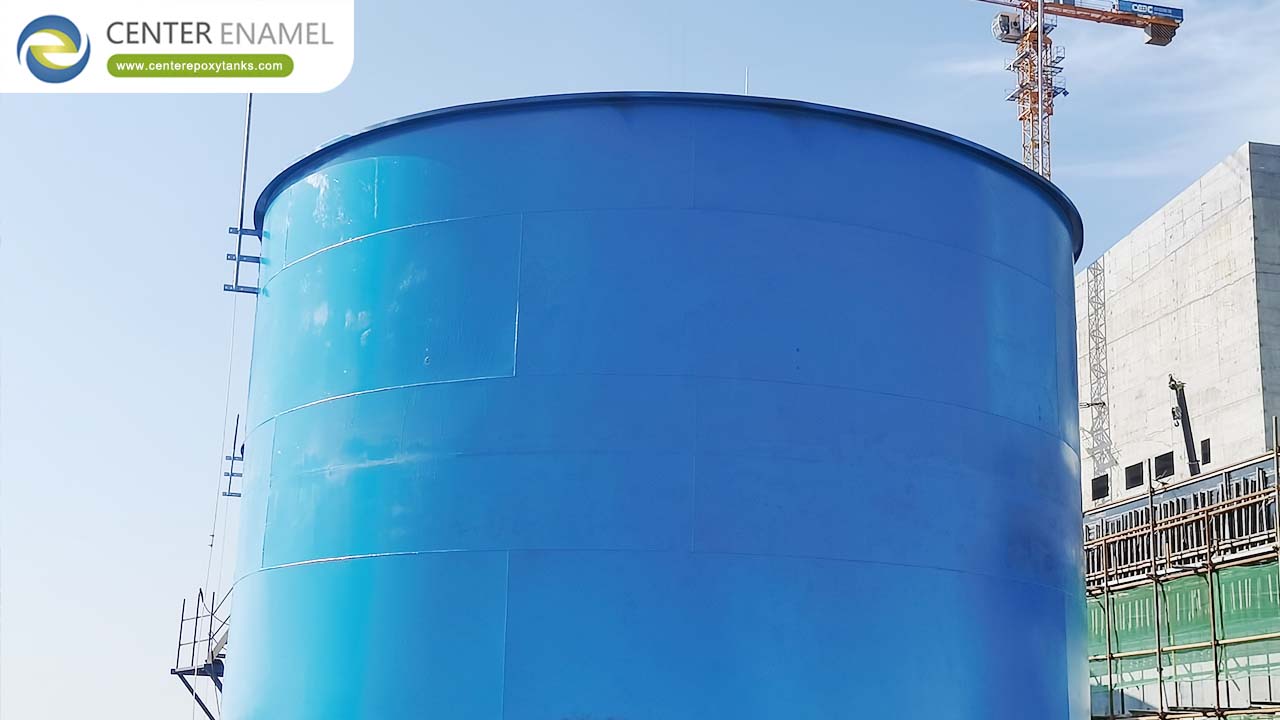
Carbon Steel Petrochemical Storage Tanks: Manufacturing For Chemical Service
Petrochemical storage is the demanding end of the tank business. The products are aggressive, the temperatures and pressures push past the atmospheric codes, and the documentation has to satisfy a regulator as well as an engineer. The manufacturing answer is material and coating selection, code-correct design and an inspection regime that proves every weld and every lined surface.
This article covers carbon steel petrochemical storage tank manufacturing: the product compatibility, the design conditions, the lining and coating systems and the pressure vessel scope the service demands.
Petrochemical Service Manufacturing
Petrochemical service is defined by the product: its chemistry, its temperature, its pressure and its hazard classification. Each has a manufacturing consequence — the material, the design code, the lining and the inspection regime all follow from what is stored.
The manufacturing scope extends beyond the tank: the pressure vessels, the separators and the process equipment that share the product service are fabricated to the same discipline, because the service does not distinguish between them.
Product Compatibility
The product compatibility is the first engineering decision. The material selection follows the product chemistry and temperature: carbon steel for the compatible duties, stainless for the aggressive ones, and lined carbon steel where the structure is carbon and the surface is protected.
The compatibility is documented against the product data: the chemistry, the temperature and the concentration together justify the selection, and where the product varies, the selection states the envelope it covers.
Design Temperature And Pressure
The design conditions set the structural scope. Atmospheric storage follows the tank codes; the elevated pressures and the extreme temperatures pull the design toward the pressure vessel codes, with their material, welding and inspection requirements.
The design condition definition is a procurement input: the design temperature and pressure are stated from the process data, and the fabrication is built to the conditions the process actually imposes, not a conservative guess.
Lining And Coating Systems
The lining and coating systems extend carbon steel into the aggressive duties. The selection follows the product chemistry and temperature: each lining family has a resistance envelope, and the specification states which product and temperature range the system covers.
The application discipline is the other half: the surface preparation, the application conditions, the cure and the holiday testing together decide whether the lining delivers its specified life — and the records document each step.
Lining System | Service | Application Note |
Fusion bonded epoxy | Refined products and produced water | Factory applied to panels, tested per batch |
Epoxy-phenolic | Hot hydrocarbon and chemical contact | Cure schedule and temperature limit govern |
Rubber lining | Acidic and abrasive aqueous service | Shop application with spark testing |
Stainless wetted surfaces | Aggressive chemistry and high purity | Material selection and weld procedure control |
Welding And Fabrication Control
The welding and fabrication control follows the design code: the procedure qualifications, the welder qualifications, the heat input controls and the interpass temperature limits are all specification items where the code requires them.
The fabrication control also covers the post-weld treatments: the stress relief where the code or the service requires it, and the lining restoration where the weld has to be re-coated after welding.
Control Item | Requirement | Record |
Welding procedure qualification | PQR for each joint geometry and material | Procedure qualification record |
Welder qualification | Current qualification within the stated range | Welder log with the weld map |
Heat input and interpass control | Limits set by the code or the service | Welding parameters record per procedure |
Post-weld treatment | Stress relief where the code requires it | Heat treatment chart and verification |
Inspection And Testing Regime
The inspection regime is the evidence chain: the radiographic extent on the major welds, the magnetic particle testing on the attachments, the lining holiday and adhesion testing and the pressure test of the completed vessel or tank.
The testing also covers the material verification: the chemical and mechanical testing of the plate against the certificate, and the traceability that links every heat to every weld.
Pressure Vessel Scope
The pressure vessel scope covers the vessels, the separators and the receivers that share the petrochemical service. The fabrication follows the pressure vessel codes with their material, welding and inspection requirements, and the documentation follows the same structure.
The scope also covers the small equipment: the filters, the knockouts and the accumulators, each fabricated to the code its service requires rather than to a tank default.
Documentation And Certification
The documentation pack for petrochemical service is a regulatory asset: the design report, the material certificates, the welding and NDT records, the lining records, the pressure test results and the as-built drawings.
The certification scope follows the jurisdiction: the code stamps, the third-party inspection where the regulation requires it and the traceability that lets a future investigation reconstruct what was built.
Site Installation Support
The site installation covers the setting, the alignment, the connection and the testing of the equipment in the plant. The manufacturer supports the installation with the drawings, the procedures and the supervision the scope requires.
The support also covers the commissioning: the pressure test in place, the lining inspection after installation and the documentation update to as-built status.
Maintenance And Repair
The maintenance regime follows the service: the internal inspection at the planned interval against the original records, the lining condition assessment and the pressure device testing at the code interval.
The repair path is planned: the weld repair procedures qualified for the repair, the lining restoration procedure and the re-inspection regime, so a repair is a controlled activity rather than a site improvisation.
Center Enamel Petrochemical Fabrication
Center Enamel fabricates carbon steel petrochemical storage tanks and pressure vessels with the material control, code-correct design, lining systems and documentation that chemical service requires. The fabrication runs under a certified quality system with export delivery experience.
Our engineering team supports product compatibility review, design condition definition and the certification scope for petrochemical projects. Contact our engineering team for manufacturer capability documentation and quotation on your next project.
Project Case Study
A petrochemical project in Hubei, China required pressure vessel equipment across several process duties. Center Enamel supplied nine units: three resin tanks at DN1200 by 2200 mm with 12 mm wall, one coalescing oil remover at DN400 by 1200 mm with 6 mm wall, two fiber adsorption tanks at DN500 by 1200 mm with 6 mm wall, one compressed air receiver at DN1300 by 4000 mm with 8 mm wall, one condensate tank at DN1200 by 3000 mm with 6 mm wall and one steam header at DN200 by 2000 mm with 6 mm wall.
The multi-unit package covered the separation, adsorption and storage duties the process required, with each vessel fabricated to its design conditions and delivered as a matched set. The total volume is not specified in the available source. The project was delivered and completed in December 2025.
Project Reference | 08 China Hubei Petrochemical 202512 |
Location | China |
Application | Petrochemical |
Product / Technology | Pressure Vessel |
Tank Count | 9 |
Tank Dimensions | Resin tanks DN1200*2200*12mm, 3 sets; coalescing oil remover DN400*1200*6mm, 1 set; fiber adsorption tanks DN500*1200*6mm, 2 sets; compressed air receiver DN1300*4000*8mm, 1 set; condensate tank DN1200*3000*6mm, 1 set; steam header DN200*2000*6mm, 1 set |
Total Volume | Not Specified In The Available Source |
Completion | Delivered and completed 2025-12 |
Supply Scope Note | A relevance grade to this topic |
About Company
Shijiazhuang Zhengzhong Technology Co.,Ltd(Center Enamel) is a professional manufacturer dedicated to the design and fabrication of bolted storage tanks since 2008. Our products range includes Glass-Fused-to-Steel (GFS) tanks, fusion bonded epoxy tanks, stainless steel tanks, galvanized steel tanks and aluminum geodesic dome roofs. With professional enameling R&D team and nearly 200 enameling patents, Shijiazhuang Zhengzhong Technology Co.,Ltd has become the leader in bolted tanks industry of Asia. Our products are certified to ISO9001, NSF61, EN1090, ISO28765, WRAS ,FM, LFGB, BSCI, IS0 45001 and other international standards.
Shijiazhuang Zhengzhong Technology Co., Ltd is not only the first manufacturer in China which produces Glass-Fused-to-Steel tanks, but also the most experienced professional bolted tanks manufacturer in Asia.The engineering & design, product testing and quality system of Center Enamel Glass-Fused-to-Steel tanks is in strict accordance with AWWA D103-09, OSHA, ISO 28765, NSF/ANSI 61, NFPA and other international standards. Until 2023, Center Enamel bolted tanks have been exported to more than 100 countries including USA, Australia,Canada, Malaysia, Indonesia, Russia, UAE, Panama,Brazil and South Africa etc., the superior tank quality and prompt service gains us worldwide recognition.
As an outstanding containment and cover system provider with decades of industry experience, Shijiazhuang Zhengzhong Technology Co., Ltd sincerely expects to establish long-term cooperation with the local partners throughout the world and make continuous contribution to the development of the industry.
Suggested CTA
Center Enamel delivers carbon steel / pressure vessel engineered for petrochemical storage duty, with petrochemical fabrication including pressure vessels and separators. Contact our engineering team for manufacturer capability and quotation on your next carbon steel petrochemical storage tanks project — including sizing, standards compliance and delivery scheduling.
Frequently Asked Questions
Q: What makes petrochemical storage manufacturing different?
A: The products are aggressive, the design conditions push past the atmospheric codes, and the documentation has to satisfy a regulator as well as an engineer. The material selection, code-correct design and inspection regime all follow from the service.
Q: How is the material selected for petrochemical duty?
A: Against the product chemistry and temperature: carbon steel for the compatible duties, stainless for the aggressive ones, and lined carbon steel where the structure is carbon and the surface is protected. The selection states the envelope it covers.
Q: What lining systems are used?
A: Fusion bonded epoxy for refined products, epoxy-phenolic for hot hydrocarbon contact, rubber lining for acidic aqueous service, and stainless wetted surfaces for aggressive chemistry. The application discipline and records decide the delivered life.
Q: What inspection regime applies?
A: Radiographic testing to the code extent on the major welds, magnetic particle testing on the attachments, lining holiday and adhesion testing, and the pressure test of the completed vessel — plus material verification against the certificates.
Q: Does the scope include pressure vessels?
A: Yes. The vessels, separators and receivers that share the petrochemical service are fabricated to the pressure vessel codes with their material, welding and inspection requirements, and the small equipment to the code its service requires.
Q: Why choose Center Enamel for petrochemical fabrication?
A: Center Enamel fabricates petrochemical tanks and pressure vessels with material control, code-correct design and the certification scope the service requires. Contact our engineering team for capability documentation and quotation.