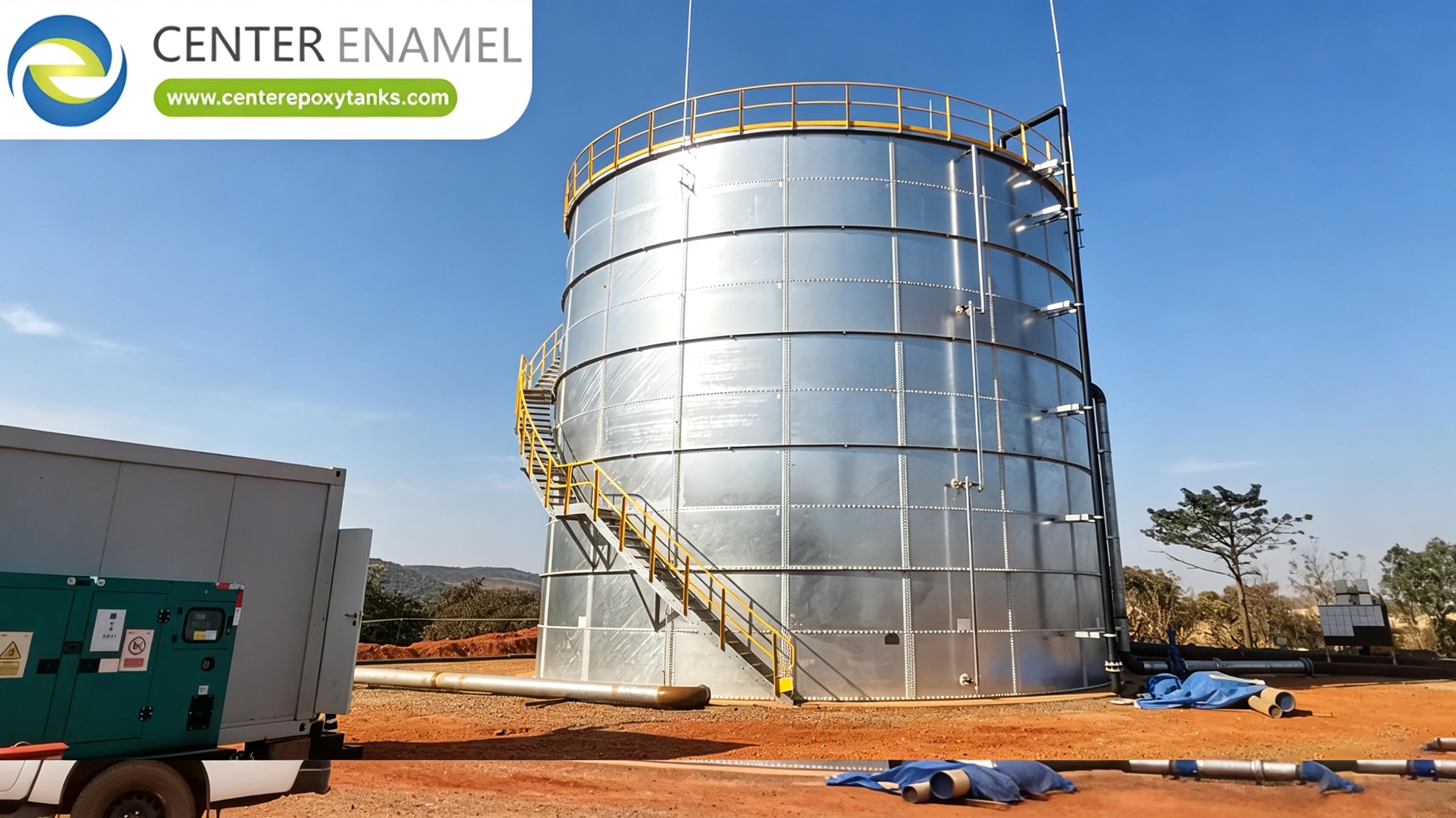
Bolted vs. Welded Cement Silos: Which is Right for Your Batching Plant?
Selecting between a bolted cement silo and a welded cement silo is one of the most critical infrastructure decisions for concrete batching plant operators, precast manufacturers, and civil contractors.
While bolted silos offer unmatched international shipping efficiency and modular scalability, factory-welded silos provide monolithic structural continuity and rapid on-site erection for smaller-footprint operations.
1. Transport & Logistics: Containerized vs. Oversized Freight
Transport logistics represent the most dramatic difference between the two systems, directly influencing shipping budgets and project scheduling.
Bolted Cement Silos: Manufactured as modular curved steel panels, stiffeners, and conical segments that nest compactly inside standard 40ft High-Cube ocean containers or flatbed trucks. They require zero oversized freight permits, making them exceptionally economical for international shipping and remote inland sites.
Welded Cement Silos: Fabricated as single, monolithic cylindrical units. Transporting them requires low-boy trailers, pilot cars, and specialized oversized load permits. Road clearance limits typically restrict factory-welded silos to a maximum capacity of 80 to 100 MT.
2. Structural Design & Corrosion Protection
The engineering and surface treatment of cement silos dictate their long-term resilience against aggressive powders and weathering.
Bolted Cement Silos: Constructed from CNC-punched steel panels joined using high-strength Grade 8.2 bolts and engineered rubber or silicone sealing gaskets. Panels are protected via hot-dip galvanization (Z275 to Z600 standards), providing decades of maintenance-free rust immunity without requiring exterior repainting.
Welded Cement Silos: Feature continuous fusion-welded seams that create a completely seamless shell, offering maximum airtightness under heavy pneumatic pumping pressures. However, field-welded joints require manual priming and touch-up painting, which can become corrosion-prone points in humid or coastal environments.
3. Installation & Erection Timelines
Bolted Cement Silos: Assembled on-site by a specialized crew using manual bolting tools over a period of 3 to 10 days. No heavy crane lifting is required for the shell plates.
Welded Cement Silos: Delivered pre-assembled from the factory. Erection requires a heavy crane to lift and anchor the silo onto the concrete foundation in 1 to 2 days.
Comprehensive Comparison Data Table
Comparison Metric | Bolted Cement Silos | Welded Cement Silos |
Transport Method | Standard 40ft HQ ocean containers | Oversized low-boy trucks & crane transport |
Capacity Range | 30 MT to 2,000+ MT | 30 MT to 100 MT (Road transport limit) |
On-Site Installation Time | 3 to 10 days (Modular assembly) | 1 to 2 days (Crane lift & anchor) |
Welding Required | None (100% bolted with rubber gaskets) | Continuous factory or field welding |
Surface Protection | Hot-dip galvanized panels (Z275–Z600) | Factory primed/painted or field-coated |
Freight Cost Efficiency | High (Optimized container packing) | Low (Requires specialized permits) |
Relocation Potential | High (Can be unbolted and moved) | Very Low (Permanent monolithic structure) |
Decision Matrix: Which Silo Should You Choose?
Choose a Bolted Cement Silo if: You are managing an overseas project, require large storage capacities (200 MT to 2,000+ MT), operate in remote locations with strict transport restrictions, or want long-term rust protection via hot-dip galvanization.
Choose a Welded Cement Silo if: You need a smaller capacity ( 100 MT) for a permanent urban batching plant, have clear highway access from the manufacturing plant, and prioritize the fastest possible on-site installation.
Frequently Asked Questions (FAQ)
Q: Are bolted cement silos 100% leak-proof against fine cement powder?
A: Yes. Bolted cement silos utilize high-density, closed-cell rubber or silicone gasketing tapes sandwiched between flanged steel panel joints. When torqued to precise engineering specifications, these gaskets create an airtight, watertight seal that completely prevents cement powder leakage.
Q: Can a bolted cement silo be disassembled and moved to a new construction site?
A: Yes. One of the primary advantages of bolted silos is their modularity. When a temporary infrastructure or road construction project concludes, the silo can be unbolted, packed into containers, fitted with new sealing gaskets, and re-erected at a new location.
Q: Why do welded cement silos have strict capacity limitations during transport?
A: Highway overpasses, bridge clearances, and road width limits restrict the maximum diameter of a cylindrical tank transported on a truck to roughly 3.5 to 4 meters. Exceeding this requires expensive oversized permits and police escorts, making welded silos over 100 MT economically impractical.
Q: Which silo type offers a lower total cost of ownership (TCO)?
A: For capacities over 100 MT, bolted silos offer a lower TCO due to significant savings on freight, simplified erection labor, and the elimination of periodic exterior repainting thanks to hot-dip galvanized coatings.


