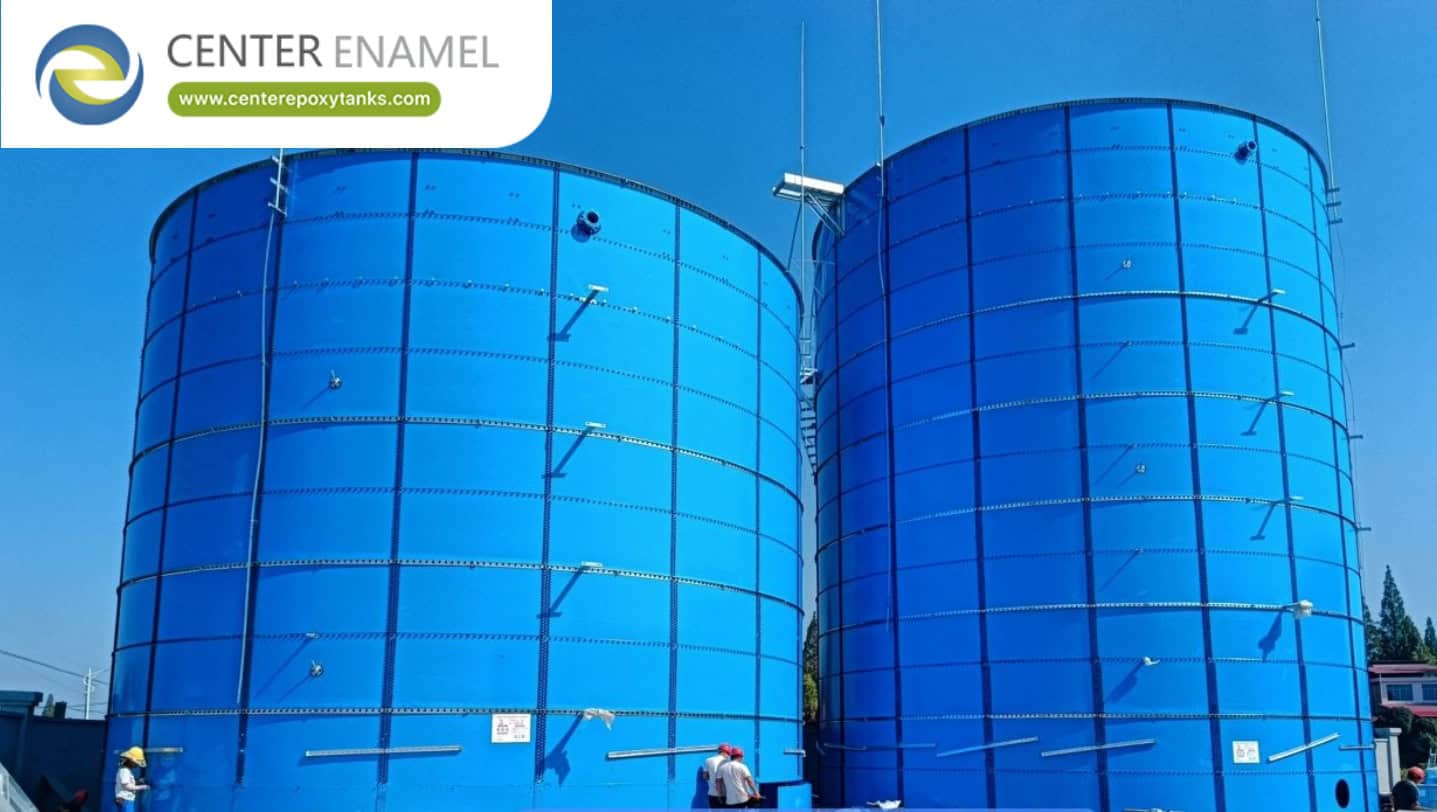
Bolted Steel Liquid Storage Tanks: Engineering Excellence, Modular Efficiency, and Advanced Containment
Across municipal water infrastructure, industrial wastewater treatment, agricultural processing, and fire suppression reserves, reliable fluid containment is critical to operational success. Facilities require storage solutions that combine long-term structural integrity with cost-effective deployment and minimal ongoing maintenance.
Traditional containment methods—such as labor-intensive field-welded carbon steel tanks prone to corrosion or slow-curing concrete basins vulnerable to cracking—often introduce severe timeline delays and high lifecycle upkeep costs. To overcome these challenges, bolted steel liquid storage tanks have become the definitive global standard, offering unmatched versatility, factory-controlled quality, and rapid modular assembly.
The Engineering Mechanics of Bolted Steel Tanks
Unlike field-fabricated structures that rely on variable environmental conditions for welding and coating, bolted steel tanks are engineered using precision-manufactured, factory-coated steel panels. These components are shipped flat-packed and bolted together on-site using high-tensile hardware.
Factory-Controlled Coating Application: Panels undergo rigorous abrasive blasting followed by the electrostatic application of high-grade Fusion Bonded Epoxy (FBE) or the fusing of vitreous enamel (Glass-Fused-to-Steel/GFS) at high temperatures. This creates a chemically inert, highly durable barrier.
Precision Hydrostatic Design: Tank walls are engineered with precise plate tapering from base to roof, ensuring structural compliance with hydrostatic hoop stress calculations and regional wind, seismic, and snow loads.
Modular Flexibility: The bolted architecture allows individual panels to be inspected, maintained, or even expanded in height and diameter if facility storage requirements increase over time.
Technical Performance Matrix: Liquid Storage Technologies
Technical Parameter | Factory-Coated Bolted Steel Tanks | Cast-in-Place Concrete Basins | Field-Welded Carbon Steel Tanks |
Corrosion Defense & Coating Quality | Excellent; factory-baked FBE or GFS coatings prevent rust and chemical attack | Moderate; vulnerable to concrete carbonation, sulfate attack, and water seepage | Moderate to low; prone to pitting and weld-seam oxidation without intensive upkeep |
Construction Speed & Deployment | Rapid modular erection completed in weeks using mechanical tools | Slow civil construction requiring extensive formwork and multi-week concrete curing | Labor-intensive field welding and weather-dependent protective coating work |
Structural Scalability & Relocation | High scalability; bolted panels allow future height extensions or relocation | Monolithic structure; impossible to modify, expand, or relocate once poured | Difficult to modify without extensive hot-work cutting and re-welding |
Governing Engineering Standards | Engineered strictly to AWWA D103, ISO 28765, and NSF/ANSI 61 | Governed by local civil masonry and structural concrete codes | Governed by general steel design codes with variable field quality checks |
Core Applications Across Industries
Bolted steel liquid storage tanks serve a vast array of commercial and municipal sectors due to their adaptable design and chemical resilience:
Municipal Water & Potable Storage: Providing safe, hygienic drinking water reserves compliant with strict health standards like NSF/ANSI 61.
Industrial Wastewater Treatment: Handling corrosive effluents, chemical sludges, and biological treatment stages in manufacturing and municipal plants.
Fire Protection Reserves: Supplying reliable, high-volume water storage for commercial sprinkler systems in accordance with standards such as NFPA 22.
Agricultural and Leachate Management: Containing organic liquid waste, anaerobic digestate, and stormwater runoff safely without structural degradation.
Frequently Asked Questions (FAQ)
Q: What are the main advantages of bolted steel liquid storage tanks over traditional welded tanks?
A: Bolted steel tanks offer superior factory-controlled coating quality, rapid on-site assembly without hot-work permits, lower maintenance overhead, and the unique ability to be expanded or relocated as storage needs change.
Q: What international standards govern the design and manufacture of bolted storage tanks?
A: Quality-compliant bolted steel tanks are engineered in accordance with major international standards, including AWWA D103 (for water storage), ISO 28765 (for glass-fused-to-steel and enameled tanks), and NSF/ANSI 61 for potable water safety.
Q: Can bolted steel tanks be expanded if a facility requires more capacity in the future?
A: Yes. Because bolted tanks utilize a modular panel design, facility operators can easily dismantle upper ring assemblies and incorporate additional panels to increase the tank height and volume.
Q: How long do factory-coated bolted steel liquid storage tanks typically last?
A: When manufactured, installed, and maintained according to manufacturer specifications, premium factory-coated bolted steel tanks provide a reliable service life spanning 30 to 50 years or more.


