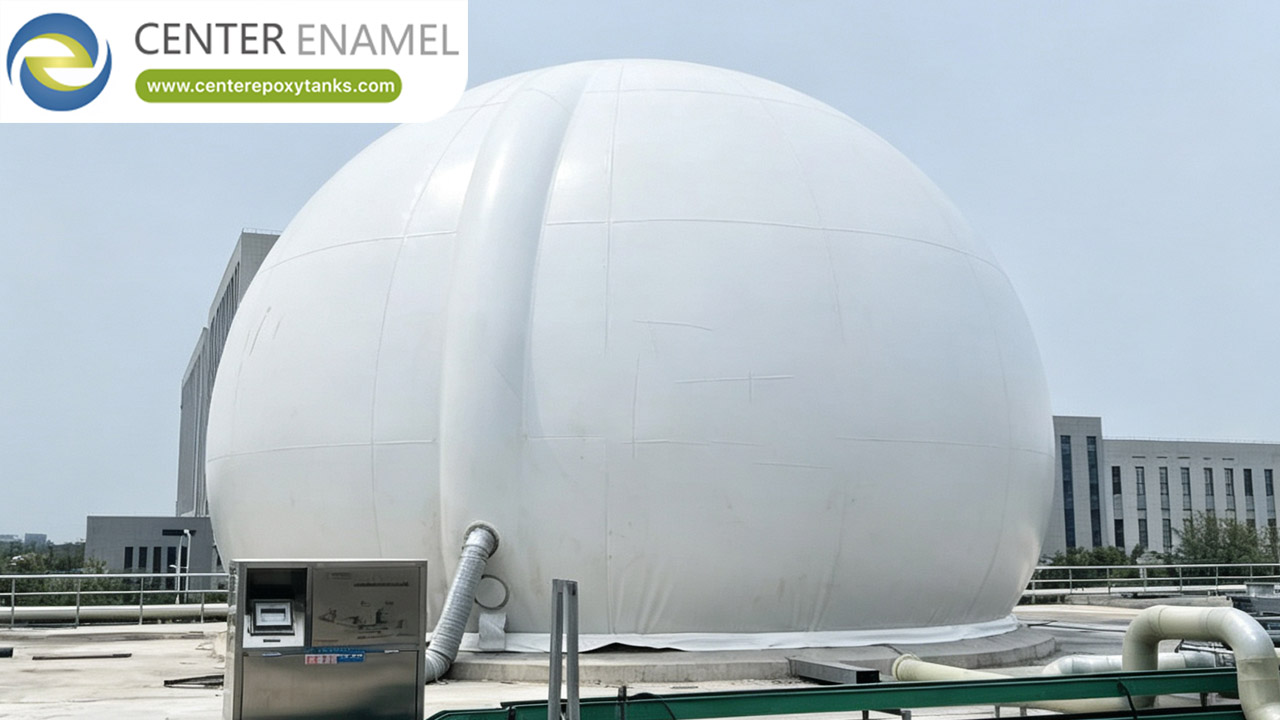
Biogas Holder for Biomass Projects: Optimizing Intermediate Gas Storage and System Efficiency
As global demand for renewable baseload energy accelerates, large-scale biomass and anaerobic digestion (AD) projects have become foundational to circular economies. Whether processing agricultural livestock manure, food waste, industrial organic effluents, or municipal sewage sludge, modern biomass plants convert complex biological matter into methane-rich biogas. However, biological digestion is a continuous, dynamic process, whereas downstream energy utilization (such as combined heat and power [CHP] engines, boilers, or biomethane upgrading systems) often experiences variable demand cycles.
To bridge this operational gap, a high-performance biogas holder for biomass project applications serves as the critical intermediate reservoir. By safely containing, buffering, and regulating gas flow, advanced storage systems ensure consistent plant uptime, protect conversion equipment from pressure surges, and prevent fugitive methane emissions.
Core Operational Functions of Biogas Storage in Biomass Plants
Integrating an effective gas holder into a biomass facility delivers two primary operational safeguards:
Securing the Energy Fuel Source: The biogas holder acts as a hermetic barrier that locks in valuable methane ($CH_4$) while keeping external air and moisture out. This prevents caloric degradation and environmental leakage.
Intermediate Flow and Pressure Stabilization: Biological gas generation rates fluctuate based on feedstock consistency, temperature, and feeding schedules. The gas holder absorbs these volumetric swings, ensuring that downstream gas engines or upgrading skids receive a continuous, steady-pressure fuel supply.
Engineering Superiority: Double Membrane Technology
The industry standard for modern biomass facilities is the double membrane gas storage system, which replaces rigid, high-maintenance steel or wet gasholders with a flexible, engineered multi-layer membrane architecture:
Inner Membrane: Directly seals and contains the biogas, expanding and contracting dynamically within the protective envelope based on current gas volume.
Outer Membrane: Maintained under a constant, automated positive air pressure via an intelligent blower system, this external layer shields the inner gas chamber from wind, rain, UV radiation, and heavy snow loads.
Bottom Membrane (Floor-Standing Units): Provides an absolute ground seal when configured as an independent, standalone storage yard separate from the main digester tank.
Technical Performance Matrix: Biogas Storage Solutions
Technical Parameter | Double Membrane Biogas Holder | Legacy Fixed-Roof Steel Tanks | Wet-Seal Telescopic Gasholders |
Storage Capacity & Scalability | High volumetric flexibility with easy adaptation to medium and large scales | Rigid, fixed capacity with zero allowance for dynamic volume buffering | Moderate volume changes limited by mechanical guide frames and water seals |
Pressure Regulation & Control | Automated inter-membrane air balancing maintains smooth, stable output pressure | Prone to pressure fluctuations as gas volume changes within a rigid shell | Variable pressure determined by liquid seal depth and mechanical weight |
Corrosion & Chemical Defense | Specialized PVC-coated polyester and FPP foils highly resistant to H2S up to 8,000 ppm | Requires continuous internal protective coatings to prevent sulfide stress cracking | High maintenance due to constant water-line corrosion and atmospheric oxidation |
Installation Speed & Footprint | Lightweight, modular components enable rapid on-site assembly and layout flexibility | Heavy structural steel fabrication requiring extensive crane lifts and time | Complex mechanical assembly with high civil engineering and foundation costs |
Safety Systems and Environmental Compliance
Modern biomass gas holders incorporate multi-tiered safety protocols to ensure absolute asset protection and regulatory compliance:
Three-Level Safety Architecture: Integrated mechanical overpressure/underpressure relief valves protect the structural integrity of the membranes, while automated sensor arrays monitor blower status and gas levels. Hard interlocks safely trigger flare or emergency shutoff routines during critical system trips.
Material Certification: High-grade technical textiles feature flame-retardant properties (DIN 4102 B1), robust antifungal treatments, and high tear resistance to guarantee a long operational service life under demanding industrial conditions.
Frequently Asked Questions (FAQ)
Q: Why is a double membrane biogas holder essential for a biomass project?
A: A double membrane biogas holder acts as a crucial intermediate buffer between variable biological gas generation and steady downstream energy consumption. It stabilizes working pressure, secures the methane fuel supply against environmental losses, and protects CHP engines or upgrading systems from starvation or surges.
Q: Can a double membrane biogas holder be installed independently from the anaerobic digester?
A: Yes. While they can be mounted directly onto the crown of concrete or bolted steel digester tanks, they are also frequently built as standalone, floor-standing units on independent foundations to optimize plant layout, maintenance access, and total storage volume.
Q: How does the outer membrane maintain stability against wind and snow loads?
A: The outer membrane is continuously supported by a controlled, low-pressure air buffer managed by an automated support blower and regulating valve system. This constant positive air pressure ensures the outer shell retains its engineered contour and withstands severe environmental loads.
Q: What materials are used to protect the gas storage membranes from hydrogen sulfide (H2S)?
A: The inner and bottom gas-contacting membranes are fabricated from specially formulated, high-density polymers (such as heavy-duty PVC-coated polyester, PELD, or FPP) that feature exceptional chemical resistance against trace hydrogen sulfide and moisture present in raw biomass biogas.


