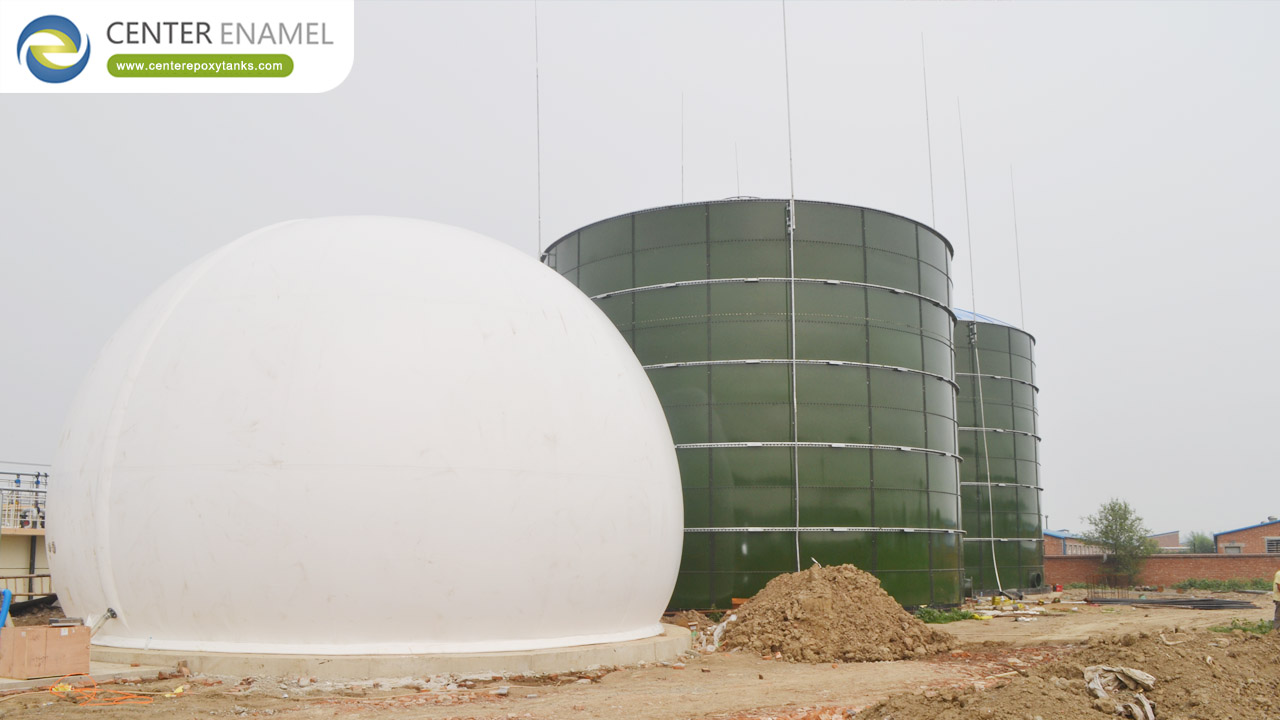
Biogas Balloons for Bio-CNG Plants: Optimizing Storage, Buffering, and Biomethane Production
In the global shift toward green energy and circular economies, converting raw organic waste into Compressed Natural Gas—widely known as Bio-CNG—has emerged as a transformative technology. By upgrading raw biogas from agricultural residues, municipal solid waste, and industrial effluents into high-purity biomethane, plants can feed clean fuel directly into gas grids or vehicle fueling stations. However, because anaerobic digestion produces gas continuously over a 24-hour cycle while gas upgrading systems and high-pressure compressors operate on intermittent batch schedules, maintaining a steady, regulated feed is a major engineering hurdle.
To bridge this operational gap, modern facilities utilize biogas balloons for Bio-CNG plants. Serving as dynamic pneumatic buffer systems, these flexible gas holders ensure seamless pressure stabilization, prevent valuable methane flaring, and guarantee uninterrupted operation for downstream purification compressors.
Architectural Mechanics of Double-Membrane Biogas Balloons
Unlike rigid industrial tanks, advanced biogas balloons—typically engineered as double-membrane gas holders—rely on a smart, air-supported multi-layer structure that solves key storage challenges:
Inner Membrane: The flexible, gas-tight containment chamber that holds the raw biogas directly. It expands and contracts dynamically based on the balance between digestion output and compressor consumption.
Outer Membrane: A heavily tensioned, weather-resistant outer shell that maintains a clean spherical or cylindrical profile, protecting the system from wind loads, heavy snow, and ultraviolet (UV) radiation.
Air Support Blower System: An automated, explosion-proof centrifugal fan pumps continuous ambient air into the interstitial space between the inner and outer membranes. This positive pressure structural support forces the inner membrane downward, maintaining a constant, reliable operating gas pressure at the outlet manifold regardless of storage volume.
Material Science and Chemical Resistance in Biogas Storage
Raw biogas contains high concentrations of moisture, carbon dioxide, and corrosive hydrogen sulfide ($H_2S$). Consequently, standard commercial plastics are entirely unsuited for Bio-CNG applications. Premium biogas balloons are manufactured using high-performance technical textiles:
High-Tensile Fabric Substrate: Heavy-duty polyester (PES) or high-tenacity base fabrics provide exceptional tear resistance and structural strength under constant pneumatic load.
Specialized Polymer Coatings: Thick layers of Polyvinyl Chloride (PVC) or specialized polyurethanes treated with anti-fungal, anti-microbial, and UV-stabilized compounds ensure a long operating lifespan in harsh outdoor environments.
Data Table: Comprehensive Comparison of Biogas Storage Technologies
Technical Parameter | Double-Membrane Biogas Balloons | Rigid Steel Gas Holders | Fixed Concrete Domes |
Capital Expenditure (CapEx) | Highly cost-effective; requires minimal civil foundations | High initial cost due to heavy steel fabrication and heavy foundations | High structural investment and extended construction timelines |
Operating Pressure Control | Constant output pressure maintained automatically by air blowers | Variable pressure profile that drops as stored gas volume decreases | Variable gas pressure dependent on liquid seal or weight design |
Corrosion Vulnerability | Zero structural corrosion; inert polymer and fabric materials | High risk of internal acid corrosion from $H_2S$ and moisture condensation | Moderate risk of microbial-induced concrete corrosion (MIC) |
Installation & Deployment Speed | Rapid on-site assembly completed within days | Extended installation timeline requiring weeks of field welding | Very slow multi-week civil pouring and curing schedule |
Frequently Asked Questions (FAQ)
Q: What is the primary function of a biogas balloon in a Bio-CNG plant?
A: A biogas balloon acts as a critical pneumatic buffer between the continuous output of anaerobic digesters and the batch-operated high-pressure compressors of a Bio-CNG upgrading unit, stabilizing pressure and preventing gas flaring.
Q: How do double-membrane biogas balloons maintain constant gas pressure?
A: An automated air support blower continuously pumps air into the space between the outer and inner membranes, applying uniform downward pressure on the inner gas chamber to ensure a steady, reliable flow of biogas to downstream equipment.
Q: What materials are used to manufacture industrial biogas storage balloons?
A: They are fabricated using high-tenacity polyester fabric bases coated with heavy-duty, chemically resistant PVC or polyurethane layers that withstand hydrogen sulfide exposure, high moisture, and UV radiation.
Q: How do you calculate the required buffer volume for a Bio-CNG plant?
A: Buffer volume sizing depends on the plant's daily gas generation rate and compressor operating schedule. Typically, a 4-to-6 hour buffer is sufficient for continuous operations, whereas batch compression setups require a 10-to-12 hour buffer capacity.


