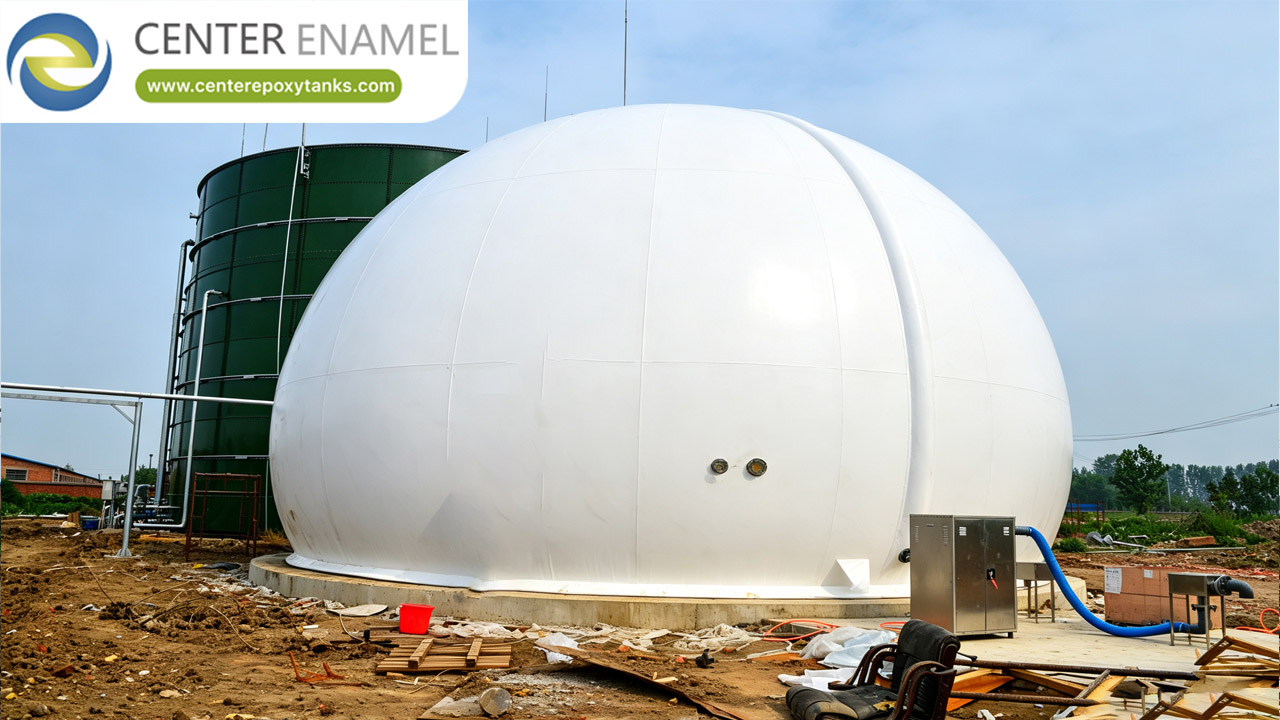
Double Membrane Gas Holder Roofs for Efficient Biomethane Storage
As global markets prioritize decarbonization, Biomethane—also known as Renewable Natural Gas (RNG)—has emerged as a high-value commodity. Unlike raw biogas, biomethane is a purified, upgraded fuel ready for grid injection or vehicle fueling. However, the operational success of an RNG facility relies heavily on its gas storage infrastructure.
To manage fluctuating production and provide a stable, low-pressure buffer, facility operators are increasingly turning to Double Membrane Gas Holder Roofs. As a leading China Double Membrane Gas Holder Roofs Manufacturer, Shijiazhuang Zhengzhong Technology Co., Ltd. (Center Enamel) provides integrated, flexible, and sustainable containment solutions designed to elevate the efficiency of modern biomethane plants.
The Innovative Design: Integrated Containment
A Double Membrane Gas Holder Roof is a sophisticated, all-in-one engineering solution. By combining a structural tank cover with an integrated gas storage system, this design eliminates the need for external storage tanks and complex, high-pressure piping.
How the Dual-Membrane System Works:
Inner Membrane: Serves as the primary storage chamber. It dynamically inflates and deflates to accommodate variable gas production rates, ensuring a consistent feed of high-purity biomethane to downstream injection or fueling points.
Outer Membrane: A robust, dome-shaped shield maintained under constant low air pressure by a blower. This layer protects the inner storage chamber from extreme weather, UV radiation, and environmental pollutants, while providing the structural stability needed for reliable gas delivery.
Comparison: Membrane Roofs vs. Traditional Storage
Feature | Double Membrane Gas Holder Roof | Traditional Rigid Steel Tank |
System Footprint | Low (Integrated with digester) | High (Requires separate tank) |
Maintenance | Minimal (Flexible materials) | Frequent (Corrosion protection needed) |
Safety Profile | Inherently Low Pressure | Requires High-Pressure Management |
Cost | Cost-Effective / Modular | Higher Capital Expenditure |
Insulation | Excellent (Air gap prevents condensation) | Low (Thermal bridging risk) |
Strategic Advantages for Biomethane Operators
1. Exceptional Gas-Tightness and Purity
The biomethane market demands strict quality standards. Our advanced welding techniques and high-strength, gas-tight membrane materials ensure the integrity of the gas, preventing methane leakage and protecting the purity of the biomethane from external contamination.
2. Streamlined Logistics and Cost
Because our system acts as both a tank cover and a gas holder, it drastically reduces the footprint of the plant. This decreases material, construction, and piping costs, significantly improving the economic viability of your biomethane project.
3. All-Weather Durability
Fabricated from UV-stabilized, PVC-coated polyester, our roofs are built to resist corrosive gas environments and harsh climates. The air gap between the membranes acts as an insulator, maintaining a stable temperature that prevents condensation, which is critical for preserving biomethane quality.
Proven Global Reliability: Case Studies
Center Enamel’s technology is currently operational in diverse climates worldwide, supporting a range of waste-to-energy applications:
Biomethane Grid Injection (UK): An agricultural waste-to-biomethane facility utilized 5 tanks with a total volume of 7,500m³ to act as a buffer for continuous grid injection.
Renewable Vehicle Fueling (Brazil): A farm-based plant deployed 3 tanks with a total volume of 1,200m³ to store purified biomethane for a fleet of agricultural vehicles.
Industrial Waste Conversion (North America): A facility processing industrial organic waste utilized 4 tanks with a total volume of 8,500m³ to supply biomethane to a nearby industrial park.
Frequently Asked Questions (FAQ)
Q: Why is this system better for Biomethane than raw biogas?
A: Biomethane requires high purity. The Double Membrane Gas Holder Roof creates a sealed, stable environment that protects the gas from external contamination and condensation, ensuring the product meets the stringent standards required for grid injection.
Q: How does the system handle fluctuating gas production?
A: The inner membrane is dynamic; it expands and contracts based on gas production rates. This allows it to act as a "breathing" buffer, ensuring that even if production spikes, the system can absorb the volume without disrupting downstream operations.
Q: Is the system safe against over-pressurization?
A: Yes. Our membrane roofs are designed with integrated pressure management features that protect the system from over-pressurization or vacuum damage, providing a safe, reliable storage environment.
Q: What is the expected service life of the membrane material?
A: With proper installation and minimal routine inspection, the high-strength, UV-stabilized fabrics we utilize are engineered for long-term service life, providing a durable and cost-effective alternative to rigid, corrosion-prone steel structures.
Are you ready to optimize your biomethane storage facility? [Contact the Center Enamel engineering team] today to receive a technical proposal or consultation tailored to your specific project volume and operational needs.


