Biogas Balloons for Bio-CNG Plants: Engineering & Sizing Guide
In the transition from raw biogas to Compressed Natural Gas (Bio-CNG), the double-membrane biogas balloon acts as the crucial pneumatic buffer. Because anaerobic digestion produces gas steadily over a 24-hour cycle, while upgrading systems and high-pressure compressors operate in variable batches based on demand, a flexible gas holder is mandatory. It balances system pressure, prevents flaring of valuable methane, and guarantees a continuous fed to the compressor intakes.
1. Architecture of the Double-Membrane Gas Holder
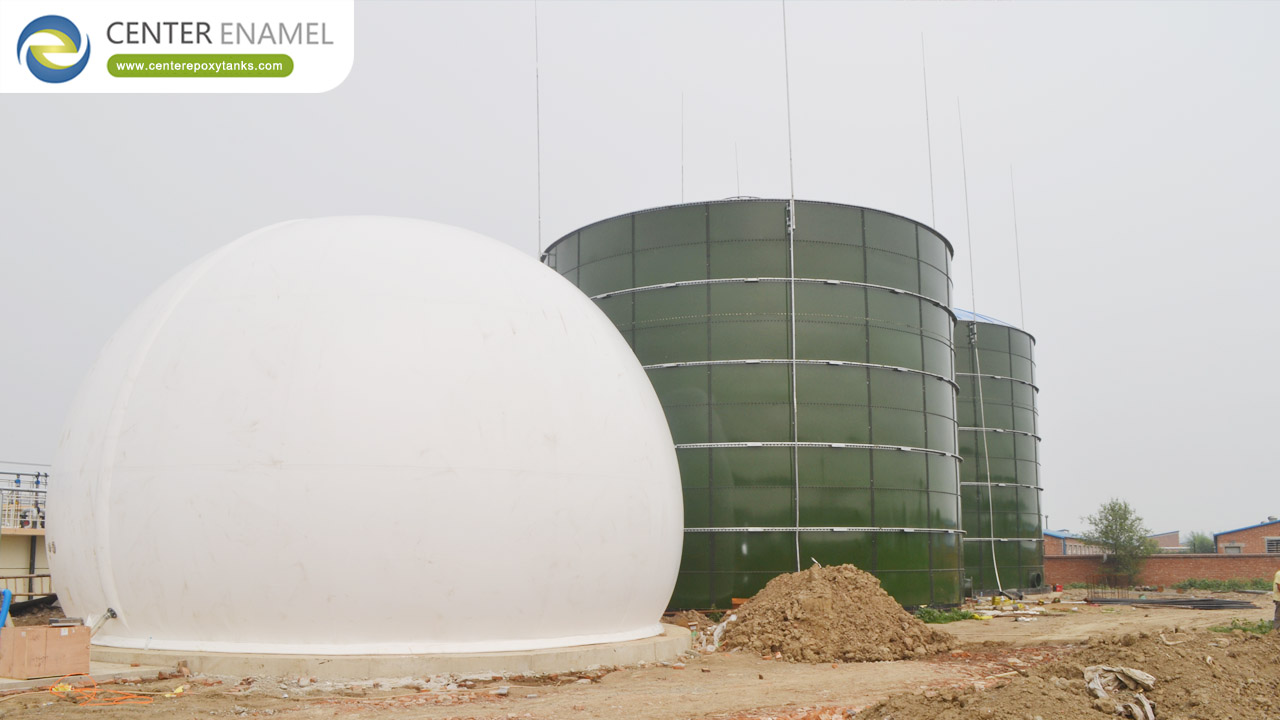
Unlike rigid steel tanks, a double-membrane biogas balloon relies on a dynamic, air-supported structure. This design solves a major engineering hurdle: it maintains a constant operating gas pressure regardless of how much gas is currently stored inside.
● Inner Membrane: The expandable, gas-tight chamber that directly contains the raw biogas or biomethane. It inflates and deflates freely based on the ratio of gas production to compressor consumption.
● Outer Membrane: A highly tensioned, weather-resistant spherical shell that protects the internal components from wind, snow loads, and UV degradation.
● Air Support Blower: An explosion-proof centrifugal fan that continuously pumps ambient air into the interstitial space between the inner and outer membranes. This provides the structural rigidity of the outer dome and applies constant downward pressure against the inner membrane, pushing the biogas uniformly toward the compressor manifold.
2. Material Science: Surviving Aggressive Gas
Biogas prior to purification is highly corrosive, saturated with moisture, and heavy in hydrogen sulfide. The membranes must be engineered from advanced industrial textiles rather than standard plastics.
● Fabric Substrate: Typically constructed from high-tensile polyester (PES) fiber meshes to resist structural stretching and tearing under pneumatic load.
● Chemical Coating: Coated with thick layers of Polyvinyl Chloride (PVC) or specialized polyurethanes. This chemically inert barrier prevents the diffusion of methane (text{CH}4) into the atmosphere and resists acid degradation from hydrogen sulfide (text{H}2text{S}).
● Thermal & UV Stability: The outer membrane undergoes intense solar exposure and is treated with anti-aging compounds to prevent embrittlement. High-grade membranes maintain flexibility across operating temperatures from -30°C to +70°C.
3. Buffer Volume Sizing Calculations
Properly sizing the biogas balloon is critical. Undersizing leads to frequent flaring of excess gas during compressor downtime, while oversizing incurs unnecessary capital expenditures and footprint requirements.
The baseline buffer volume (Vb) can be calculated using the plant's daily gas production rate (Qp) and the required buffer time (tb):
Use this interactive tool to estimate the required buffer storage volume for your specific plant parameters:
Key insight: A 4-to-6 hour buffer is generally sufficient if the upgrading system and compressor run continuously. However, if gas compression occurs in batches (e.g., only filling CNG trucks during daytime shifts), a larger 10-to-12 hour buffer is strictly required.
4. Flexible Membranes vs. Rigid Steel Gas Holders
When engineering a Bio-CNG plant, project managers must choose between flexible membrane balloons and traditional rigid steel gas holders. Membrane technology has largely become the industry standard for specific operational advantages:
Feature | Double-Membrane Balloon | Rigid Steel Gas Holder |
Capital Cost | Lower (Requires minimal foundation) | High (Heavy steel and civil works) |
Operating Pressure | Constant (Maintained by air blower) | Variable (Decreases as gas is drawn) |
Corrosion Risk | Zero structural corrosion | High (Requires internal epoxy coatings) |
Installation Time | Rapid (Days) | Extended (Weeks to Months) |
Lifespan | 10 to 15 years | 25 to 30+ years |
5. Safety and Instrumentation Protocols
Handling highly combustible gas requires stringent safety mechanisms integrated directly into the balloon's pneumatic design:
1. Hydraulic Overpressure Valve: A liquid-seal relief valve that safely vents excess biogas to the atmosphere or a flare if the internal pressure exceeds the design limit (typically set between 15 and 50 mbar).
2. Ultrasonic Level Sensors: Mounted at the top of the outer dome, these sensors bounce sound waves off the inner membrane to measure gas volume in real-time. This volume data is wired to the plant's SCADA system to automatically trigger the compressors or an emergency flare.
3. Gas Detectors: Methane sniffers are installed around the blower air intake and concrete perimeter to detect micro-leaks in the membrane seams before the gas concentration reaches the Lower Explosive Limit (LEL).


