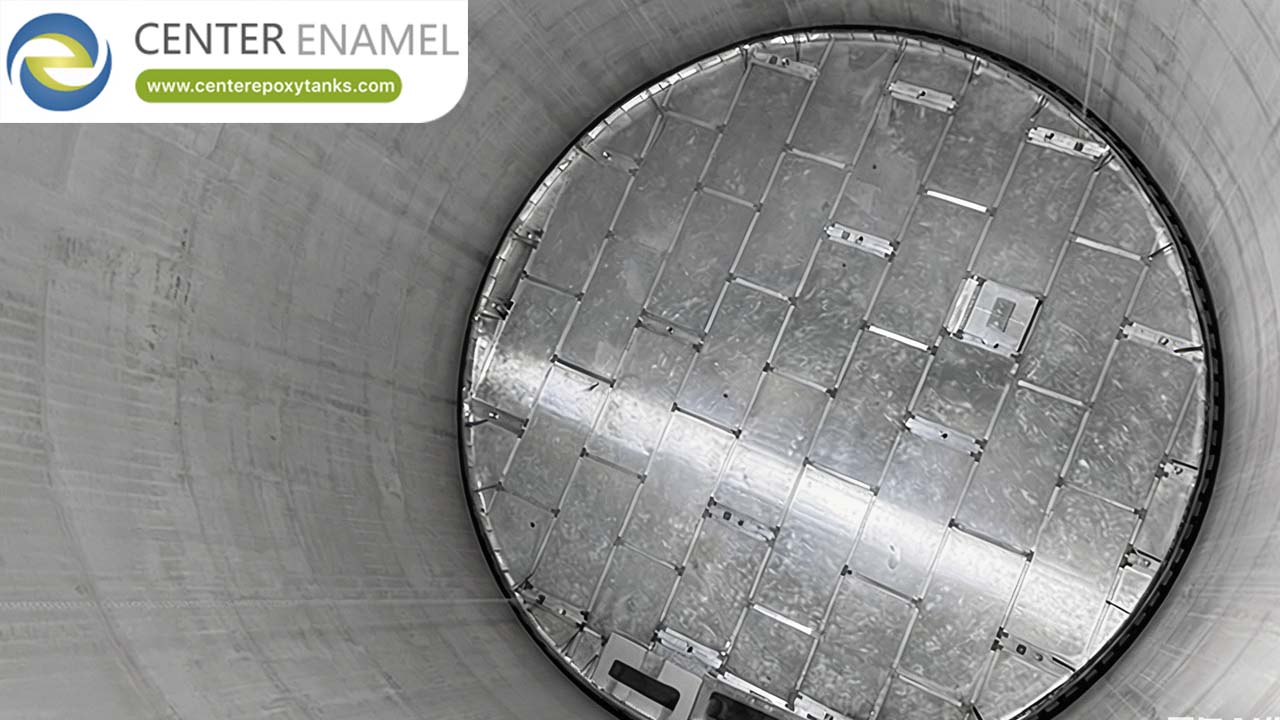
Benefits of Using Internal Floating Systems (IFS) in Crude Oil Storage: Maximizing Safety, Emission Control, and Economic Efficiency
In the global petroleum and refining sectors, storing crude oil efficiently while meeting rigorous environmental mandates presents a complex engineering challenge. Crude oil is a complex mixture of volatile hydrocarbons that readily vaporize when exposed to ambient temperature fluctuations and solar radiation. In traditional fixed-roof storage tanks without internal floating covers, a large vapor headspace accumulates above the liquid, leading to severe evaporative losses, high economic waste, and harmful emissions.
To combat these challenges, facility operators increasingly deploy Internal Floating Systems (IFS)—commonly referred to as Internal Floating Roofs (IFRs)—within fixed-roof tanks. By combining the weather protection of a fixed outer shell with a buoyant deck that rests directly on the crude oil surface, internal floating systems deliver exceptional environmental performance, enhanced safety, and long-term asset security.
The Engineering Mechanics of Internal Floating Systems
An internal floating system operates through straightforward hydrostatic principles integrated with advanced mechanical design:
Elimination of the Vapor Headspace: The floating deck rests directly on the surface of the crude oil. By removing the air gap between the liquid and the roof, the system suppresses the vaporization of light ends (such as propane, butane, and light naphtha fractions), halting evaporation at the source.
Dual-Layer Weather Protection: Because the internal floating deck is housed beneath a permanent fixed roof (cone or dome), it is entirely shielded from external weather elements like heavy rain, snow, and wind-driven debris, eliminating the primary operational complications associated with open external floating roofs.
Advanced Rim Sealing Dynamics: A flexible primary and secondary seal spans the narrow annular gap between the moving perimeter of the floating deck and the interior tank wall, containing any minor vapor migration and ensuring a tight operational seal during liquid level drawdown or refilling cycles.
Technical Performance Matrix: Crude Oil Storage Technologies
Technical Parameter | Internal Floating Systems (IFS / IFRT) | External Floating Roof Tanks (EFRT) | Conventional Fixed-Roof Tanks (No Deck) |
Vapor Space & Headspace | Virtually zero; liquid surface is fully covered by the buoyant deck | None at surface, but open to the atmosphere above the outer rim | Large, combustible ullage prone to continuous vapor breathing losses |
VOC Emission Reduction Efficiency | Maximum; suppresses up to 95% to 98% of evaporative hydrocarbon losses | High; suppresses approximately 90% to 95% of volatile emissions | Zero emission control; massive atmospheric evaporation and odor release |
Weather & Environmental Exposure | Low; completely sheltered from rain, snow, and UV degradation by the fixed outer roof | High; exposed directly to weather elements, requiring continuous drainage management | Low; fully enclosed structure, but vulnerable to explosive vapor accumulation |
Governing Engineering Standard | Engineered strictly per API 650 Appendix H specifications | Engineered strictly per API 650 Appendix C specifications | Standard API 650 fixed-roof structural codes |
Core Operational Benefits for Terminal Operators
1. Drastic Reduction of Volatile Organic Compound (VOC) Emissions
Fugitive hydrocarbon emissions represent both a direct financial loss of valuable crude oil and a major environmental compliance concern. By suppressing vaporization, internal floating systems reduce VOC losses by up to 98%, helping terminal operators comply strictly with regional environmental air quality mandates and EPA regulations.
2. Enhanced Fire and Explosion Safety
In fixed-roof tanks without internal floating covers, an oxygen-hydrocarbon vapor mixture accumulates in the headspace, creating a persistent explosion hazard. Internal floating systems eliminate this flammable vapor-air mixture, drastically lowering the risk of catastrophic fires or static ignition incidents.
3. Protection Against Product Contamination
Because the fixed outer roof shields the internal floating deck from rain, dust, bird droppings, and ambient moisture, the stored crude oil remains free from external water contamination. This preserves the baseline quality of the feedstock prior to refining.
Frequently Asked Questions (FAQ)
Q: What is an Internal Floating System (IFS) in crude oil storage?
A: An Internal Floating System (or Internal Floating Roof) is a buoyant deck installed inside a permanent fixed-roof storage tank. It floats directly on the surface of the stored crude oil, eliminating the vapor headspace and drastically reducing evaporation losses.
Q: How do internal floating systems reduce VOC emissions in crude oil terminals?
A: By resting in direct contact with the liquid surface or maintaining minimal trapped vapor space, the system prevents volatile light hydrocarbons from vaporizing. This keeps hydrocarbons inside the liquid phase rather than allowing them to escape into the atmosphere.
Q: What international standards govern the design of internal floating roofs?
A: Internal floating roofs are engineered, fabricated, and tested in strict accordance with API 650 Appendix H (Welded Tanks for Oil Storage - Internal Floating Roofs), ensuring structural integrity and reliable long-term performance.
Q: Are internal floating systems suitable for heavy crude oil or only light refined products?
A: While frequently utilized for volatile refined products like gasoline and aviation fuel, internal floating systems are also highly effective for storing crude oil variants that contain volatile fractions, helping terminals control emissions and maintain product quality.


