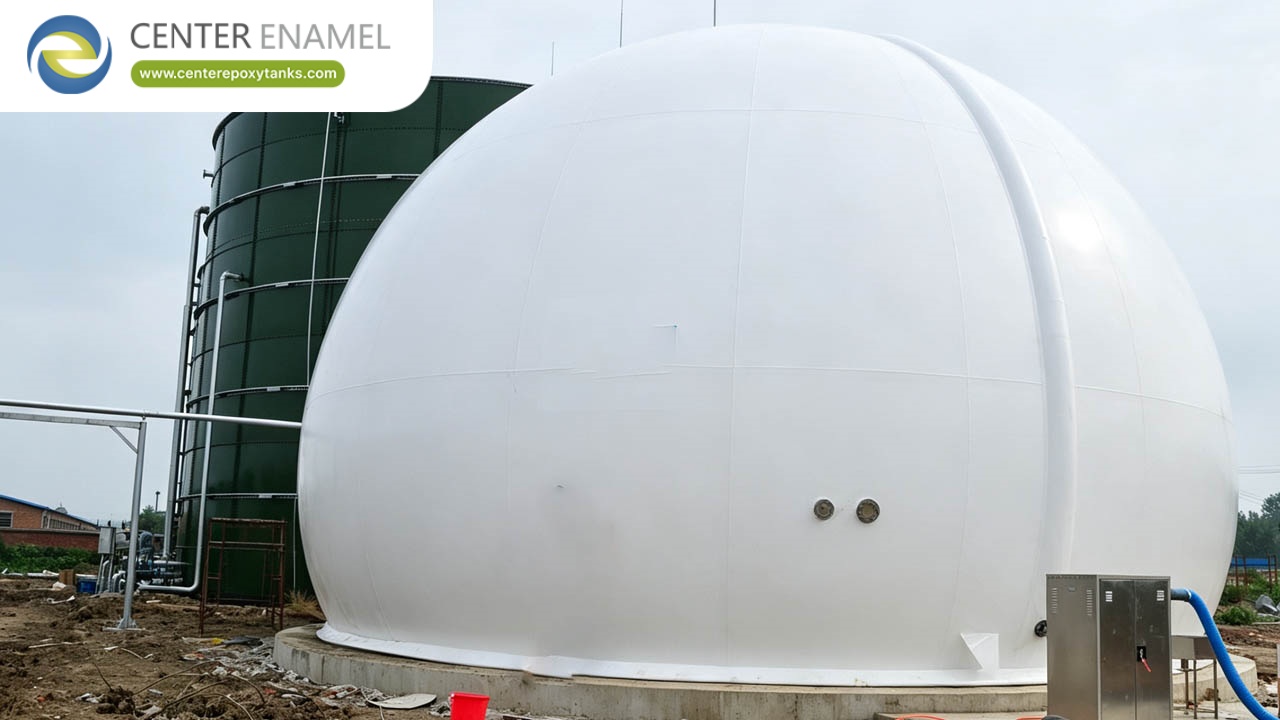
Balloon Biogas Digesters: An Ideal Solution for Agricultural Digester Tanks
Intensive livestock farming and agricultural production generate massive volumes of organic waste, including livestock manure, crop residues, and processing byproducts. Left unmanaged, these materials release potent greenhouse gases and create environmental pollution risks. However, when treated through anaerobic digestion, agricultural waste transforms into a valuable asset: high-grade renewable biogas and nutrient-rich organic fertilizer.
While large-scale industrial plants rely on rigid concrete or bolted steel tanks, small-to-medium agricultural operations often require decentralized, highly efficient, and economically accessible alternatives. Balloon biogas digesters have emerged as an ideal solution for agricultural digester tanks, combining flexible membrane technology with integrated gas storage to deliver exceptional performance, ease of deployment, and cost-effectiveness.
The Engineering Mechanics of Balloon Biogas Systems
Unlike rigid civil structures, a balloon biogas digester utilizes a heavy-duty, highly elastic envelope fabricated from specialized composite materials (such as reinforced red mud PVC or high-density PELD polymers). This flexible container serves a dual purpose:
Integrated Reaction Chamber: The lower section of the balloon acts as the anaerobic digestion zone, where methanogenic bacteria break down organic slurries in the absence of oxygen.
Flexible Gasholder Crown: The upper section expands dynamically to store generated biogas. As gas production rises, the balloon inflates; as gas is consumed by generators or stoves, it deflates smoothly without creating hazardous pressure differentials.
This unified design eliminates the need for complex, expensive external gasholders and complex piping manifolds, streamlining the entire waste-to-energy process.
Technical Performance Matrix: Agricultural Digestion Solutions
Technical Parameter | Flexible Balloon Biogas Digesters | Fixed-Dome Masonry Digesters | Industrial Bolted Steel Digesters |
Capital Expenditure & Accessibility | Highly economical; low material and labor overhead | Moderate initial cost; vulnerable to masonry cracking over time | Higher capital investment optimized for large-scale commercial utility grids |
Installation Speed & Deployment | Rapid deployment; unpackaged and installed on farms in days | Slow civil masonry construction requiring skilled bricklayers and curing | Fast modular bolted assembly, but requires engineered concrete foundations |
Volumetric Adaptability | Dynamic expansion accommodates fluctuating gas generation volumes | Fixed internal volume with zero elasticity or pressure buffering | Rigid volume with optional integration of flexible double-membrane roofs |
Corrosion & Substrate Resistance | Superior resistance to organic acids, moisture, and hydrogen sulfide (H2S) | Vulnerable to concrete carbonation and sulfate attack from manure slurries | Exceptional when paired with specialized Fusion Bonded Epoxy (FBE) or GFS coatings |
Key Advantages for Modern Agricultural Operations
Balloon biogas digesters provide distinct operational benefits tailored to the realities of rural farming:
Superior Thermal Insulation: Flexible polymer walls and low-profile ground positioning allow the digester to absorb ambient soil and solar heat more effectively, supporting stable mesophilic digestion cycles.
Ease of Maintenance and Sludge Removal: The flexible skin allows operators to gently agitate or massage the envelope to prevent scum crust formation, while periodic emptying and cleaning are significantly simpler than clearing rigid concrete tanks.
High Gas-Tightness: Factory-welded high-frequency seams ensure a 100% airtight seal, preventing fugitive methane emissions and maximizing energy recovery efficiency.
Frequently Asked Questions (FAQ)
Q: What is a balloon biogas digester and how does it work on a farm?
A: A balloon biogas digester is a flexible, closed-loop reactor made of heavy-duty polymer fabric. It combines anaerobic digestion and gas storage into a single unit, where agricultural manure and organic waste ferment to produce methane gas, which is stored in the expanding upper section of the balloon.
Q: What materials are used to ensure balloon digesters withstand weather and agricultural chemicals?
A: High-quality balloon digesters are fabricated from advanced composite materials such as reinforced red mud PVC or specialized PELD alloys. These materials offer exceptional UV resistance, tensile strength, and complete immunity to agricultural acids and hydrogen sulfide (H2S).
Q: Can balloon biogas digesters operate effectively in colder climates?
A: Yes, though cold climates require supplemental heating. Farmers often install greenhouse enclosures over the balloon digester or utilize internal heating loops powered by a portion of the generated biogas to maintain optimal bacterial digestion temperatures.
Q: What is the expected lifespan of a flexible agricultural balloon digester?
A: When manufactured with premium UV-stabilized polymer membranes and operated according to manufacturer guidelines, a modern balloon biogas digester provides a reliable operational lifespan ranging from 10 to 15 years or more.


