API 650 Welded Steel Tanks: Engineering Specifications, Design Standards, and Industrial Applications
In modern petroleum refining, chemical processing, and bulk liquid logistics, safe and reliable containment is paramount. Aboveground storage tanks (ASTs) serve as the backbone of industrial supply chains, holding everything from crude oil and refined fuels to process water and industrial chemicals. To ensure structural integrity, environmental safety, and operational uniformity across global projects, the industry relies universally on API Standard 650.
Published by the American Petroleum Institute, API 650 Welded Steel Tanks represent the definitive international benchmark for vertical, cylindrical, aboveground, closed- and open-top welded storage structures. Engineered to operate at atmospheric or near-atmospheric internal pressures, API 650 tanks provide a robust framework that balances material science, environmental load calculations, and stringent quality control.
Core Engineering Fundamentals of API 650 Tanks
Designing an API 650 compliant tank requires rigorous calculation of hydrostatic liquid pressure, wind loads, seismic activity, and thermal variations. The structural anatomy of an API 650 tank is divided into three primary components:
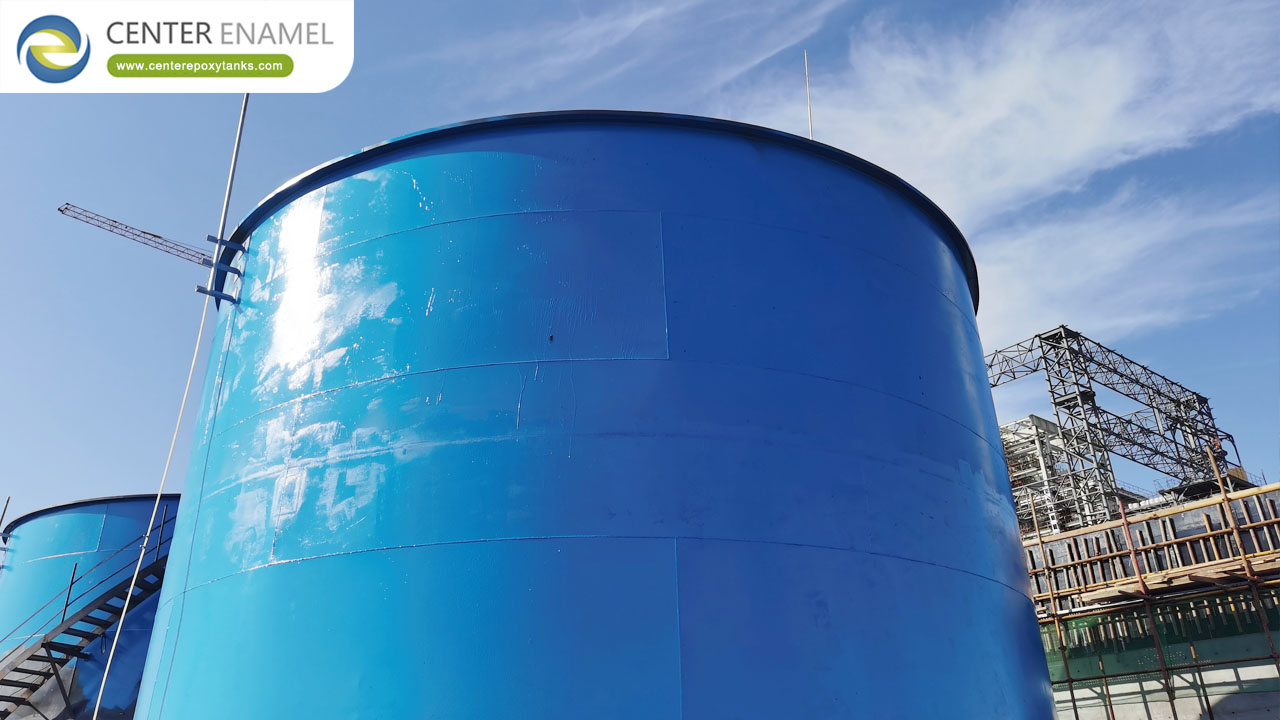
Shell Design (Variable-Thickness Courses): The cylindrical shell is constructed from stacked horizontal steel plates called strakes or courses. Because hydrostatic pressure increases with depth, bottom courses are engineered with maximum wall thickness, tapering upward to thinner plates at the top. Thickness calculations strictly follow either the one-foot method or the variable-design-point method outlined in the standard.
Bottom and Foundation Integration: Tanks feature uniformly supported flat bottoms resting on prepared foundations, typically consisting of a reinforced concrete ring wall with a compacted crushed stone or sand base. Annular bottom plates are frequently specified under heavier shell courses to handle high edge-bending stresses.
Roof Configurations: Depending on the stored product volatility and environmental requirements, API 650 accommodates multiple roof types, including self-supporting fixed cone roofs, dome roofs, internal floating roofs (IFR) for vapor suppression, and external floating roofs (EFR).
Data Table: Technical Parameters and Specifications of API 650 Welded Steel Tanks
Technical Parameter | Specification / Range Options | Primary Engineering Purpose |
Operating Pressure | Atmospheric up to 2.5 psig (pounds per square inch gauge) | Governs low-pressure design thresholds for atmospheric storage. |
Design Temperature | Non-refrigerated service from ambient up to 93°C (200°F); Annex M up to 260°C (500°F) | Determines material impact testing requirements and temperature de-rating. |
Material Standards | Carbon steel (ASTM A36, A283, A285, A516), Stainless steel (Type 304/304L, 316/316L) | Balances tensile strength, cost-effectiveness, and chemical compatibility. |
Roof Types | Fixed Cone, Dome, Internal Floating Roof (IFR), External Floating Roof (EFR) | Prevents evaporation losses, rainwater ingress, and VOC emissions. |
Welding & NDE | ASME Section IX welder qualifications; Radiographic (RT), Ultrasonic (UT), Magnetic Particle (MT) testing | Guarantees defect-free weld joints and structural soundness. |
Corrosion Allowance | Typically 1.5 mm to 3.0 mm (customizable based on service) | Provides a sacrificial steel layer to offset chemical or atmospheric oxidation. |
Material Selection and Quality Inspection Protocols
Material selection under API 650 depends on the stored product's corrosiveness, governing metal temperatures, and plate thickness. While standard carbon steel plates offer optimal structural economy for petroleum products, stainless steel or specialized alloy grades are mandated for aggressive chemical or high-purity applications.
Furthermore, fabrication quality is verified through mandatory Non-Destructive Examination (NDE). All vertical and horizontal shell butt welds undergo rigorous spot or complete radiographic inspection (RT) in accordance with ASME standards. Vacuum box testing is applied to bottom plate seams, and a comprehensive hydrostatic water test is performed upon completion to verify overall structural stability and leak-tight integrity.
Frequently Asked Questions (FAQ)
Q: What is the maximum internal pressure rating for an API 650 welded steel tank?
A: API 650 tanks are designed for atmospheric or near-atmospheric service, with internal design pressures not exceeding 2.5 psig. Tanks requiring higher pressures (up to 15 psig) typically fall under the API 620 standard.
Q: What materials are approved for construction under the API 650 standard?
A: The standard primarily permits high-strength carbon steel grades (such as ASTM A36, A283 Grade C, and A516 Grade 70), as well as stainless steel alloys (such as SA-240 Type 304 and 316L) for corrosive liquid environments.
Q: Why are internal floating roofs used in API 650 petroleum tanks?
A: Internal floating roofs (IFRs) float directly on the liquid surface inside a fixed-roof tank, significantly reducing vapor space, minimizing product evaporation losses, controlling harmful VOC emissions, and lowering fire risks for volatile liquids like gasoline and jet fuel.
Q: What is the difference between API 650 and API 653?
A: API 650 governs the design, fabrication, erection, and testing of new welded steel storage tanks. In contrast, API 653 covers the inspection, repair, alteration, dismantling, and reconstruction of existing API 650 tanks already in service.


