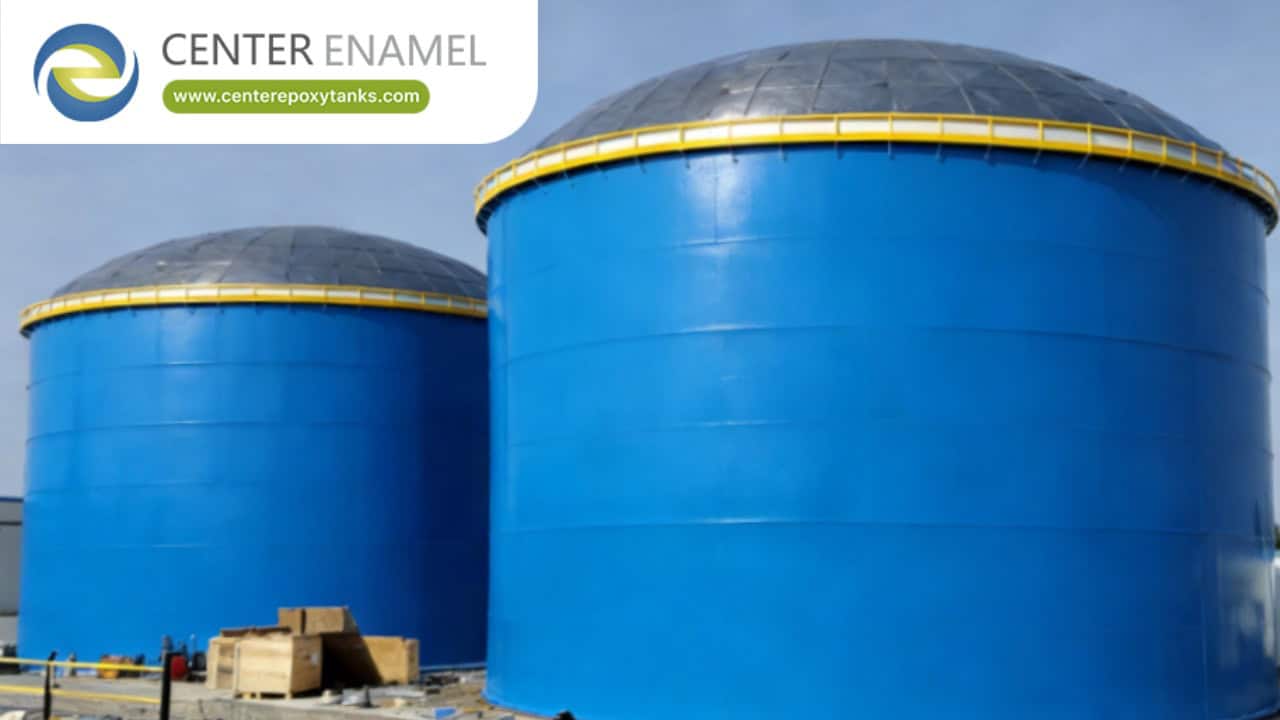
API 650 Tanks: The Industry Standard for Safe Liquid Storage
In the global industrial landscape, storage tanks are critical safety assets. Among the various engineering codes, API 650 stands out as the most trusted standard for welded, aboveground storage tanks (ASTs). Whether containing crude oil, refined fuels, water, or industrial chemicals, these tanks are engineered to resist environmental stressors, ensure structural integrity, and provide long-term operational reliability.
This guide explores why API 650 has become the "gold standard" for bulk liquid storage and how it safeguards operations across the oil and gas sector.
What is the API 650 Standard?
API 650 is a comprehensive standard developed by the American Petroleum Institute that governs the material selection, design, fabrication, erection, and inspection of welded steel storage tanks [1.1.2, 1.2.2].
First issued in 1961, the standard is continuously updated to reflect advances in materials science and engineering [1.1.2, 1.2.2]. It specifically applies to vertical, cylindrical, aboveground tanks operating at atmospheric pressure (typically up to 2.5 pounds per square inch, or psig) [1.1.2, 1.3.4]. By standardizing every aspect of construction, API 650 ensures that a tank built anywhere in the world meets a consistent, verifiable level of quality and safety [1.1.1, 1.1.2].
Why API 650 Tanks Are Essential
For facility operators, an API 650-compliant tank is more than just a vessel; it is a proven engineering system. Here is why it remains the industry benchmark:
1. Structural Integrity & Predictable Performance
API 650 mandates rigorous design criteria, including calculations for shell thickness based on hydrostatic pressure, wind loads, and seismic activity [1.1.1, 1.3.3]. By accounting for these specific "site conditions," the standard ensures tanks can withstand extreme weather and ground acceleration without buckling or shell tearing [1.2.1, 1.3.4].
2. Environmental Risk Mitigation
Leakage is a primary environmental risk in bulk liquid handling. API 650 addresses this through:
Welding Standards: Stringent requirements for Welding Procedure Specifications (WPS) and non-destructive examination (NDE) of seams (e.g., vacuum box or X-ray testing) ensure leak-tightness [1.1.1, 1.2.2, 1.3.4].
Vapor Containment: The standard provides the framework for internal and external floating roofs, which minimize Volatile Organic Compound (VOC) emissions by eliminating the vapor space above the liquid [1.3.1, 1.3.2, 1.3.4].
3. Long-Term Durability
Unlike unstandardized storage vessels, API 650 tanks are built for longevity. Requirements for corrosion allowances (extra material thickness) and the integration of cathodic protection systems ensure that the tank remains operational for decades, significantly lowering the total cost of ownership [1.1.2, 1.2.1, 1.3.4].
Technical Comparison: API 650 vs. Other Approaches
Understanding when to use API 650 versus other storage methods is essential for procurement and engineering teams.
Engineering Parameter | API 650 (Welded) | AWWA D103 (Bolted) |
Primary Construction | Field-Welded Steel | Bolted/Gasketed Panels |
Pressure Rating | Atmospheric (Low) | Atmospheric (Low) |
Typical Capacity | Extremely Large (100m+) | Moderate/Large |
Leak-Proofing Method | Welded Integrity (NDE) | Gasket & Sealant Integrity |
Core Application | Oil, Gas, Chemicals | Water, Wastewater |
Frequently Asked Questions (FAQ)
What is the primary difference between API 650 and API 620?
API 650 is designed for atmospheric storage tanks (up to 2.5 psig), whereas API 620 is used for larger tanks that require higher internal pressures (up to 15 psig) or specialized low-temperature/cryogenic service [1.1.1, 1.1.3, 1.3.4].
Are API 650 tanks only for petroleum storage?
No. While developed for the petroleum industry, API 650 is widely used to store water, fertilizers, biofuels, and various chemicals. Its robust design parameters are easily adjusted to handle different liquid densities and chemical compatibility requirements [1.1.2, 1.2.1, 1.3.3].
What happens after the tank is built?
While API 650 governs the construction of the tank, the sister standard API 653 governs the ongoing inspection, repair, and alteration of the tank throughout its service life to ensure it remains compliant and safe [1.3.4].
Why is hydrostatic testing required?
Hydrostatic testing—filling the tank with water to its maximum design height—is a mandatory requirement of the API 650 standard. It serves as a final proof-test to verify structural integrity and identify any potential weld defects or foundation settlement before the tank is filled with hazardous product [1.1.1, 1.3.3, 1.3.4].


