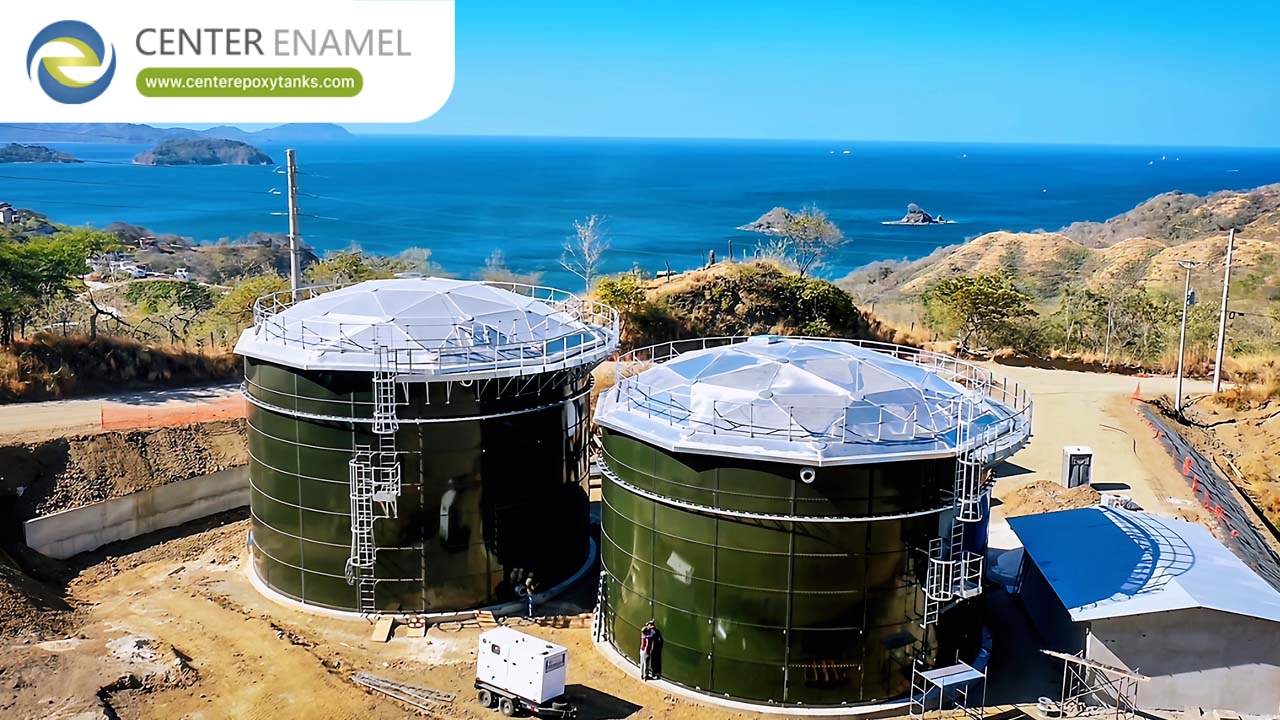
Aluminum Vs Steel, Concrete And FRP Dome Roofs: A Material Comparison
When specifying a dome roof, the structural material drives corrosion performance, maintenance, weight and cost. This article compares aluminum with steel, concrete and fiberglass-reinforced-plastic (FRP) dome roofs so you can match the material to the service environment.
Why Material Choice Drives Life-Cycle Cost
The cover sees weather, UV, vapor and sometimes corrosive atmospheres for decades. The material that needs the least intervention usually wins on lifecycle cost even if its first cost is higher.
Aluminum's advantage is that corrosion resistance and UV stability are intrinsic — no coating system to renew.
Corrosion And UV Resistance
Aluminum forms a stable oxide layer and resists rust, spalling and tearing; it is also resistant to ultraviolet and ozone degradation. Steel requires coatings and cathodic protection; concrete can spall; FRP can degrade under prolonged UV without additive protection.
For wastewater (H2S) or coastal atmospheres, aluminum's inert behavior reduces ongoing protection work.
Maintenance Burden
Aluminum: no painting or repainting, low lifetime maintenance. Steel: periodic coating renewal and possible cathodic protection. Concrete: crack and spall repair. FRP: inspection for UV/impact damage.
The maintenance difference is the largest lifecycle differentiator, not the purchase price.
Weight And Foundation Load
Aluminum is lightweight versus steel and concrete, reducing shell and foundation load and simplifying handling. FRP is also light but less stiff for large clear spans.
Lower weight helps retrofits where the existing shell was not detailed for a heavy cover.
Clear-Span Capability
Aluminum geodesic domes achieve large clear spans without internal columns. Steel can span but at higher weight; concrete large spans are heavy and form-intensive; FRP large clear spans are limited by stiffness.
For big tanks, aluminum's span-to-weight ratio is a decisive advantage.
Customization And Penetrations
Aluminum is easily customized for hatches, vents, nozzles and penetrations using aluminum curbs and gaskets. Steel is customizable but adds coating at cuts; concrete penetrations need formed openings; FRP penetrations need careful laminate termination.
Early fixation of penetrations keeps all materials clean to build.
Cost Considerations
First cost: aluminum is typically a premium vs basic steel/concrete; FRP varies. Lifecycle cost: aluminum often leads due to avoided repaint and corrosion work.
Exact cost depends on diameter, rise, penetrations and site; figures are Not Specified here and must come from a project quote.
When Steel Or Concrete Is Preferred
Very small tanks or where local concrete/steel supply and code familiarity dominate may favor those materials. Heavy industrial loads or fire-rating needs can also shift the choice.
The decision is environmental and structural, not purely aesthetic.
When FRP Is Considered
FRP suits corrosive, non-structural-small covers and where electromagnetic transparency matters. Large clear spans and high live loads favor aluminum or steel.
UV stabilization and impact resistance must be specified for FRP in exposed service.
Selection Framework
Match material to: atmosphere (corrosive? coastal?), span (clear span needed?), maintenance tolerance (repaint acceptable?), weight limit (retrofit?), and budget (first vs lifecycle).
For low-maintenance large clear spans in corrosive or potable service, aluminum is frequently the strongest candidate.
Verifying Supplier Claims
Ask for design certification, reference projects and the governing code calculations for each candidate material. Avoid unverified 'best' or 'leading' claims without evidence.
A like-for-like specification (span, loads, penetrations) makes the comparison meaningful.
Coating Lifecycle Perspective
Steel covers incur recurring coating renewal tied to atmospheric exposure; concrete covers need spall and crack repair. Aluminum's oxide layer removes both cost streams.
Over a 20 to 30 year horizon this difference typically dominates the comparison more than the purchase premium, which is why lifecycle - not first - cost should lead the decision.
Hybrid And Special Cases
Some projects combine a dome with an internal floating or other cover where vapor control demands it; the dome then provides the weather and access layer above the primary vapor control.
Such hybrids are project-specific and must be engineered as one system, not two unrelated covers stacked without coordination.
Total-Cost-Of-Ownership Logic
Compare the discounted lifecycle cost: aluminum's avoided repaint and corrosion work against a higher first cost. The crossover point varies with environment and labor rates.
Request a like-for-like quote so the comparison is meaningful rather than a unit-price guess.
Selecting For Coastal Sites
Coastal and industrial atmospheres are where aluminum's intrinsic corrosion resistance pays off most, because steel and concrete covers incur the heaviest recurring protection work there.
For such sites, the material comparison should weight maintenance burden heavily.
Matching Material To Atmosphere
The decisive question is the service atmosphere: potable and coastal favor aluminum's inert, no-paint behavior; heavy industrial or abrasive duty may need different detailing; very small or temporary tanks may not justify a premium cover. The material choice follows the environment, not a generic preference.
A short table of atmosphere versus preferred material focuses the decision and prevents over- or under-specifying the cover.
Avoiding False Economies
Choosing the cheapest cover without weighing lifecycle maintenance often costs more within a decade, especially where coating programs are frequent. The honest comparison shows aluminum leading on lifecycle for demanding service even when first cost is higher.
Specifiers should require a lifecycle basis in proposals so the apparent saving on a cheaper cover is tested against its long-term cost.
Factor | Aluminum | Steel | Concrete | FRP |
Corrosion | Inherent | Coating + CP | Spall risk | UV-limited |
Maintenance | Low | Repaint | Repair | Inspect |
Weight | Low | High | High | Low |
Clear span | Large | Large/heavy | Heavy | Limited |
Customization | High | High | Medium | Medium |
Driver | Preferred material |
Low lifecycle cost | Aluminum |
Local material familiarity | Steel / concrete |
Small corrosive cover | FRP |
Large clear span | Aluminum |
Frequently Asked Questions
Which dome material needs least maintenance?
Aluminum — it needs no painting or repainting and resists corrosion and UV intrinsically.
Is aluminum cheaper than steel?
First cost is often higher; lifecycle cost is frequently lower due to avoided coating and corrosion work.
Can concrete or steel span as large?
They can, but at much higher weight, which loads the shell and foundation more.
When is FRP better?
Small, corrosive, non-structural covers where UV stabilization is specified; large spans favor aluminum/steel.
What should I verify from suppliers?
Design certification, reference projects and governing-code calculations for a like-for-like specification.
What drives the choice most?
Service environment (corrosive/coastal), required clear span, maintenance tolerance and first-vs-lifecycle budget.
Work With Center Enamel
Center Enamel (Shijiazhuang Zhengzhong Technology Co., Ltd) is a Chinese manufacturer of bolted storage tanks and aluminum geodesic dome roofs, established in 2008. Its product range covers Glass-Fused-to-Steel (GFS) tanks, Fusion-Bonded Epoxy (FBE) tanks, galvanized and stainless-steel tanks, welded tanks, pressure vessels, and aluminum dome roofs. The company holds ISO 9001, NSF, WRAS, FM, CE/EN 1090 and ISO 28765 certifications for its tank lines and designs aluminum domes to AWWA D108, API 650, ADM 2015, ASCE 7-10 and IBC 2012. It operates automated enamel-plate production and has supplied engineering projects across drinking-water, wastewater, biogas, fire-water and industrial-storage applications.
For aluminum geodesic dome roofs engineered to AWWA D108, API 650, ADM 2015, ASCE 7-10 and IBC 2012, contact Center Enamel to discuss your tank cover, span and site requirements.


