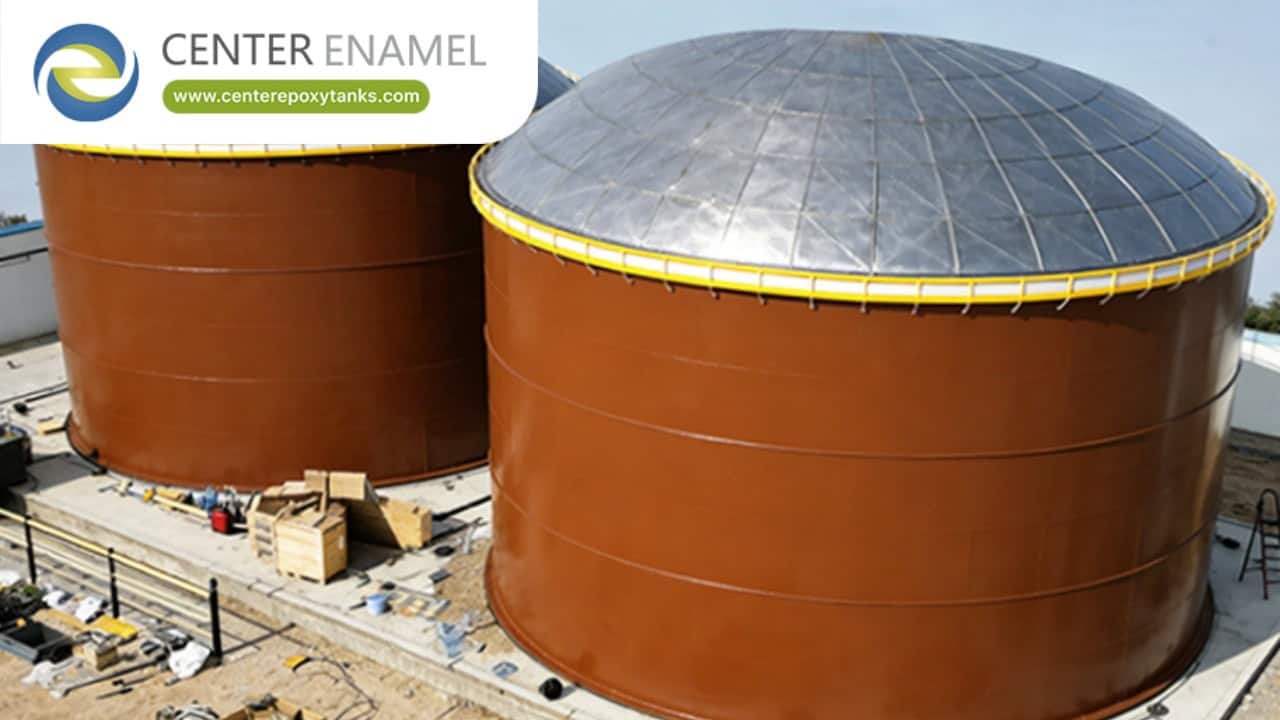
Aluminum Geodesic Domes for Sustainable Storage Tanks Cover Solutions
An aluminum geodesic dome is a lightweight, clear-span, self-supporting tank cover constructed from a network of interlocking triangular space-frame elements. It is widely considered the most sustainable and structurally efficient solution for large-diameter liquid and bulk storage tanks. Because it requires zero internal support columns, it completely eliminates column-seal vapor leaks common in traditional fixed roofs. When retrofitted over external floating roof tanks, it shields the tank interior from wind and rainfall, reducing Volatile Organic Compound (VOC) emissions by up to 90% or more. Manufactured from inherently corrosion-resistant aluminum alloys, these domes require zero painting or sandblasting over a 50-plus-year service life, providing an exceptionally low carbon footprint and 100% end-of-life recyclability.
The Engineering Principle: The Power of Triangular Tessellation
The unmatched strength-to-weight ratio of a geodesic dome relies on structural geometry rather than mass.
Traditional steel roofs require heavy beams, rafters, and massive central support columns to prevent sagging across wide spans. In contrast, an aluminum dome uses a spherical network of triangles that distribute stress and load uniformly across the perimeter of the tank shell.
Because the structure is completely self-supporting (clear-span), it can stretch across tanks up to 100 meters or more in diameter without requiring a single internal vertical pillar. This provides a completely unhindered internal volume, allowing internal floating decks to move up and down seamlessly without complex column seals that are prone to mechanical binding and vapor leaks.
The Sustainability Dynamics: Reducing Environmental and Operational Costs
When processing industrial effluent, drinking water, or petrochemical products, sustainability is evaluated by both environmental compliance and long-term asset lifecycle efficiency.
1. Maximum Vapor Control & VOC Mitigation
Wind rushing over an open-top floating roof tank creates a low-pressure zone that pulls volatile vapors past perimeter seals and into the atmosphere. Installing an aluminum dome blocks external wind currents entirely. By neutralizing the wind factor, the dome creates a stagnant, controlled gas environment above the floating deck, cutting VOC emissions significantly and ensuring strict adherence to global clean-air mandates.
2. Zero Environmental Maintenance Impact
Traditional carbon steel roofs are an ongoing environmental and financial liability. They require routine sandblasting, priming, and painting every 10 to 15 years to prevent atmospheric corrosion. These maintenance cycles release abrasive dust, chemical fumes, and volatile solvents into the surrounding ecosystem. Aluminum solves this by creating a natural, self-healing passivating oxide layer when exposed to oxygen. It never rusts, never flakes, and never requires painting—even when exposed to harsh marine environments or industrial chemical vapors.
3. Stormwater Shielding
In municipal wastewater or industrial effluent storage, heavy rain or snow melting on an open floating deck creates a massive volume of clean stormwater that mixes with the stored product. This artificially inflates the wastewater volume, forcing the facility to waste energy and chemical resources treating clean rainwater. A secure, liquid-tight aluminum dome completely isolates the tank interior from rain, optimizing processing plant capacity.
Technical Evaluation: Aluminum Dome vs. Traditional Steel Roof
Engineering Attribute | Aluminum Geodesic Dome | Fixed Steel Cone Roof |
Internal Supports | None (100% Clear-Span) | Requires heavy central columns |
Structural Weight | Extremely lightweight (Easy retrofit) | Heavy (Requires robust shell reinforcement) |
Corrosion Resistance | Excellent (No painting required) | Low (Prone to rust; requires recoating) |
Emission Prevention | High (Eliminates column-seal paths) | Moderate to Low (Vapor headspace risks) |
Lifecycle Lifespan | Over 50 Years | 20 to 30 Years (With high maintenance) |
Recyclability | 100% infinite value at end-of-life | Low scrap value relative to processing cost |
Frequently Asked Questions (FAQ)
Q: Can an aluminum geodesic dome be installed on an existing steel tank?
A: Yes, this is one of their most popular applications. Because aluminum weighs significantly less than steel (often less than one-third of the weight), it adds minimal dead-load to the existing structure. In many cases, an aluminum dome can be engineered to sit directly on top of an old tank wall without requiring expensive structural reinforcement of the tank foundation.
Q: How do these domes manage extreme wind, snow, or seismic loads?
A: Geodesic domes are inherently aerodynamic. Their spherical shape allows heavy wind profiles to slide smoothly over the structure rather than pushing directly against it, significantly reducing wind-load stresses. Furthermore, the triangular interlocking space-frame naturally distributes snow and seismic forces evenly throughout the entire perimeter rim rather than concentrating it at a single weak point.
Q: Are aluminum domes completely leak-proof against rainfall?
A: Yes. High-quality aluminum domes are engineered with continuous interlocking batten caps and specialized, high-durability silicone or EPDM gaskets. These components create a tightly sealed barrier that prevents rain, dust, and insects from entering, while protecting the interior product from external contamination.
Q: What makes aluminum a greener material choice than steel?
A: Aluminum requires far less energy to transport and install due to its lightweight nature, often allowing components to be pre-assembled on the ground and craned into position in hours rather than weeks. Additionally, aluminum retains a high scrap material value and is infinitely recyclable without losing its inherent mechanical properties, aligning perfectly with modern circular economy goals.


