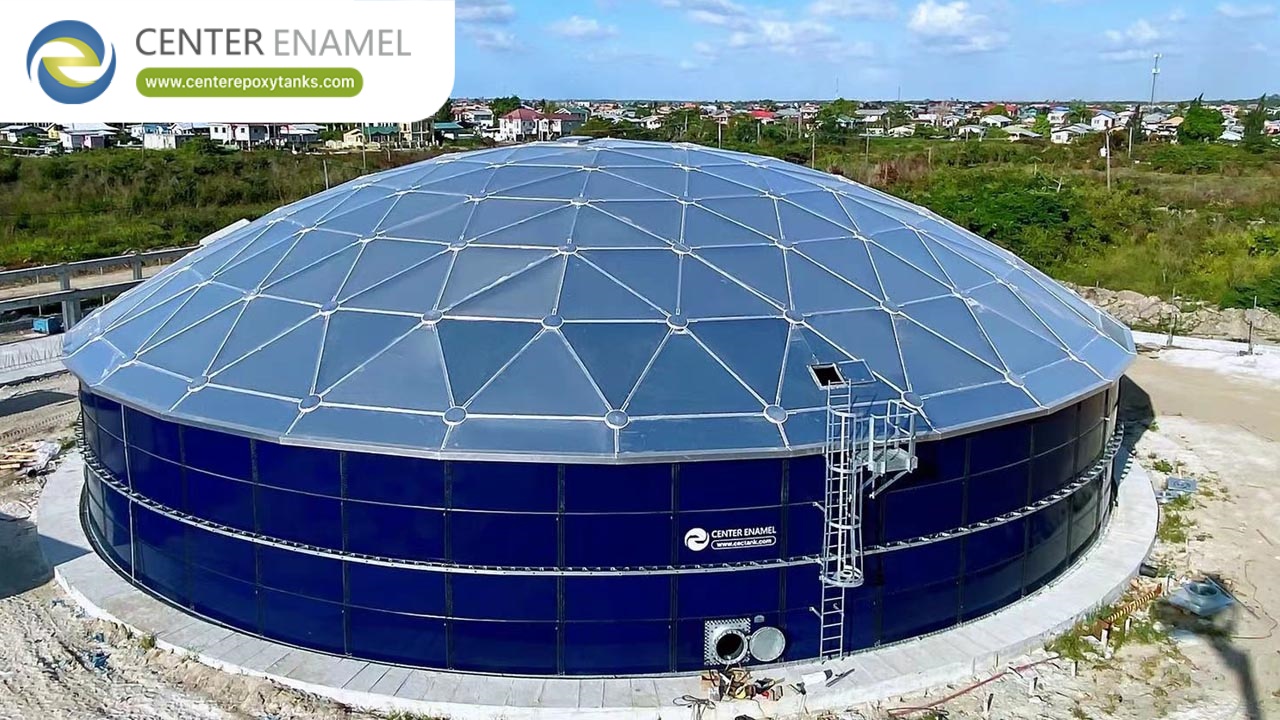
Aluminum Geodesic Domes: An Effective Solution for Wastewater Tank Covers
In municipal wastewater treatment plants and industrial effluent facilities, covering large-diameter tanks is a critical engineering challenge. Wastewater processes—including primary clarification, biological aeration, sludge thickening, and trickling filters—generate aggressive chemical fumes, high moisture levels, and intense odor emissions. Traditional structural covers, such as carbon steel frames or cast-in-place concrete roofs, frequently suffer from accelerated corrosion, structural degradation, and high maintenance costs when exposed to hydrogen sulfide and moisture-laden environments.
To overcome these severe operational hurdles, aluminum geodesic domes have become the industry-leading solution for wastewater tank covers. Combining an advanced self-supporting space frame geometry with the inherent corrosion resistance of marine-grade aluminum alloys, these structures deliver a durable, low-maintenance, and cost-effective containment solution.
Engineering Mechanics and Structural Superiority
The exceptional performance of an aluminum geodesic dome stems from its unique design principles and metallurgical properties:
Self-Supporting Clear-Span Geometry: Unlike conventional flat roofs or truss-supported systems that require internal columns, a geodesic dome distributes environmental and structural loads uniformly through a triangulated lattice grid. This clear-span design eliminates internal supports, maximizing usable interior volume and preventing the accumulation of condensation or debris on interior structures.
Inherent Corrosion-Free Durability: Fabricated from high-strength marine-grade aluminum alloys (such as 6000-series aluminum), these domes naturally form a protective aluminum oxide layer when exposed to air. This eliminates rust and removes the need for periodic repainting, sandblasting, or chemical protective coatings.
Advanced Odor and Vapor Containment: Wastewater treatment facilities face intense regulatory scrutiny regarding odor emissions. Aluminum geodesic domes are equipped with specialized gasketing and weather-tight batten bar systems that hermetically seal the basin, preventing volatile organic compounds (VOCs) and foul odors from escaping into surrounding communities.
Governing Regulatory Standards and Engineering Compliance
To ensure long-term structural reliability and safety in demanding wastewater applications, aluminum domes must comply with rigorous engineering standards:
AWWA D108: The standard governing the design, fabrication, and erection of aluminum structures for water and wastewater facilities.
ASCE 7 & IBC Codes: Mandates precise calculation of site-specific environmental loads, including extreme wind velocities, seismic acceleration parameters, and heavy snow load capacities.
Finite Element Analysis (FEA): Advanced computer modeling ensures that every custom-engineered dome maintains structural integrity under complex loading conditions and large-diameter spans.
Data Table: Comprehensive Comparison of Wastewater Tank Cover Technologies
Technical Parameter | Aluminum Geodesic Domes | Cast-in-Place Concrete Roofs | Welded Carbon Steel Roofs |
Corrosion Resistance | Excellent; natural aluminum oxide film prevents rust in corrosive atmospheres | Moderate; vulnerable to microbial-induced concrete corrosion (MIC) and rebar oxidation | Poor to Moderate; requires continuous protective coatings and field painting |
Internal Support Structure | Self-supporting clear-span design; zero internal columns required | May require internal support columns and beams for wide basins | Often requires internal rafter trusses and support columns |
Maintenance Profile | Virtually maintenance-free over a 40+ year operational lifespan | Moderate maintenance; requires crack remediation and joint sealing | High ongoing maintenance overhead to prevent rust and flaking |
Installation Speed & Weight | Lightweight modular assembly; rapid "jack-and-assemble" installation | Extremely heavy structure requiring extensive concrete formwork and curing | Heavy plate assembly requiring intensive field welding |
Frequently Asked Questions (FAQ)
Q: Why are aluminum geodesic domes preferred for wastewater tank covers?
A: Aluminum geodesic domes offer superior resistance to corrosive wastewater gases like hydrogen sulfide, a lightweight self-supporting clear-span design, and exceptional odor control capabilities that help treatment plants comply with environmental regulations.
Q: How do aluminum domes handle foul odors and gas emissions in wastewater facilities?
A: They feature a hermetically sealed panel and batten bar system with continuous elastomeric gaskets that lock in foul odors and volatile vapors, which can then be safely ducted to biofilters or scrubbers for treatment.
Q: Can aluminum geodesic domes be retrofitted onto existing concrete or steel wastewater tanks?
A: Yes. Because aluminum domes are exceptionally lightweight, they exert minimal dead load on tank walls and foundations, making them an ideal retrofit solution for existing circular or rectangular basins without requiring structural foundation reinforcement.
Q: What is the expected service life of an aluminum geodesic dome cover?
A: Built from marine-grade aluminum alloys, these domes provide a reliable service life of 40 to 50+ years with virtually zero structural maintenance or recoating requirements.


